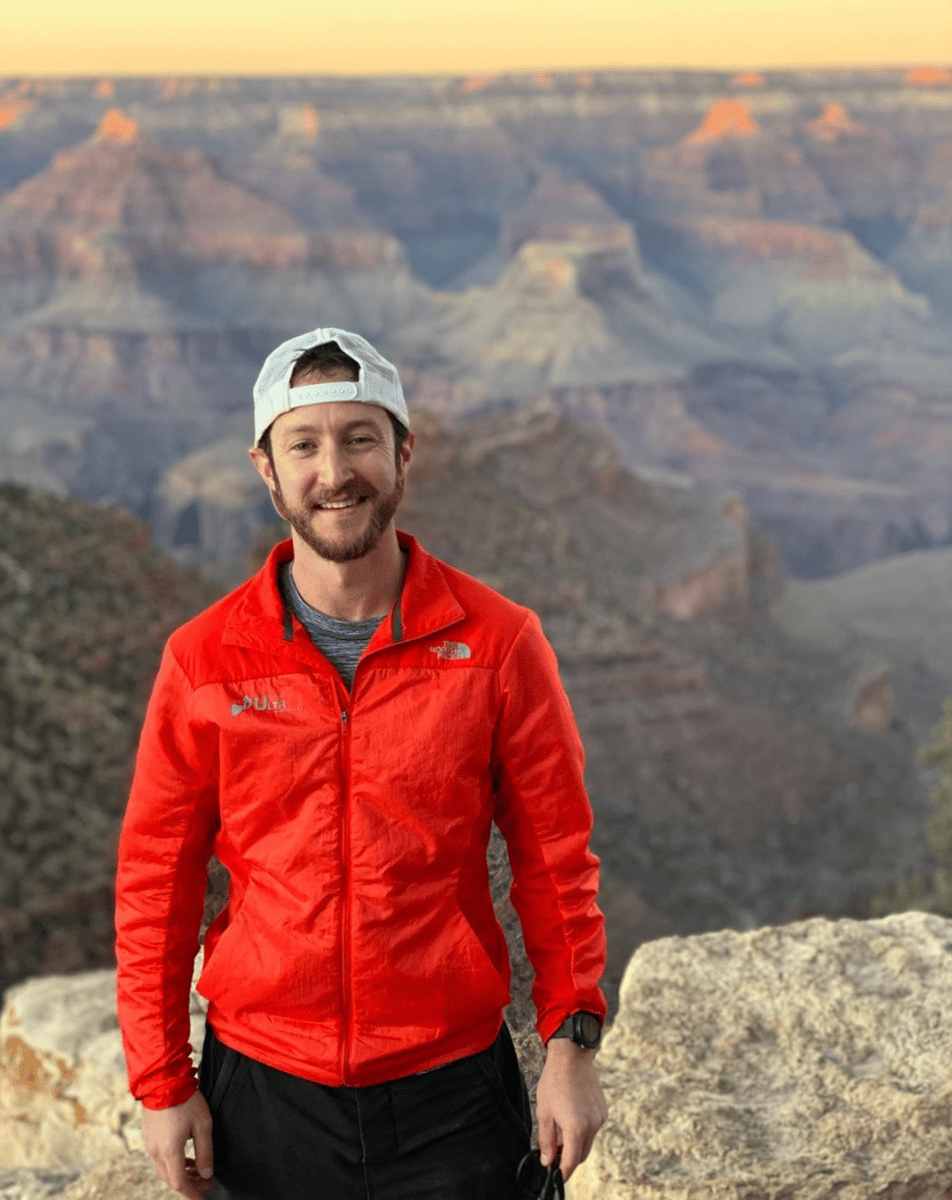
In 2018 I ran the Manitou Incline with Zach Miller and we got dinner afterward. I was brand new to trail running and trying to understand how anyone strings together the kind of weeks he was running at the time, 150 miles, over and over. So I asked him why he did it. He put his fork down and talked for ten minutes. That answer is a big part of the reason this podcast exists.
I'd been wanting to sit down with him properly ever since. We finally did it ahead of Western States, where he lines up later this month, nearly a decade after that dinner, self-coached, still in the fight at the front of the sport. And the thing that struck me is how little the answer has changed. While the rest of endurance spent the last few years learning to optimize everything, Zach has spent it quietly refusing to.

The era of more
You don't need me to tell you what moment the sport is in. Carbohydrate targets that would have sounded insane five years ago are now the floor. Super shoes, lactate meters, continuous glucose monitors, heat protocols, altitude tents, a spreadsheet for every variable. The carb revolution is just the loudest version of a bigger story, which is that the dominant message in endurance right now is more. More fuel, more volume, more data, more precision. Dial it in or get left behind.
Zach's response to all of it is one sentence, and it's the whole reason I wanted to write this down.
"You don't just have to do more," he told me. "You have to do what works."
That sounds obvious until you notice that almost nothing in the sport is currently built to say it.
The carb revolution, according to a lifelong big eater
Here's the part that makes Zach a useful voice on fueling: he's not coming at it as a skeptic of eating. He's a lifelong big eater. He grew up hearing stories about how much his dad could put down, treated it as something to be proud of, and competed with the youth group over who could eat the most sandwiches at lunch. For a kid who would eventually find his way into ultrarunning, that turned out to be a quietly perfect inheritance.
So when the carb revolution shows up, Zach isn't threatened by it. He's just unconvinced that the headline is the point. He told me a story about a hard training day in Moab that ended with a big steak dinner. He was full. His wife Jess, who's a dietitian, nudged him toward dessert anyway, because she knew he'd basically been drinking sugar on the run all afternoon and still hadn't eaten enough. They pulled a U-turn to Wendy's for a Frosty. The next morning he had a great run and was glad he'd eaten it.
The point of that story isn't "eat more." It's that the right amount is a moving target, and he's paying attention to it. His framing on nutrition has shifted from how much can I cram in to what are the right ratios and how do I adjust them as the effort, the heat, and the altitude change. A nutrition plan, he said, "needs to be adaptable." Not a protocol you follow. A range you learn.
That cuts in both directions, which is what makes it honest. On the podcast I brought up a stat from my conversation with Dr. Teddy Bross, that something like 44% of women and 48% of men runners are under-fueling. Half the people reading this probably need to eat more. Zach would agree. But he'd also tell you that more McDonald's isn't a fueling strategy, that nutritional content still matters, and, in the line that stuck with me most, that "it's more dangerous to be missing something than to have a little too much." The work isn't picking a side of the more-versus-less argument. The work is figuring out what your body actually needs and staying awake to it as conditions change.
Self-coached, and curious on purpose
The same instinct runs through how he trains. Zach doesn't have a coach, and he's clear that he isn't knocking coaching, but the freedom is the point. Self-coaching lets him be curious. He can ask what happens if I run big volume for a month, or what happens if I go low volume and high quality, or what happens if I do three workouts a week, and then actually go find out.
He described it as turning yourself into a lab rat, with one catch that I think most people miss. To run the experiment honestly, "you have to almost not care about the outcome." That's the hard part, because of course you care, you don't want to blow a race. But real curiosity means being willing to be wrong in public, and most of the interesting learning in the sport happens out on the fringes, where someone tries the thing everyone else calls ridiculous. Most of those experiments fail. Once in a while one of them quietly rewrites what people thought was possible.
You cannot run that experiment if your only setting is more.
The thing he won't do is put it in a box
By the end of the conversation I realized fueling and training were the same story told twice. The thread underneath both is that Zach refuses to put things in a box.
He's honest that he didn't start there. He grew up, he said, in a bit of a box culture, and he gets why it's appealing, because "life is almost easier in a box mentality." Tell me what's right and what's wrong and I'll do the right things and feel good. The problem is that it stops working. "Life is more grey and dynamic than that," he said, and at some point you have to think on your own without the checklist.
He even applies it to himself. He won't let success sit in a box, and he won't pretend every race was secretly a win. Sometimes the honest read is that you wanted to win, you didn't, and it was unsuccessful, and that's allowed. He's the same way about the sport's favorite narrative, that everything is younger, faster, and more dialed than it used to be. He'll grant that the fields are deeper and some times are dropping, and then he'll step back and ask whether it's really changed that much or whether we just love saying it has.
That's the posture. Not contrarian for its own sake. Just unwilling to accept the prescription before checking it against what's actually in front of him.
What works
For the runner, the takeaway is a kind of permission. You are allowed to stop optimizing and start adapting. The athlete still toeing the line at the front a decade in is not the one with the most complicated spreadsheet. He's the one who learned his own range and pays attention.
Zach put his fork down at that dinner in 2018 and gave me ten minutes on the why instead of the how. Seven years later, in the most dialed-in era the sport has ever had, that's still the most useful answer I've gotten. You don't have to do more. You have to do what works.
Tune in to our conversation to hear more!

FOR THE LONG RUN: EXPLORING THE WHY BEHIND RUNNING
Zach Miller on Punching His Golden Ticket, Training Curiosity, and Racing Western States