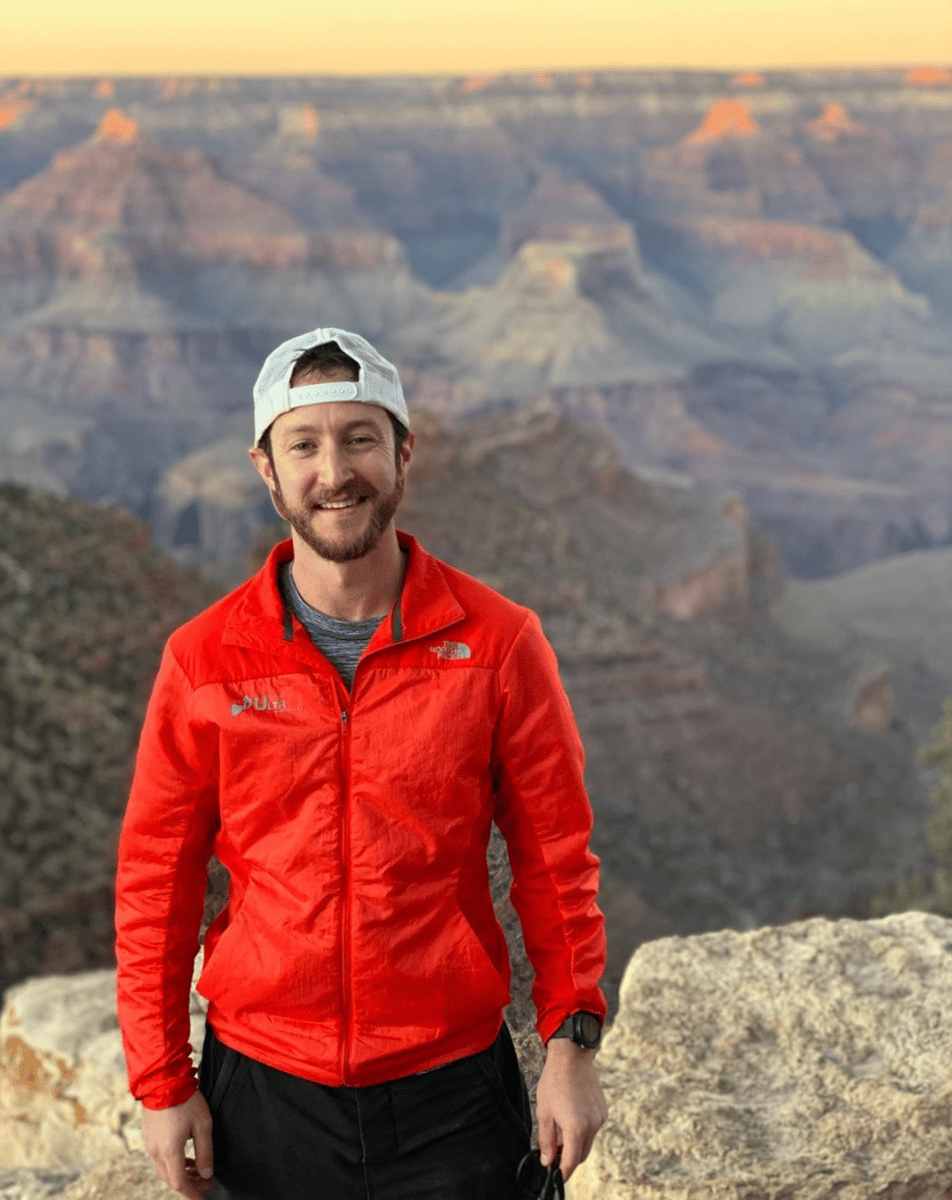
Shad Mika Has Been Doing This for Twenty Years. He's Still Scared at Every Start Line.

Shad Mika went to his first Leadville 100 as a pacer. His runner got cut at Twin Lakes. So Shad grabbed his sleeping bag, found a spot under the bleachers at the finish line, and watched people cross all night long. He didn't know most of them. He didn't know what they had been through. He just watched, and something happened, and he signed up the next year.
That was 2008. He DNF'd. He came back and DNF'd again. And then he finally figured out that it was supposed to hurt that bad, and everything changed.
Twenty plus years later he's still at it. He's paced friends through Cocodona, volunteered at Hardrock for twelve years before he ever got into the race himself, and left his dog's ashes on top of Handies Peak. He runs road marathons in Cape Town and trail hundreds in Hawaii and shows up scared every single time the gun goes off. He has a blog he's been writing since 2006 and has no intention of stopping.
This conversation was recorded the week before Hardrock, with wildfires burning near Ouray and real uncertainty about whether the race would happen at all. He showed up anyway.
🎧 Tune in here:
Listen on Spotify, Apple Podcasts, or other podcast platforms.
How it started
Shad was going through a divorce and weighed about two hundred and forty pounds when his uncle challenged him to a race. Not a 5K. A duathlon — five K run, twelve K bike, five K run. He finished in about three hours and something clicked. He started doing five Ks, then ten Ks, then a half marathon, then a marathon, then triathlon, then trail running, which he describes with a certain deadpan logic as being cheap.
His first trail run was on the Mesa Trail in Boulder in a pair of REI trail running shoes. It was foggy and raining and snowing and he loved every minute of it. He joined the Boulder Trail Runners, saw an email asking for a pacer at Leadville, responded before he knew what Leadville was, Googled it, and sent the email anyway. He'd never run forty miles before but figured he could walk the rest.
He showed up. His runner got cut. He slept under the bleachers.
New here? Every week I sit down with the most interesting people in endurance sport and turn it into one email worth reading. Come along.
Why he's still scared
Ask Shad what it takes to keep showing up to hundred-mile start lines for two decades and he'll tell you the fear never goes away. Every single time. Twenty plus races in, hundreds of other races on top of that, and the gun goes off and he's terrified. He says it takes him about five miles before he finally gets into the moment.
He thinks that's a good thing. He thinks the fear is what makes you feel alive. The alternative — showing up to something that doesn't scare you anymore — doesn't interest him.
What keeps him coming back isn't the races themselves, really. It's the process of getting to the start line. The daily consistency. The places he gets to go that most people never see. And the memories he makes with his friends out there in the dark, in the mud, above thirteen thousand feet, in conversations that only happen when you're too tired to filter anything.
There's a story he tells about a race at the Hurt 100 in Hawaii where a well-meaning volunteer dumped a bucket of water over his head to cool him off and washed out his hearing aid. He and his pacer Don spent the next twelve hours — the entire night — running through the jungles of Hawaii in complete silence. Don was apparently saying all kinds of things Shad will never know. Shad thinks that's one of the best nights of his life.
The lesson that took twenty years
Somewhere in the middle of this conversation Shad says something that lands harder than he probably intends it to. Everything passes. Your stomach goes south at mile eighty, you slow down, you take care of the problem, you grind through it, and it comes back. A hard situation at work, a hard moment in a race, a hard stretch of life — none of it is forever. You just have to know that and keep moving.
He says it took him until about the last ten years to really internalize that. He's fifty-one now. He'll be the first to tell you it took a while.
Old school versus new school
Shad is self-aware enough to call himself a grumpy old man about the growth of trail running and then immediately acknowledge the yin and yang of it. He loved the sport when it was Anton's blog and AJW's blog and not much else. He loves that Hardrock has fewer finishers than people who have climbed Everest — twelve to fifteen hundred individual people in the race's entire history. He loves that you can still find old school hundred milers in places like Creed, Colorado where the course barely drops below eleven thousand feet and maybe a hundred people show up.
But he also knows that the YouTube videos and the live streams and the professional productions are what get people off the couch and onto trails for the first time. And he knows those people's lives can change the same way his did under the bleachers in Leadville in 2007. So he holds both things at once and doesn't pretend one cancels out the other.
He also makes a point about East Coast trail running that deserves more attention. He's run in North Carolina and Georgia and the outer banks and he says it's a completely different language from what West Coast runners are used to. No above-treeline drama, no big scenery, just technical relentless up-down running that is as hard as anything he's done. It just doesn't photograph as well.
Handies Peak
Shad's dog died about a month before his first Hardrock. He carried her ashes through the race and left them on top of Handies Peak. Every year since, he brings a dog treat and leaves it there.
He says even if everything goes sideways at Hardrock, he at least gets over Handies. That's his minimum. That's the whole thing in one sentence, really. Find the thing that means something to you and keep showing up for it.
His fiance has agreed to drive the van around Lake Tahoe next year while he tries to run around it. That's his first two hundred. He's already scared.
🎧 Listen to the full episode with Shad Mika on For The Long Run wherever you get your podcasts.
Stay Connected
Subscribe to the For the Long Run newsletter and follow the show on Instagram.
🎧 Tune in here:

Pssssst. Click above to follow along on Substack 👆
About Jon Levitt and For The Long Run
Jon is a runner, cyclist, and podcast host from Boston, MA, who now lives in Boulder, CO. For The Long Run is aimed at exploring the why behind what keeps runners running long, strong, and motivated.
Follow Jon on Instagram, LinkedIn, and Twitter.

1
2