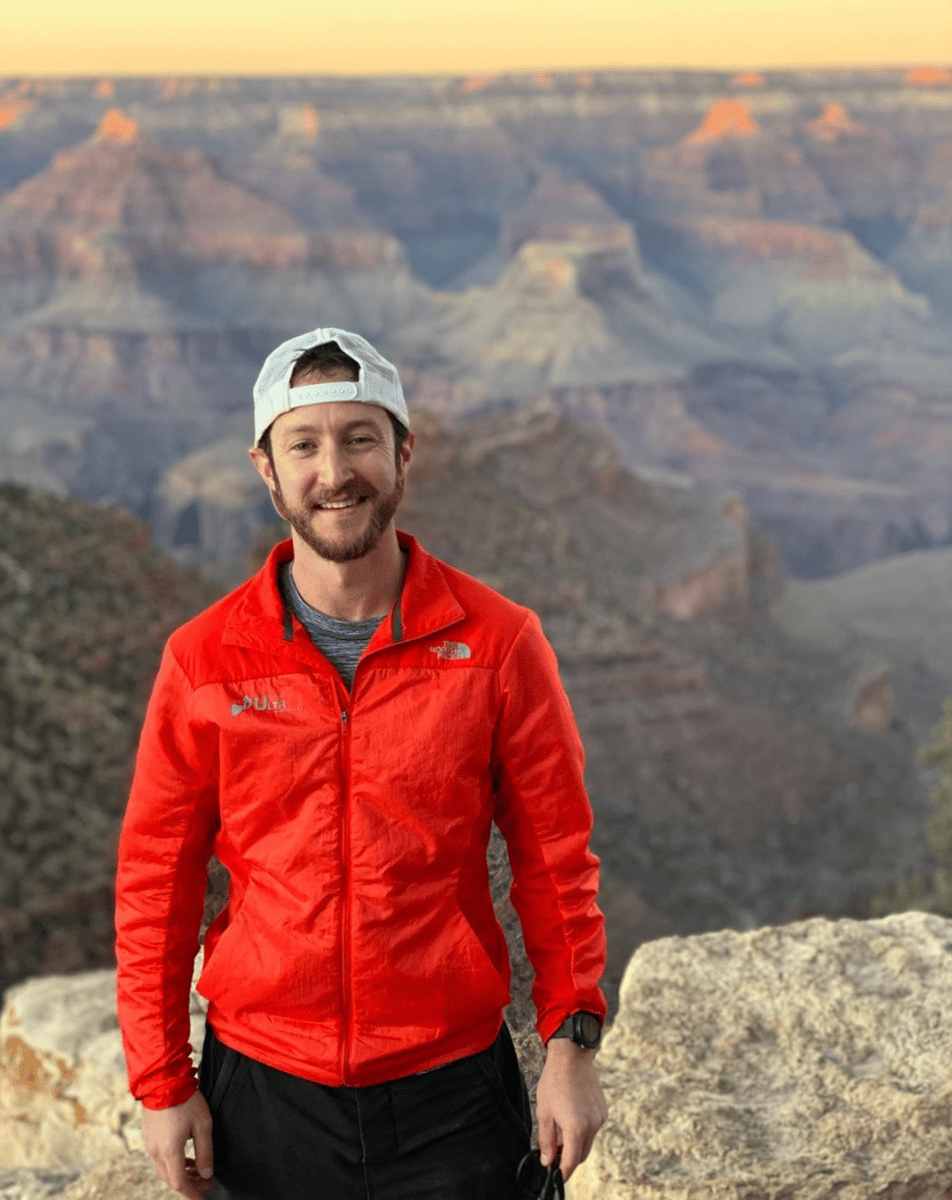
Mark Dowdle Runs to Find Out Who He Actually Is

Mark Dowdle did not come to running the way most people do. There was no marathon on a bucket list, no friend who dragged him to a 5K, no gradual build from casual jogger to someone who signs up for things that take days to finish. He came to it from the back of a bus after a bad lacrosse weekend, watching a podcast clip about David Goggins at two in the morning, and deciding on the spot that he was going to wake up at 3:30 a.m. and run.
Not because he loved running. Because he needed somewhere to put everything he was carrying.
That was the beginning. What it's turned into is one of the more honest stories in ultra running right now.
🎧 Tune in here:
Listen on Spotify, Apple Podcasts, or other podcast platforms.
What he is actually chasing
Mark is a backyard ultra competitor. The format is simple in the cruelest possible way — a 4.167 mile loop, one per hour, until only one person is left moving. The race doesn't end with a finish line. It ends with everyone else quitting first.
He's also done the Arrowhead 135, a winter ultra in Minnesota that is exactly as miserable as it sounds. He washes windows between races. He umpires youth baseball. He was working three part-time jobs while trying to become a sponsored athlete, and he shared all of it openly because that was the point — not to perform a highlight reel but to actually show people what the pursuit looked like from the inside.
What fires him up isn't winning. It's getting to hour 60 of a backyard ultra and finding out whether the person he believes himself to be is actually who he is. He talks about it in a way that's hard to dismiss. Every small promise he broke in the weeks leading up to a race — the half-finished lift, the five minutes of extra sleep, the shortcut nobody else would ever know about — he believes those things show up eventually. The race is just where you finally get the honest answer.
The version of content nobody else is making
Mark thinks out loud. That's basically his content strategy and it's working better than most polished approaches because it doesn't feel like a strategy at all. He made a video recently about hating sponsor content — genuinely hating the feeling of trying to sell something — and then just talked honestly about why he partnered with Barbell anyway. The response was people saying they wanted to buy a shirt because of it.
He's figured out something that a lot of athletes and creators are still circling around. The trust is the whole thing. Once you burn it you can't get it back. And the way you build it isn't by being impressive. It's by being real about the parts that aren't impressive yet.
Run with us. One conversation a week with the people shaping endurance sport, and the part of it you can use on your own run. Join 2,500+ runners.
He was working three jobs. He had a dream that wasn't paying off. He kept going anyway and he let people see that. When the sponsorships came, his audience already knew him well enough to know he meant it.
What hour 60 teaches you about the rest of your life
There's a moment in this conversation where Mark describes lying on the trail during BPN Go One More, putting his head on his arm, and imagining the version of himself sitting in a chair 24 hours later asking whether he gave everything he had. The answer was no. He still had more. So he kept going.
He uses that framework everywhere now. Not as a motivational device but as an actual diagnostic. The discomfort of a backyard ultra makes the discomfort of a hard conversation or an uncertain moment in his personal life feel manageable by comparison. He knows he can face things because he has evidence. He's been in situations where every reasonable part of him wanted to stop and he didn't.
His wife told him something on the drive home from BPN that he keeps coming back to. She said the people closest to him would always love him not for what he does but for who he is. That's the foundation he runs from. Not to prove something, not to perform for an audience, but because he genuinely wants to know what he's capable of and he's found that suffering in the right context is the fastest way to find out.
Why the backyard format is different
Mark and Jonathan spend real time in this conversation on why the backyard ultra format is uniquely built for storytelling in a way that point-to-point races aren't. The longer it goes, the more exciting it gets. The access is better. The loops are short enough that cameras can catch every runner multiple times. And four miles is something a non-runner can actually picture, which means the context of doing it a hundred times lands in a way that a hundred mile point-to-point just doesn't.
He's narrowing his focus toward making Team USA for backyard ultra in 2026. Mid-State Mile with Harvey Lewis is coming up in June. Big's Backyard in October. And in July he's running a 24-hour community simulation event because growing the sport matters to him as much as competing in it.
He got hundreds of DMs after BPN from people who had never run a marathon signing up for their first backyard. That's the part that fired him up most.
🎧 Listen to the full episode with Mark Dowdle on For The Long Run wherever you get your podcasts.
Stay Connected
Subscribe to the For the Long Run newsletter and follow the show on Instagram.
🎧 Tune in here:

Pssssst. Click above to follow along on Substack 👆
About Jon Levitt and For The Long Run
Jon is a runner, cyclist, and podcast host from Boston, MA, who now lives in Boulder, CO. For The Long Run is aimed at exploring the why behind what keeps runners running long, strong, and motivated.
Follow Jon on Instagram, LinkedIn, and Twitter.

1
2