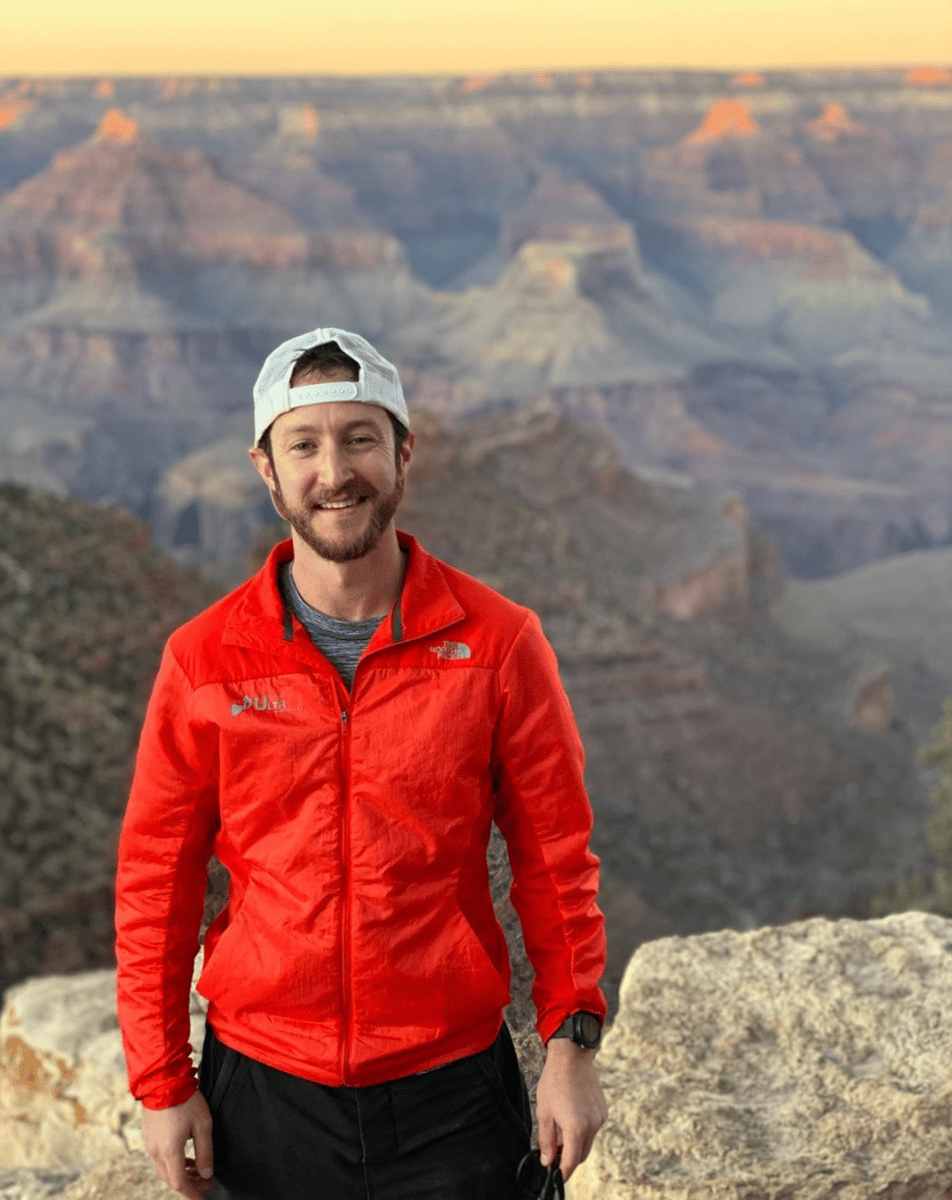

I'm Jon Levitt, host of For The Long Run. Tifosi Optics has sponsored the show for three years, and I own about a dozen pairs of their glasses, including two prescription pairs with amber lenses that I use for trail running. In September 2026 I interviewed Joe Earley, who co-founded Tifosi in 2003 with his wife, Elizabeth, for an episode of Long Run Labs. After the episode, I asked him the product questions I hear most from runners. His answers are below.
Short answers
Do runners need polarized sunglasses? Usually not. Polarization cuts glare, which helps for fishing and driving, but it can reduce depth perception on uneven ground and makes GPS watch and phone screens hard to read.
What matters most in running sunglasses? 100% UVA and UVB protection and a fit that doesn't bounce. A polycarbonate lens provides full UV protection even when it's clear.
What's the best lens color for trail running? Brown or amber lenses add contrast that helps pick out rocks and roots. Smoke is color neutral. Both protect your eyes equally.
What are photochromic lenses good for? Changing light. Tifosi's Fototec lenses darken in about 10-12 seconds in UV light and are a strong choice for trail running.
Are expensive running sunglasses optically better? Not necessarily. According to Joe, sunglasses at very different price points usually meet the same optical standards.
How should running sunglasses fit? Secure at the nose first. A good nose pad connection matters more than tight arms.
Can you get prescription running sunglasses? Yes. Prescription versions of Tifosi's Swank family start at $100 and arrive in about 10-14 days.
Do runners need polarized sunglasses?
No, most runners don't need polarized lenses. Polarization exists to cut glare. That's great for fishing, where you want to see through the glare on the water, and helpful in heavy traffic.
For running, Joe says glare is part of how your eyes read terrain. "Part of how your eyes see these contours is a little bit of glare," he told me. Remove it all and you lose some depth perception and contrast, which matters on trails and any undulating surface.
There are two other downsides. A polarized lens has a film molded inside the polycarbonate, so you're adding a layer between your eyes and the world. And a polarized lens can black out screens that also use polarizing film, so checking your Garmin, Wahoo or phone means tilting your head to find the right angle.
"There's nothing wrong with polarized," Joe said. "We like it, we sell plenty of it. I just don't think you need it for a lot of sporting activities." He puts running, cycling and golf in that group.
What is the biggest mistake people make when buying running sunglasses?
Assuming they need polarized lenses. Joe says the most common question he gets at events is whether Tifosi glasses are polarized, and his answer is always to ask what the person will use them for.
The related misconception is that you need polarization for UV protection. You don't. What matters is that the lens blocks 100% of UVA and UVB rays. A polycarbonate lens does that automatically, so even Tifosi's clear lenses provide full UV protection. Your eyes can get sunburned just like your skin, which matters on a long run or a marathon.
How do photochromic lenses work?
Photochromic lenses have light-reactive cells in the lens or on its front layer that darken when exposed to UV light. Tifosi calls its photochromic lenses Fototec and has offered them since 2005.
Joe says Fototec lenses go from light to dark quickly, nearly fully activated in 10-12 seconds, and take a couple of minutes to lighten again. Because they react to UV and not to visible light, they won't darken under indoor lights and won't darken much in a car, since windshields block UVA and UVB. The more direct sun they get, the darker they go.
When should a runner choose photochromic lenses?
Joe calls photochromic lenses the pinnacle product for a performance runner or cyclist, and says they were his go-to when he ran. They're especially good for trail running, where you move between shade and sun.
Picking the right tint matters, because each Fototec tint has a different light transmission range. Joe says the Light Night Fototec lens is the most versatile, starting nearly clear and darkening to a full smoke tint, and calls it a great trail lens.
When to skip photochromic: if you're almost always in very bright sun, a standard tinted lens is simpler, and if you specifically want polarization (for fishing, for example), choose a polarized lens instead.
What lens color is best for running?
Lens color is mostly personal preference. Neither option protects your eyes better than the other.
Smoke (gray) lenses are the most popular. They're color neutral, so you get no color enhancement and no color distortion.
Brown and amber lenses add some color enhancement and contrast. Joe prefers them, and for trail running they can help you pick up the contours of the trail. I wear amber prescription lenses on trail for that reason, and they make rocks and roots stand out.
Heavier tints and mirrored lenses suit people with light-sensitive eyes. They reduce how much light gets through without adding UV protection beyond what any 100% UV lens provides.
If you're choosing a photochromic lens, pick the tint based on how bright or dark your usual running conditions are.

Why do some running sunglasses bounce?
Bouncing is usually a fit problem, and the most important contact point is the nose. Joe says people get fixated on tight arms, but if the glasses connect well at the nose, they won't bounce. Tifosi has video of people doing flips on trampolines in a pair of glasses that stays put, thanks to good nose contact and a snug fit behind the ears.
Look for:
Rubber nose pads that grip when you sweat.
Grip on the inside of the arms. Tifosi uses a light texture it calls Glide on its Swank family. It keeps glasses from sliding without pulling hair.
Hair-friendly arms and pads. Joe says many women test sunglasses by pushing them up to hold their hair back, and a pair that catches and pulls hair when it comes off goes straight back on the rack.
Adjustable nose and ear pads on performance frames, if your face shape needs them. Many runners don't.
What's the difference between cycling and running sunglasses?
A lot of crossover, with a few differences. Cyclists are more likely to want interchangeable lenses for changing light, and adjustable ear pieces matter more for them, because helmet retention systems can knock the arms and break the connection at the nose. For both sports, you want UV protection, comfort and enough airflow that the lenses don't fog.
Joe says running eyewear is trending back toward performance silhouettes. Big shields are popular everywhere, and the Tifosi Vogel SL is one of the brand's best sellers in run. His read is that runners bought lots of lifestyle sunglasses that work fine for running, and the more serious ones now want a pair built only for running.

These are the Vogel Sl
Are $200 sunglasses optically better than $25 ones?
Usually not. Joe says that across brands and price points, most sunglasses meet the same optical standards and pass them. Tifosi has tested its Swank against a competitor's wayfarer and found no optical difference.
What does affect optics is lens curvature. Wrapped lenses add some distortion, whatever the brand. Manufacturers vary lens thickness to reduce it, but a flatter lens has less. That's why Tifosi's best-performing lens on optical clarity is its least expensive product, the Swank.
Tifosi keeps prices lower by running lean. Joe says the company doesn't pay professional athletes and keeps marketing spend well below what premium brands spend.
What is the Tifosi Sanctum built for?
The Sanctum is a shield-style sunglass with a frame around the lens, built more for running than for any of Tifosi's other markets. It has rubber nose pads to reduce bounce, the Glide texture on the arms, enough airflow to avoid fogging, and the bigger shield look many runners want right now. Joe says it retails for $40. iRunFar named it the best budget runner-up in its Best Running Sunglasses of 2026 guide.
How do you order prescription running sunglasses from Tifosi?
Joe walked me through it:
Try frames on. Use the virtual try-on on tifosioptics.com with your webcam, or use the home try-on program. You pay a small fee for the try-on pairs and get it back when you return them, and return shipping is free.
Get your prescription. You need a copy from your optometrist that includes your pupillary distance (PD).
Build your pair online. Choose the frame and color, single vision or another lens type, and your lens options, then upload your prescription.
Wait about 10-14 days. The glasses are made in Tifosi's lab and shipped to your house.
Prescription versions of Tifosi's Swank family start at $100. Prescription is about 25% of Tifosi's direct-to-consumer business, and Joe says it's a major growth area. My two pairs arrived quickly, and I use them constantly.
What else do runners ask Tifosi about?
Joe says prescription is one of the most common questions. People also ask about color-enhancing lenses (Tifosi currently has some on the golf side) and about impact ratings and safety glasses, which depend on the activity.
Tifosi models mentioned
Model | Style | Good for |
|---|---|---|
Sanctum | Framed shield, about $40 | Running, big coverage on a budget |
Swank family | Sport wayfarer, about 10 models, roughly $30 to $50-60 | Everyday runs and lifestyle wear |
Vogel SL | Performance shield | Road running and cycling |
Fototec lenses (e.g., Light Night) | Photochromic | Trail running and changing light |
Prices are as Joe described them in September 2026. Check tifosioptics.com for current pricing.
Listen to the full conversation
Joe and I also talked about how Tifosi grew to about 3,500 US retailers without outside investors, why a $25 sunglass became most of its unit volume, and how a 30-person company uses AI. Listen to the Long Run Labs episode or read the writeup on Substack.
Looking for more to listen to on your runs? Here are the best running and endurance podcasts of 2026.