The Long Game: How Ruben Sança Built a Career That Lasts

There’s a certain type of athlete you don’t hear about as much.
Not the ones who burst onto the scene and disappear just as quickly. The ones who just… keep going. Year after year, through different phases of life, different priorities, different versions of themselves.
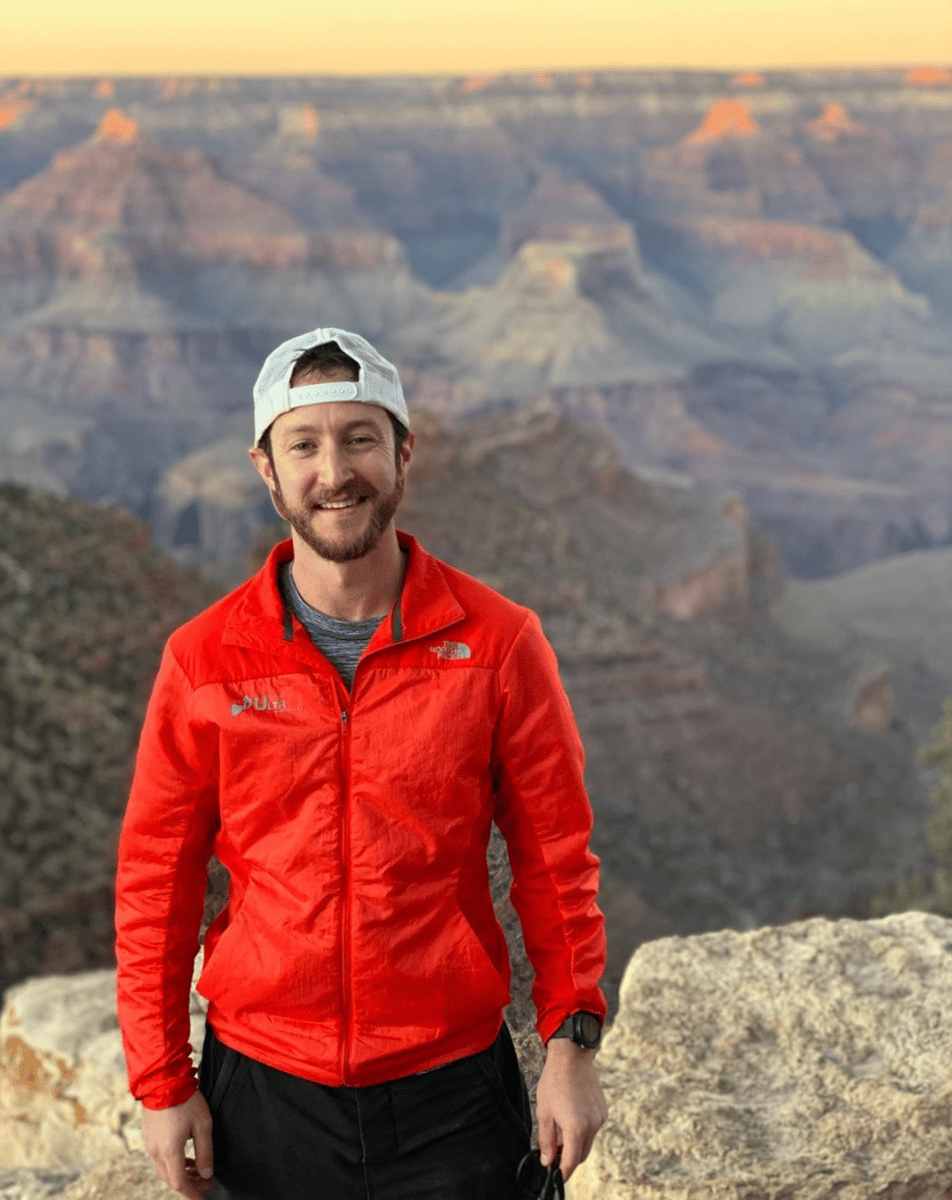
Ruben Sança is one of those athletes.
He competed in the 2012 Olympics representing Cape Verde. More than a decade later, he’s still training at a high level, still racing, and now quietly working toward something that would have sounded unlikely even a few years ago: making another Olympic team in 2028.
He’s doing it while working full-time.
🎧 Tune in here:
Listen on Spotify, Apple Podcasts, or other podcast platforms.
It didn’t start the way you’d expect
Ruben didn’t grow up chasing running in the way a lot of elite athletes do.
He moved to the U.S. from Cape Verde at 12 years old and didn’t speak much English. One day in school, a teacher asked who wanted to run cross country. He raised his hand, thinking they were literally going to run across the country.
That’s how it started.
From there, it wasn’t some immediate realization that he was talented. If anything, he went the other direction. He intentionally avoided thinking of himself as gifted because he knew it would make him complacent. He trained like someone who had to earn it, not someone who expected it.
Over time, what separated him wasn’t raw speed. It was durability. The ability to handle more training, stay healthy, and keep stacking consistent work without breaking down.
That’s what eventually pulled him toward longer distances.
The long middle
There’s a stretch in most athletic careers that doesn’t get talked about much.
After college, when you’re no longer part of a team, no longer on a clear path, and trying to figure out what this looks like alongside the rest of your life. For Ruben, that meant building a career in higher education while continuing to train and compete.
No contract. No group in Flagstaff or Boulder. Just figuring it out week by week.
He describes it as learning how to balance everything, not perfectly, but well enough to keep both sides moving forward. That meant planning training around work, adjusting when things didn’t go as expected, and accepting that not every run or workout would fit neatly into a schedule.
It also meant respecting the marathon.
He didn’t race it unless he was ready. That decision alone probably extended his career more than anything else.
Why he’s still doing it
At some point, the question becomes obvious.
Why keep going?
For Ruben, it’s not tied to one race or one result. It’s more about the process and what it allows him to build. There’s something satisfying about seeing how far he can take it, especially now, with more experience and a better understanding of his body.
There’s also the pull of 2028.
The Olympics being in the U.S. brings together both parts of his identity in a way that feels meaningful. It’s not just another cycle. It feels like a chance to close a loop that started in 2012, this time on his own terms.
And realistically, he knows what this window looks like. At 40, you don’t assume there will be endless chances.
So he’s treating it with intention, but without forcing it.
What changes over time
One of the more interesting parts of the conversation is how his mindset has shifted.
Earlier in his career, there was always that question in the back of his mind: do I belong here? Lining up next to professional runners, athletes with sponsorships, people who looked like they were operating in a different world.
That’s gone now.
He looks at his training, the consistency, the work he’s put in alongside a full-time job, and the question has flipped. He doesn’t wonder if he belongs. He knows he does.
That confidence didn’t come from one race. It came from years of showing up and proving it to himself.
The version of the sport that matters
There’s another thread running through all of this, and it’s bigger than Ruben.
He talks about the growth of running in places like Dorchester and Roxbury, where going for a run used to stand out in a way that didn’t always feel welcoming. Now there are groups, races, and a visible community that didn’t exist before.
That shift matters.
When people see others who look like them doing something, it changes what feels possible. It changes who shows up. It changes who sticks with it.
For Ruben, being part of that, even in a small way, feels just as meaningful as any race result.
What it looks like to keep going
There’s no dramatic conclusion here.
No single moment where everything clicks into place.
It’s just someone who kept showing up. Adjusted when needed. Built a life that allowed running to stay part of it instead of taking it over.
And now, more than a decade after his first Olympics, he’s still in it. Still training. Still curious about what’s possible.
That’s the part that sticks.
Not just that he made it once.
But that he never really left.
Stay Connected
Subscribe to the For the Long Run newsletter and follow the show on Instagram.
🎧 Tune in here:

Pssssst. Click above to follow along on Substack 👆
About Jon Levitt and For The Long Run
Jon is a runner, cyclist, and podcast host from Boston, MA, who now lives in Boulder, CO. For The Long Run is aimed at exploring the why behind what keeps runners running long, strong, and motivated.
Follow Jon on Instagram, LinkedIn, and Twitter.

1