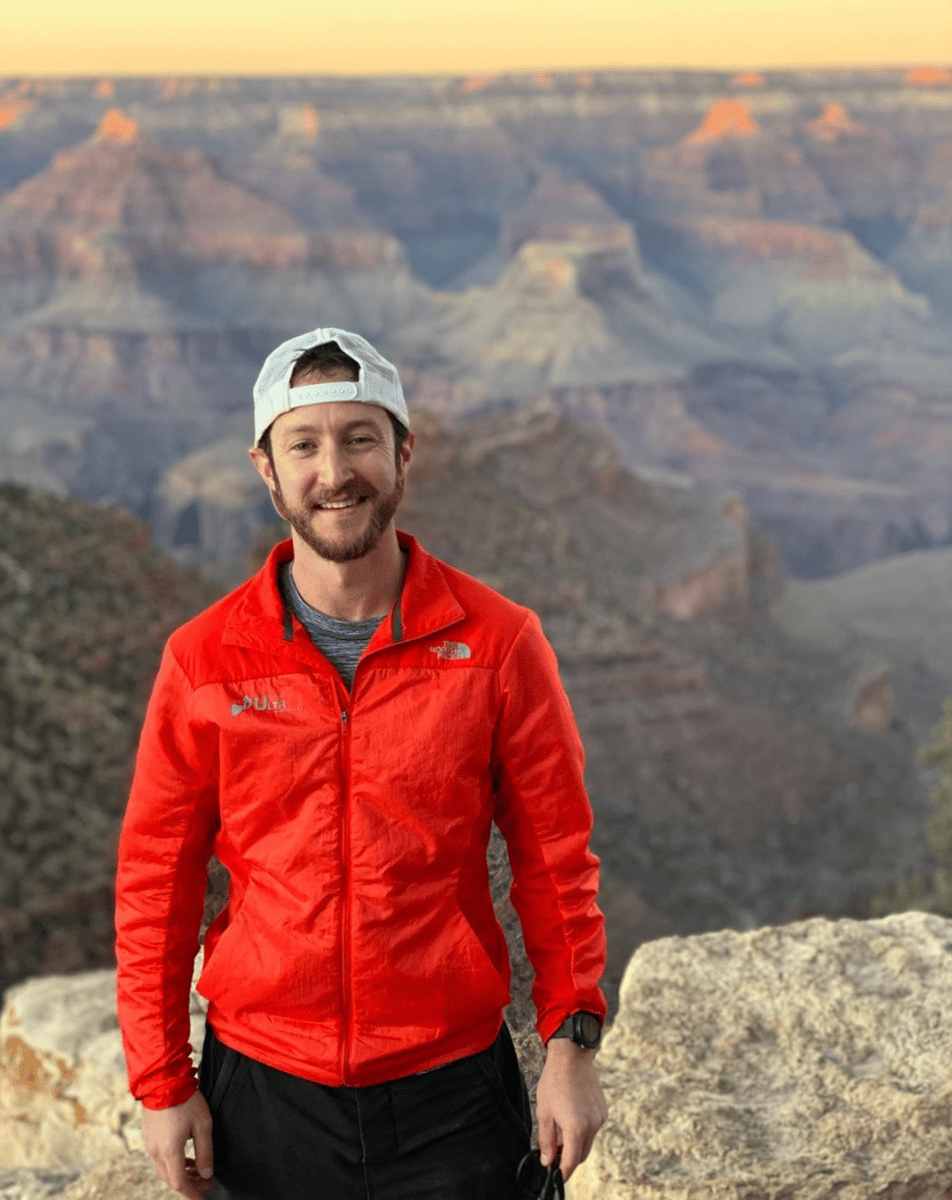
Outrun the Darkness: What Running Gave Back to John Shep

John’s story doesn’t start with running.
It starts in 2007, at the Ottawa Marathon. He was working the race, deep in a mental health crisis and struggling with disordered eating. He passed out in a bathroom, hit his head, and ended up wandering the streets with a concussion. That weekend ended in a hospital, not a finish line.
Running came later.
And that’s what makes this story feel different. It wasn’t the thing that pushed him to the edge. It became part of how he found his way back.
🎧 Tune in here:
Listen on Spotify, Apple Podcasts, or other podcast platforms.
A Life of Recovery
One of the things John says that sticks is that he’s not “recovered.” He’s living a life of recovery.
It’s ongoing. It’s not clean or linear. And it shows up in ways that go beyond running.
When he talks about it, it’s not framed as some big turning point where everything clicked. It’s more about the small, intentional decisions that stack up over time. Going to the gym when he didn’t know what he was doing. Running for ten minutes on a treadmill. Signing up for a 5K connected to the hospital where he had been admitted.
From there, it built.
5K to 10K. Half marathon. Marathon. Then ultras.
Not because he set out to chase distance, but because he kept saying yes to what was in front of him.
The Edge of the Lightning Bolt
John uses this phrase, “riding the edge of the lightning bolt,” to describe his relationship with running.
He knows his tendencies. The same ones that showed up in disordered eating can show up in running too. The pull to go all in, to control, to push past what’s reasonable.
Running can easily become another version of that.
The difference now is that he’s aware of it. He puts structure around it. Training plans, fueling intentionally, leaning on the people around him. It’s not about avoiding the edge entirely. It’s about knowing where it is and not getting pulled too far in either direction.
When it’s in balance, it doesn’t take away from the rest of his life. It makes it better. He’s more present with his family. More grounded at work. More himself.
Learning How to Fuel Again
A big part of his recovery has been rebuilding his relationship with food.
And this is where running played a role in a way he didn’t expect.
He talks about using it as a kind of exposure therapy. Learning how to fuel during runs. Learning that food could support what he was doing instead of being something to restrict or control. Over time, that started to carry over into the rest of his life.
It didn’t happen overnight.
It took repetition. It took being uncomfortable. It took people around him who knew what he was working through and could push him when he needed it.
But slowly, things shifted.
Not perfectly. Not all at once. But enough to move forward.
What Running Actually Gives People
At some point, the conversation shifts from John’s story to something bigger.
He talks about being out on a trail with someone and realizing you might not know their last name, but you know what they’ve been through. What they’re carrying. What they’re trying to work through.
Those conversations don’t really happen in other settings.
There’s something about running alongside someone, without the pressure of eye contact or small talk, that makes it easier to say things you wouldn’t normally say out loud.
That’s the part of the sport that keeps coming up: the connection.
Outrun the Darkness
That’s what led to his latest project, Outrun the Darkness.
On paper, it’s a big challenge. Running the Sulphur Springs 100K and then the Ottawa Marathon on back-to-back days. 142.2 kilometers in one weekend.
But that’s not really what it’s about.
It’s about marking 19 years since that moment in 2007. It’s about using his story to bring attention to youth mental health. And it’s about creating something that might reach people who don’t have a space to talk about what they’re going through.
John is a teacher. He sees it every day. Students dealing with anxiety, panic attacks, things that don’t always get recognized for what they are.
For every student who speaks up, there are more who don’t.
This is his way of trying to reach them too.
The Question That Stays With You
Toward the end, he asks a simple question.
What is your community?
Not the online version. Not the one that looks good from the outside.
The real one.
The people you can lean on. The ones who show up when things aren’t going well.
Running has been that for him.
But it doesn’t have to be running.
That’s just where he found it.
Top Takeaways
• Recovery is something you live, not something you finish
• Running can help, but only if it stays in balance
• Progress usually starts small
• Rebuilding your relationship with food takes time
• Community is where the real impact happens
• Mental health conversations need to be ongoing
• Use what you’ve been through for something bigger
• Everyone needs a real community
Stay Connected
Follow John on Instagram.
Subscribe to the For the Long Run newsletter and follow the show on Instagram.
🎧 Tune in here:

Pssssst. Click above to follow along on Substack 👆
About Jon Levitt and For The Long Run
Jon is a runner, cyclist, and podcast host from Boston, MA, who now lives in Boulder, CO. For The Long Run is aimed at exploring the why behind what keeps runners running long, strong, and motivated.
Follow Jon on Instagram, LinkedIn, and Twitter.

1