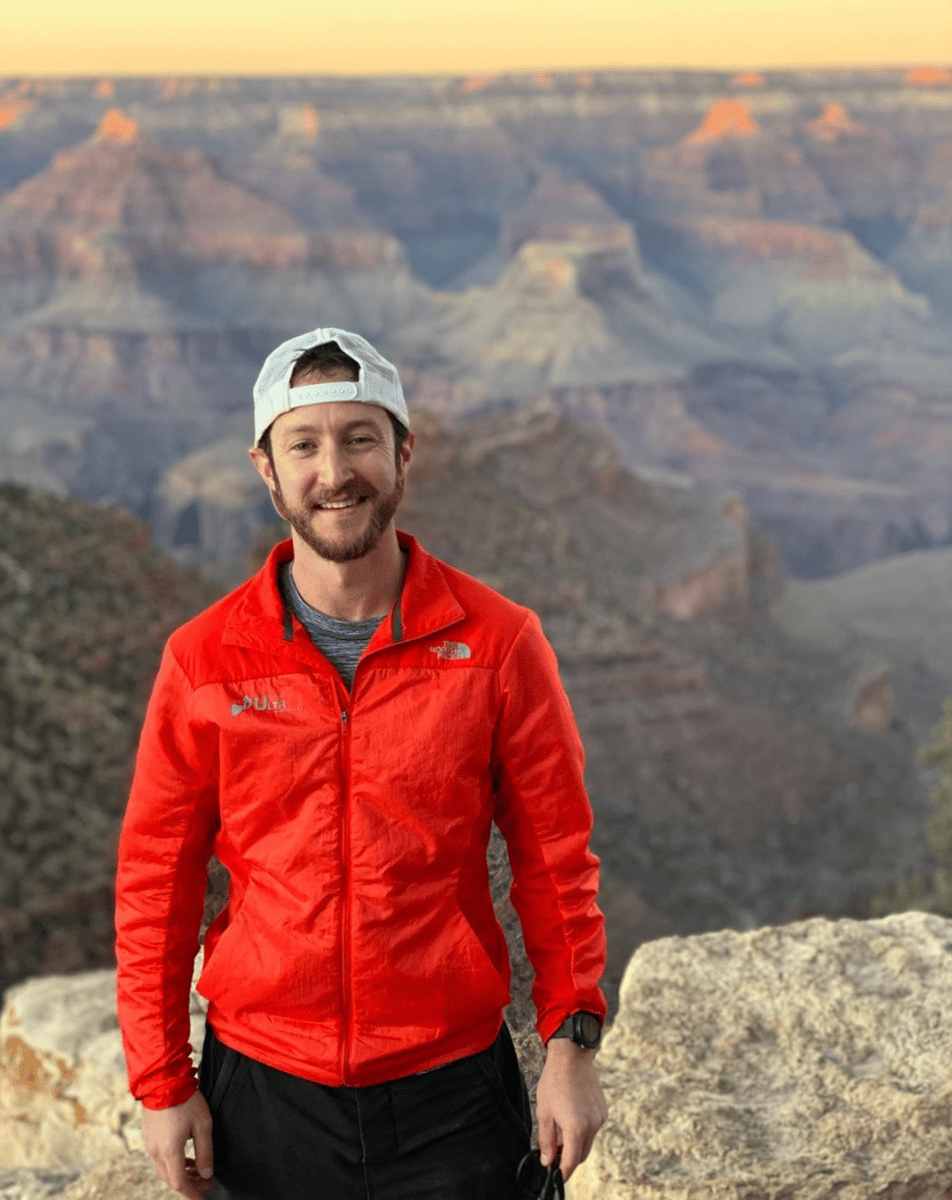
Mike Wardian: The Art of Saying Yes, Racing Everything, and Building a Life Around Adventure

Mike Wardian has completed over 180 marathons and 143 ultra marathons while maintaining a full-time job, raising two sons, and constantly seeking new adventures from rowing across the Atlantic to running the Appalachian Trail. The international ship broker and professional athlete exemplifies how invisible training, strategic time management, and an unshakeable growth mindset enable sustainable excellence in endurance sports.
What does it take to race 40 to 50 times per year, set age-group American records, and compete in everything from Scrabble to the Senior Olympics while showing up fully for family and career? Mike Wardian has spent nearly three decades answering that question through an unwavering willingness to say yes to almost everything.
Listen to the full episode on:
From Lacrosse to Lifelong Runner
Mike never set out to become an ultra runner. He played lacrosse through Michigan State University, with running serving merely as a means to score goals. But when he stopped playing going into his senior year, running became the vehicle for staying fit.
A pivotal Easter weekend at his friend's house in Charlevoix, Michigan changed everything. His friend's mother had just completed the Boston Marathon, and that conversation crystallized a goal. With a photocopied training plan titled Training for Your First Marathon and unwavering discipline, he qualified at the 1996 Marine Corps Marathon with a 3:06. The following year, he ran Boston and broke three hours. He was hooked.
Nearly three decades later, Mike has returned to Boston over 22 times and Marine Corps 18 times. What started as curiosity evolved into a life built around movement and the constant pursuit of what else might be possible.
The Philosophy of Saying Yes
Mike's approach to adventure distills into a simple principle: say yes more than you say no. This philosophy led him to row 10K, run up and down the Exorcist Steps 30 times, and complete a 10K all in one morning for the Fulham Triathlon. It inspired him to compete in 45 events at the Northern Virginia Senior Olympics in three weeks, winning 40 medals across swimming, diving, pickleball, croquet, bowling, and golf.
This isn't recklessness but calculated curiosity. Mike isn't afraid to suck at stuff. He knows that sticking with something almost always leads to improvement, whether learning to row across the Atlantic or attempting to break Ted Corbett's 1970 American record of 5:35 for 50 miles at Tunnel Hill.
The secret isn't just physical capacity but mental elasticity — the willingness to embrace discomfort, adapt plans on the fly, and always have multiple goals so there's always a reason to keep moving forward.
Invisible Training and Time Management
One of Mike's most impactful concepts is invisible training — doing workouts in ways that minimize impact on family and obligations. For years, this meant run-commuting to work. Now working from home, he wakes at 4:45 a.m., a time when nobody needs him. His second workout often comes around lunch, frequently while running dogs for clients.
This approach extends to family life. At his son Grant's frisbee tournament, Mike squeezed in six miles around the field. When traveling with family, he blends FKT attempts into vacations, running routes in the British Virgin Islands in the morning and spending afternoons with his wife Jennifer and sons Pierce and Grant. His kids have visited 33 countries across all seven continents before turning 18, experiencing cultures and developing resilience from watching their dad navigate challenges worldwide.
Invisible training isn't about hiding your passion but integrating it so seamlessly that it enhances rather than disrupts life. Mike proves elite performance and deep family presence aren't mutually exclusive; they just require creativity and intention.
The Evolution of Sponsorship
Mike has been a sponsored athlete since 2002, witnessing the industry transform dramatically. Early on, getting a couple pairs of shoes felt like victory. Now, brands invest deeply, enabling bigger adventures. Mike's partnerships with T-Mobile since 2017, Big Spoon Roasters, and Teva have made projects like seven marathons on seven continents in seven days possible.
The biggest shift is that brands now care about more than podiums. They want to support athletes in what they want to do, whether races, FKTs, or novel challenges. Mike maintains relationships by consistently communicating what he's doing and how sponsors are helping achieve it.
For aspiring sponsored athletes, Mike's advice is straightforward: be persistent, build genuine relationships, and understand that for every yes, there will be a hundred nos. If you love something, reach out to those brands and share your story.
Finding Humanity Through Global Adventures
Mike has raced across every continent, from Ethiopia to Saudi Arabia to Antarctica. Through all his travels, one lesson stands out: people everywhere share the same fundamental needs. They want their families safe, access to clean water, and the ability to care for those they love.
He recalls mornings in Ethiopia watching kids head to school at bus stops that looked identical to Arlington, just in a different part of the world. In Saudi Arabia when he won the first ever trail race there, people drove out in the desert to hand him water because they wanted him to feel welcome. In the Gobi Desert, locals in a truck pulled over with food, concerned his crew might be lost.
These experiences reinforce what running teaches: kindness and respect are universal. Treat people well, and they'll return it. The more you travel and spend time with people in their environments, the more you realize we're far more alike than different.
What You'll Learn
In this episode, Mike shares insights on balancing elite performance with family through invisible training techniques. He discusses mental frameworks allowing him to race 40 to 50 times per year without burnout, including having multiple goals and staying adaptable when plans go wrong. Mike offers practical advice on building sponsorships and reflects on the evolution of his why, from seeking external validation to now pursuing challenges simply because they interest him. Throughout, Mike emphasizes curiosity, the willingness to be a beginner, and the power of saying yes.
Top Takeaways
Invisible training means fitting workouts into times that don't disrupt family, like early mornings or lunch breaks, making elite training compatible with full-time work and parenting.
Having multiple goals ensures you always have a reason to keep moving forward, even when your primary goal becomes unreachable.
Embracing the beginner mindset repeatedly builds resilience and keeps life interesting.
Sponsorships thrive on communication; consistently sharing your journey creates lasting partnerships.
Travel reveals our shared humanity, as people everywhere want the same things: safety, connection, and care for loved ones.
The growth mindset isn't about immediate mastery but trusting that sticking with something leads to improvement over time.
Tune In
Listen to the full conversation with Mike Wardian on:
🎧 Tune in here:
Stay Connected
Instagram: @mikewardian
Website: mikewardian.com

Pssssst. Click above to follow along on Substack 👆
About Jon Levitt and For The Long Run
Jon is a runner, cyclist, and podcast host from Boston, MA, who now lives in Boulder, CO. For The Long Run is aimed at exploring the why behind what keeps runners running long, strong, and motivated.
Follow Jon on Instagram, LinkedIn, and Twitter.
