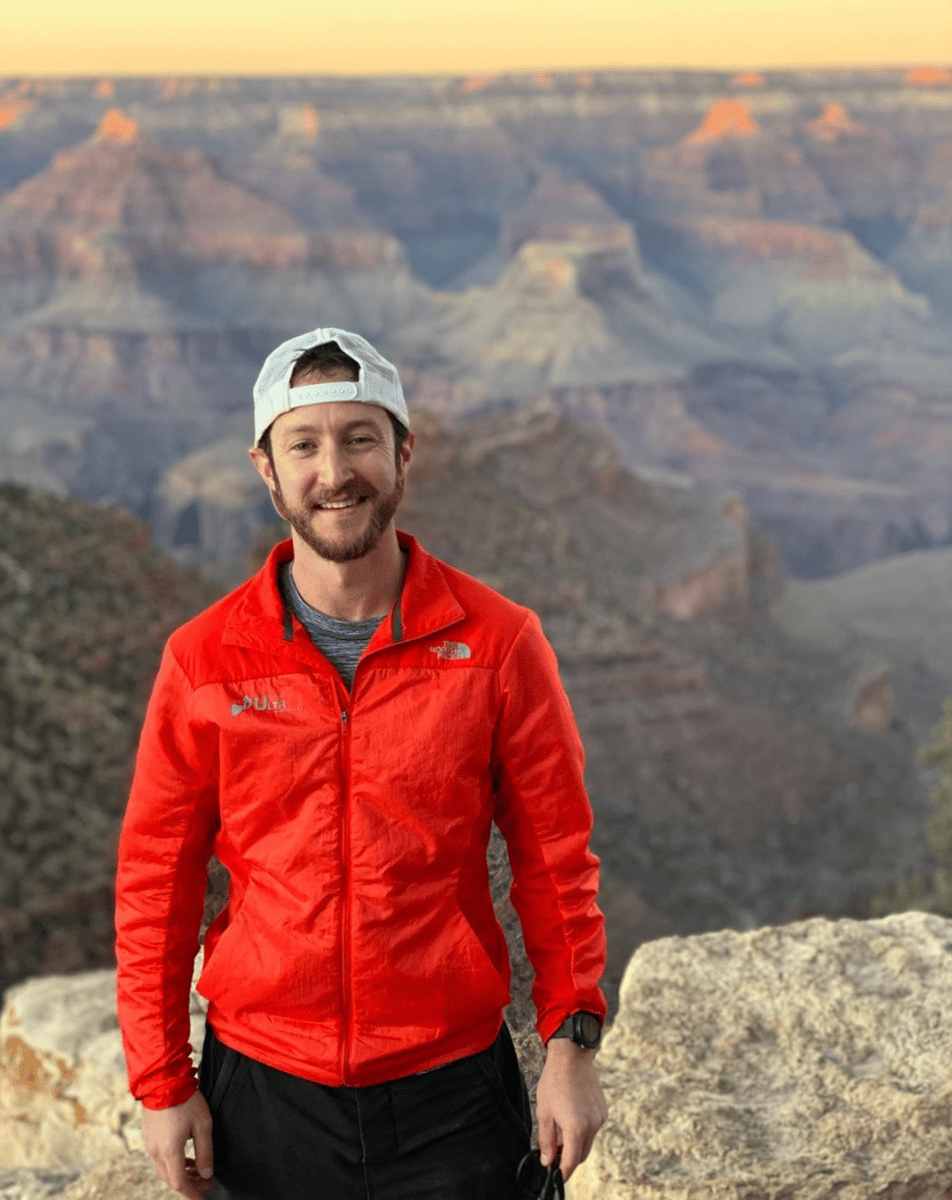
How Jason Wiener Built a Data-Driven Athlete Development Program and Why Podcast Networks Are the New Performance Marketing

Jason Wiener has watched media economics evolve three times in 25 years. In the late '90s, his San Francisco agency ran seven-figure campaigns for PowerBar, trying to get users to come through channels and hopefully buy bars. Google AdSense replaced DoubleClick because Google identified people you would trust. Now podcast networks are doing the same thing, but with outcome-based goals instead of just eyeballs.
He's also building something more precise: a data-driven development program for junior mountain bike athletes that uses digital twin simulation to break down race courses with 30-second accuracy. His daughter placed fourth at nationals in her first year using these methods. The goal is Olympic gold in LA 2028.
🎧 Tune in here:
Listen on Spotify, Apple Podcasts, or other podcast platforms.
From Adventure Sports to Physics Modeling
Wiener's San Francisco agency in the late '90s was the agency of record for PowerBar and represented Specialized bikes. They beat out high-profile agencies because they were local, understood the space, and resonated with the team. The challenge then was the same as podcasting now: blind advertising trying to get users to engage somehow.
After the dot-com bubble burst, Wiener moved in and out of sports and technology. He became a quantified self nerd in the early 2010s, was in the first 10,000 Strava users, and did work consulting with IndyCar teams. In 2015, he hired McLaren for digital twin simulation work with Toyota. That fascination with modeling physics became the foundation for what he's building now.
Breaking Down Courses with 30-Second Accuracy
When his daughter became old enough to race nationally, Wiener had domain expertise and contacts. He figured out how to get her on the podium at national championships. First year there, she came in fourth.
They built a model of the national championships course at Bear Creek and got it accurate to about 30 seconds per 20-25 minute lap. All they needed was access to data from practice through timing and scoring. They could infer rolling resistance and technicalities of the course, then simulate what any rider would do.
They took girls in his daughter's category and found her weaknesses. Twelve weeks prior to nationals, they broke down the course and sent her into the forest with a performance coach. They'd say you need to go up this 9% grade for two minutes and do intervals on it all afternoon. They normalized out challenges of the course by knowing it in advance.
The vision now is to win a gold medal in LA 2028. They're looking for four primary athletes, two men and two women, in consideration for the Olympics. They'll provide support from data and training. They also want to back four dark horses in the U23 ranks, athletes with ability who aren't at elite level yet.
Why Podcast Networks Work
Wiener sees the parallel to internet advertising evolution. Google replaced DoubleClick with AdSense by identifying people you would trust. That's the cornerstone of podcast networks.
What's compelling is the motion changes once you're not trying to pay for eyeballs. You're enabling partners to be wiser about where and why they're placing. When you have similarly focused people, you can A/B test for low cost. If you're talking to 10,000 people instead of Super Bowl audiences, you can turn a small knob and make a big result.
Opening the Aperture Beyond Endemic Brands
The network model opens advertisers toward new ideal customer profiles. Traditional fitness brands have narrow ICPs. But meat delivery companies in IndyCar or financial space companies targeting high net worth active people with liquid funds can now reach audiences they've never accessed.
Once you have inferred trust between advertiser and presenter plus demographic targeting across a network, you enable brands to test messaging with low consequences before scaling.
Weaknesses and Threats
You're beholden to presenters. If they leave, they hamstring your operability. That's where you're no longer master of your destiny.
Distribution through third parties is another challenge. If you're dependent on platforms and the algorithm changes, you're in trouble. Look at YouTube creators who depend on monetization.
Quality control requires bidirectional trust. With 30 hosts choosing their own partners, channel conflict happens when a payday beats no payday. Once alignment breaks down, it's hard to get back. The power of no matters.
Outcome-Based Goals Over Eyeballs
Some brands are more interested in directional knowledge of what happens when they put a dollar in than conversion information. Is this audience even worth investigating? For a meat delivery company spending $25,000, it's a rounding error in their marketing budget. But if it works, they'd be damned not to spend a quarter million to continue testing.
That's the beauty of CPG companies. You do a test for one dollar and it works well, you're not doing a test for two dollars, you're doing a test for 10 or 50 or 100.
It's similar to how marketing companies did focus groups and consumer research in the '60s through '80s. They couldn't quantify what was happening at the shelf, but they could get sentiment and drive budget from that. This is a modern version.
As you learn more about how to quantify the target viewer and do the back office side of quantifying that, you have something far more educated than ever was in the sixties to eighties.
Why Trail Over Road
Wiener sees parallels to gravel's popularity in cycling. Enthusiasts find visceral connection. Running on asphalt feels played out with massive organizations running events. Trail offers connection to self.
There's a movement toward finding flow state. It gets referenced everywhere now but wasn't five or 10 years ago. Brands that help people reach flow have exponentially higher customer lifetime value.
Top Takeaways
Outcome-based goals matter more than eyeballs. Some brands care less about conversion data and more about directional knowledge. A $25,000 test that works becomes a $250,000 expansion. This mirrors '60s-'80s focus groups but with better quantification.
You're beholden to talent when building networks. The vulnerability is you're no longer master of your destiny when presenters drive the ship. If they leave, they hamstring your operability. Quality control depends on bidirectional trust.
Domain expertise is the 20% AI can't solve. AI handles the 80% in the 80/20 rule. You can work backward from revenue goals to top of funnel, but AI doesn't give you a realistic plan you can follow. You still need domain experts as the secret sauce.
Digital twin simulation normalizes course challenges. Building physics models accurate to 30 seconds per lap lets you identify weaknesses 12 weeks out and train specifically for them. His daughter placed fourth at nationals using this approach.
Podcast networks solve what Google AdSense solved algorithmically. Trust is the cornerstone. When you have inferred trust between advertiser and presenter, plus demographic targeting across a network, you enable brands to test messaging with low consequences before scaling to broader campaigns.
Trail running attracts brands seeking flow state affinity. Road racing feels played out with massive organizations. Trail offers visceral experience and connection to self. Brands that associate early with flow-seeking athletes build exponentially higher lifetime customer value.
Stay Connected
🎧 Tune in here:

Pssssst. Click above to follow along on Substack 👆
About Jon Levitt and For The Long Run
Jon is a runner, cyclist, and podcast host from Boston, MA, who now lives in Boulder, CO. For The Long Run is aimed at exploring the why behind what keeps runners running long, strong, and motivated.
Follow Jon on Instagram, LinkedIn, and Twitter.
