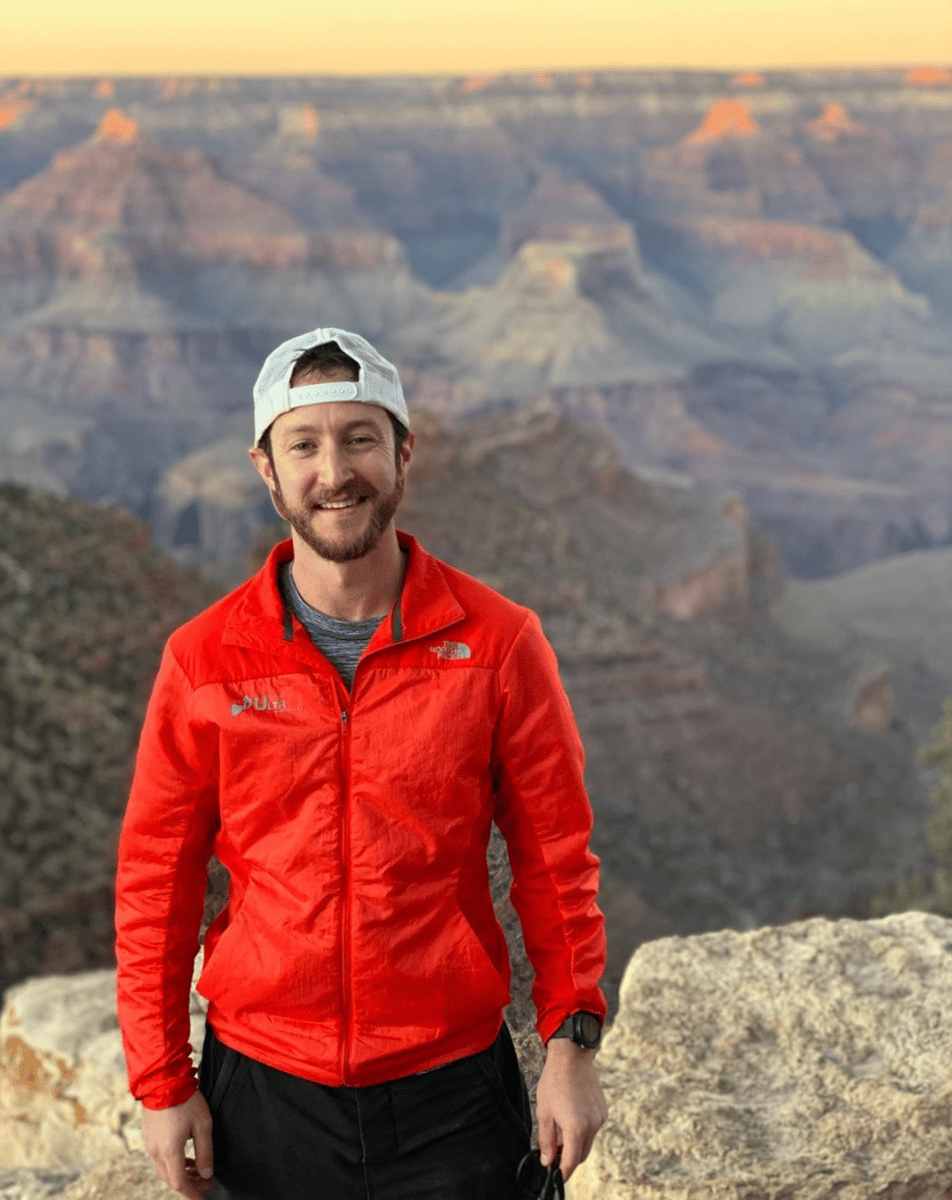
How GOES Pivoted From Consumer App to Enterprise Safety Solution and Raised the Money to Make It Happen

Building a product people love and building a sustainable business are two entirely different challenges. Camilo Barcenas learned this after spending five years creating GOES, a wilderness medicine app that won industry awards and earned glowing testimonials but struggled to convert enthusiasm into paying customers at scale.
The pivot from consumer app to enterprise safety solution offers frank insights into fundraising strategy, the role of marketing versus product quality, and why mission-driven founders still need to find customers with urgent, expensive problems to solve.
🎧 Tune in here:
Listen on Spotify, Apple Podcasts, or other podcast platforms.
From Hospitals to the Great Outdoors
Camilo Barcenas spent two decades in healthcare technology, digitizing x-rays across hospitals, deploying Kaiser Permanente's electronic medical record system, and implementing technology at Stanford's new $2 billion hospital.
The more he improved hospital efficiency, the more he saw fundamental system limitations. He began thinking the future meant developing tools so people could take care of themselves, not just giving doctors more technology.
Serendipity struck when he mentioned this idea to his neighbor, who had started Stanford's wilderness medicine fellowship program. A week later, that neighbor saved snake bite victim Bill, whose grateful donation to Stanford became GOES's seed funding.
Global research revealed two critical gaps: no comprehensive pre-trip risk assessment beyond weather, and no completely offline medical protocols for emergencies without cell service.
The Product Everyone Loved But Didn't Buy
GOES launched with enviable validation. Sixty Grand Canyon search and rescue rangers tested the MVP during COVID summer 2020. They won electronic innovation of the year. Users emailed saying the app saved their lives. Partnerships with Columbia Sportswear and Outside Magazine offered discounts at $1.99 monthly.
But adoption stayed slow. Camilo admits he underestimated how critical marketing was and how many touch points people need before downloading. Between 2023 and 2024, customer acquisition costs skyrocketed from algorithm changes, iOS privacy updates, and advertising saturation. He faced a choice: raise substantial capital for aggressive marketing or find different customers with more urgent pain.
The Hurricane That Changed Everything
After Hurricane Helene devastated North Carolina, Camilo flew out to help. While interviewing high voltage contractors restoring power, he heard about workers from Virginia unprepared for Southern heat. One 300-pound worker passed out two hours into a shift. It took two colleagues to get him to a truck, knocking out the entire crew for the day because they didn't see symptoms coming.
That conversation crystallized the pivot. Outdoor workers face 20x higher injury risk. Four states have heat legislation. Workers' comp costs create massive financial impacts. Industrial safety managers see GOES as essential compliance technology with measurable ROI.
B2B economics transform everything. Instead of acquiring consumers at $20-50 each, one enterprise deal opens 10,000 or 100,000 workers. GOES now partners with distribution channels serving thousands of installations.
AI Built on Human Expertise
While startups rushed to add AI, GOES spent four years building medical protocols peer-reviewed by wilderness medicine physicians. That foundation proved essential when they trained an Anthropic model on their proprietary content this year, creating GOES Activity Intelligence for personalized risk assessments.
The curated knowledge base from 27 medical advisors makes outputs trustworthy in ways generic chatbots can't match. Camilo notes you can't trust ChatGPT to know if risks are real for specific locations. The competitive advantage isn't AI technology but years of human expertise guiding what AI can say.
Angels, VCs, and Aligned Capital
Camilo originally planned to fund GOES through angels offering flexible, mission-aligned capital. His previous VC-backed startup made him vow never to take venture funding again.
When Silicon Valley Bank imploded in 2023, KB Partners offered a term sheet. His angels advised him to take it.
His philosophy evolved: match capital to your stage. Angels offer mission alignment and patience. VCs offer networks and quantum leap opportunities. Going to institutional investors means mission becomes secondary, but the benefits are networks and brilliant people opening doors.
The Long Game
Five years in, GOES is releasing eight-day heat illness risk forecasting, the world's most advanced predictive capability for outdoor safety. They're finalizing partnerships with multi-billion dollar distribution channels and pursuing innovation grants to deploy in national parks.
The persistence came from family support. Camilo emphasizes you need a partner in life that supports your dreams and wants you to succeed. He also credits team conviction, noting that as much as he's doing, his team is behind him and alongside him, and the power of what they've made gives him the conviction to know they have transformative technology.
For outdoor recreationists, GOES remains available as a consumer app. But the bigger story is about letting the market guide you to where your product creates the most value, even when that requires pivoting from your original vision.
Great products don't market themselves. Mission-driven founders still need paying customers. And sometimes the path from idea to impact takes longer and goes in unexpected directions, but with the right team, resilience, and willingness to adapt, you might just build something that matters.
Top Takeaways
Healthcare technology veterans can bring transformative expertise to adjacent industries when they identify problems no one else is solving. Camilo's 20 years developing technology for hospitals positioned him uniquely to create offline medical protocols.
User love doesn't equal market traction. GOES won electronic innovation of the year from the outdoor industry and received testimonials from users saying it saved their lives, but consumer adoption remained slow without significant marketing investment.
The cost of customer acquisition has skyrocketed. What worked for consumer apps in 2019 required exponentially more marketing spend by 2024, forcing a strategic decision between raising substantial capital or finding a different market.
Sometimes your product is a vitamin for one market and a painkiller for another. Outdoor recreationists saw GOES as a nice-to-have enhancement, while industrial safety managers saw it as essential compliance technology with clear ROI.
Distribution partnerships change the economics entirely. Instead of acquiring individual consumers at high cost, one enterprise deal can open access to 10,000 or 100,000 workers at once.
Curated knowledge bases unlock AI's real potential. GOES spent four years building peer-reviewed medical content before unleashing AI on that foundation, creating trustworthy outputs that generic chatbots can't match.
Angels and VCs serve different purposes at different stages. Angels offer flexibility and mission alignment early on, while VCs provide networks and quantum leap opportunities when you need to scale rapidly.
Stay Connected
Connect with Camilo on LinkedIn or visit goeshealth.com to learn more about the platform.
🎧 Tune in here:

Pssssst. Click above to follow along on Substack 👆
About Jon Levitt and For The Long Run
Jon is a runner, cyclist, and podcast host from Boston, MA, who now lives in Boulder, CO. For The Long Run is aimed at exploring the why behind what keeps runners running long, strong, and motivated.
Follow Jon on Instagram, LinkedIn, and Twitter.
