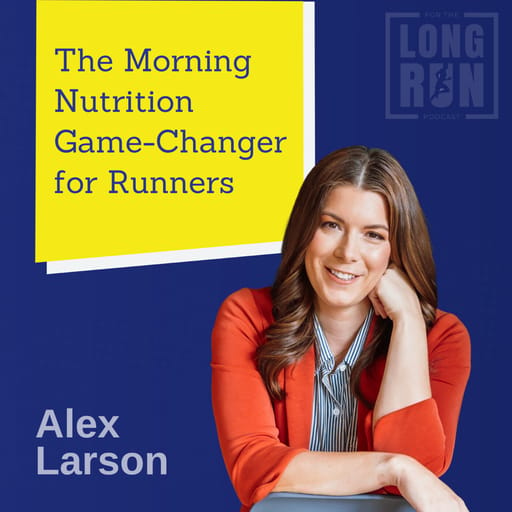
Transcript 0:00 [instrumental music] That's one of the most interesting things that I have found just anecdotally with the athletes that we work with, where they're like, "Oh, my gosh, my sleep quality is, like, so much better just in the past two weeks now that I'm eating better earlier on in the day." 0:19 And I see that over and over and over. And again, that's just gonna benefit them body composition-wise, performance-wise, health, mental health-wise, mood-wise. Like, it's just a win-win situation all the way around. 0:34 Welcome to For the Long Run. We explore the why behind what keeps runners running long, strong, and motivated, and how they've been able to achieve sustainable excellence. 0:42 I'm your host, Jonathan Levitt, and we're so glad you're here. [instrumental music] Okay, I'm really excited about this partnership. 0:51 I'm working with Vacation Races this year, and if you've been dreaming about running Zion or Bryce Canyon, this is your moment. 0:57 Vacation Races runs these premium, incredibly well-organized events just outside national parks. Zion Ultras is coming up on April 11th. Perfect if you're training now or looking for a last-minute spring goal. 1:08 Then Bryce Canyon Ultras is September 19th. And it's not just a race. It's a full adventure weekend, trail-driven courses through wild natural landscapes, strong runner support. 1:17 And they use Laurel Timing Technology, which is another company I'm involved with via Brooksy and my friend Phil, who's their CEO, so you know that the race day experience is dialed in for racers and spectators. 1:28 I love these places, the red rocks, the trails, the sense of running somewhere truly special. And Vacation Races gets it. They're not trying to be a road race. 1:36 They're trying to be about running where you play, chasing the extraordinary. Use code FTLR for 15% off their half marathons, ultras, and trail fests. That's good through the end of 2026. 1:47 Head to vacationraces.com, and let's run some wild places together. [instrumental music] A lot of runners see fueling as some secret, mysterious superpower. Either you magically get it right or you don't. 2:00 What I love about Precision Fuel and Hydration is how they cut through all that mystique. They take sports nutrition back to basics with three simple dials you can adjust: carbs, fluid, and sodium. 2:10 Learn how to tweak each one on its own, and suddenly most mid-run struggles start to make a lot more sense. I've relied on Precision for every run over 75 minutes for years now. 2:20 The mix of regular and caffeinated gels have carried me through plenty of smooth, well-fueled miles. When I'm heading into the mountains or racing ultras, I grab their chews and bars. 2:28 Ran ultras on them last summer and felt strong the whole way through. The real light bulb moment for me was understanding just how individual hydration is. 2:36 Some of us lose way more salt than others, and I'm firmly in that camp. Going only by thirst doesn't always cut it. 2:43 Precision's free online Fuel and Hydration Planner gives you a data-driven starting point for your body, not somebody else's highlight reel. If you've got a big goal on the calendar this year, try the planner. 2:53 It only takes a few minutes, and it's surprisingly revealing. Head to precisionfuelandhydration.com/planner, and if you end up testing their products, use code LongRun26 for 15% off your first order. 3:05 [instrumental music] And welcome back. We have Alex Larson joining from northern Minnesota. Mm-hmm. 3:14 Alex, hopefully it's warm enough for you today to join the- We've had a couple days of almost 40, and that feels like shorts weather to us 'cause we had a really long stretch of negative 15 when I was dropping the kids off for school [chuckles] in the morning. 3:31 Um, and I know the East Coast kind of had a, a stretch of really cold weather, too, and I, I feel their pain. 3:36 But yeah, it's b- we have a February thaw every year, which is always really nice, but then it kind of goes back to another, like, six, eight weeks of winter, and it's pretty torturous these [chuckles] last few months of winter. 3:48 Here in Boulder, we are having a second summer. It's very bizarre. We could use some snow. It was 71 degrees on Monday. Not normal, so. Yeah. Yeah, I've seen the West Coast did not get a lot of snow this year. 4:00 The skiing was not optimal. Not ideal. Boston got more snow than all the resorts in Colorado so far this winter, which is- So bizarre... which is pretty crazy. 4:08 We lead off with a tough question that you've been training your whole life to be prepared to answer, and that question is, who is Alex? Hmm. Well, that answer changes, I feel like, day to day. [chuckles] It should. 4:20 I am, at heart, just this, like, dietician that wants to create a world of well-fueled athletes. I think for me, endurance sports is such a important part of my life 'cause I really love, like, feeling fit and strong. 4:36 I love challenging myself, but I'm also a mom of three young kids, which is a, a huge part, but I don't want, like, my whole world to be def-defined by a motherhood, and I want to show up for my kids as someone that's really strong and healthy as well. 4:52 And I'm a wife. Sometimes I feel like I maybe need to prioritize that a little bit more. So yeah, like, who is Alex? What a hard question, Jonathan. Thank you for leading that off. Oh, my gosh. 5:02 These days, you know, being in Minnesota, it's definitely, like, a stressful time, and so just kind of navigating the mental gymnastics that are going on. I don't know. 5:12 It's kind of a tough, tough question to answer right now 'cause I, I sometimes am like, "What's going on in the world, and how do I fit in to all of this?" Yeah, I think we should start there. 5:23 Anyone that's listened to me for years knows that it's important to care about things besides running. Mm-hmm. And what's going on in Minneapolis and in other places across the country is not okay. 5:36 Arresting humans, citizens or not, um, and treating them the way that it appears that they're being treated, and then being told that that's not what happened is wild. 5:47 Uh, so this is a running podcast, but as I shared on the run that I did in Boulder, that Kalen Alexander organized, where we outlined a F ice- Mm.... 5:59 in, in our run, I captioned that as running is political because there's so much that goes into what and who feels safe out there, whether you feel safe running down the street at night, whether you feel safe in any neighborhood, in any place. 6:13 Like-That is all political, that is all influenced by choices that people other than ourselves are making that we can hopefully have some sort of influence on. But I find it important to, to talk about these things. 6:25 I'm sure that I will get comments that say, "Stick to running." Yeah Uh, unfollowing, blah, blah, blah. So to head that off, if, if you love running and other things, this is the place for you. 6:36 But I'm curious, like you have a platform. Mm-hmm. You have a bunch of people that follow you. You have your own business. How are you navigating this challenging time, right? 6:46 Like, I'm posting a bunch of running stuff constantly interjected with like there's a lot going on in the world, and it's like you get whiplash sometimes between like, "Oh, I had a great workout today," to like US citizens are being shot dead in broad daylight. 7:03 Like, we're gonna talk about nutrition and running and stuff, but- Yeah, we'll, we'll get there. Well, and here- We'll get there... here's where- or let me share a story. 7:09 So I've been like moderately vocal on social channels. 7:13 I've been trying to find a balance between like making sure that people are still feeling inspired by fueling themselves while navigating the stress and heaviness that is in the world. 7:23 And I did a Q&A probably a week ago where I just said, you know, "Ask me anything. How can I help?" And someone asked the question of, "I have been really struggling with motivation to train this winter. 7:36 Like, any magic advice?" And I gave an answer, and I, you know, talked about how sometimes you can't rely on motivation for training or eating well. 7:46 You really need to build systems within your life so that when you have ebbs and flows in motivation, you're still staying disciplined and on top of your training. And I kept it very supportive and positive. 7:58 And this person, you know, messaged me afterwards saying, "Thanks so much for answering my question. I'm a first-generation Asian American, and this is a really, really hard time for me." 8:09 And, like, my heart just broke for them. 8:12 And talking with other people who, um, have thanked me for speaking up, you know, they talk about how their husband or their parents are, you know, uh, you know, here legally, but not US citizens, and how terrified they are for them. 8:27 And just putting myself in that position would just be so overwhelming. 8:32 And so my heart really goes out to those people, and my heart goes out to my friends and family that are in the Twin Cities, and everyone that's down there supporting one another. I mean, I'm so proud of this state. 8:45 I've always, always said, like, I don't think people are aware of how incredible Minnesota is. 8:51 Like, there- it's just this little hidden secret, and now I'm going [laughs] I really wish this wasn't the way that everyone learned about how great this state was. 8:59 But the silver lining is everyone is just, like, when this is all over, we want to come visit Minnesota and see, like, this beautiful state. 9:08 It's just truly, I, I feel so blessed to live here, even though we have really [laughs] brutal winters. It's, uh, there's a really great running community. We've got wonderful marathons. 9:18 I live near Duluth, which is home to Grandma's Marathon, very popular marathon, the Twin Cities Marathon in October. 9:25 So hopefully, in the long run, we can really help bring this state back to the vitality and, you know, heart that it truly is. I've had the pleasure of getting to know Kara Goucher quite well. Mm. 9:38 And I run with her, like, once a week and hearing her talk about her pride for her home state. Yeah, she's from Duluth as well. Yeah. And I think she's got a cabin up that way. Mm-hmm. Yep. Um, still. 9:49 Yeah, it's just a different, it's a different type of pride. And to see the way that she's spoken out and has been really vocal about, about it, and many others, many other athletes. 10:00 Fiona Oakeefe has been fantastic in her writing. Mm-hmm. Saw Dakota Lindworm talk about it. A lot of runners that they're paid to run, but, but they're humans, right? 10:10 And so that's, I think that's the, the piece that, that really matters. To your point on the motivation ebbing and flowing and setting up structures and systems, that's a piece that, that I find to be fascinating. 10:20 And I've personally dealt with, you know, waxing and waning motivation over the years, and for me, it's been setting up that similar framework of like, no, this is not a choice. 10:30 Like, you're gonna go out there and, and the motivation follows action. 10:34 Like, today, I did a workout, and I felt like junk in the first two miles, and I did some strides in the third warm-up mile, and then, like, [laughs] it was, like, one of the most excellent workouts I've had in months. 10:46 And it's like, and I wasn't particularly motivated to get out today, but, you know, 80 minutes later, I was like, "This was a wonderful, a wonderful session." 10:56 And it's only, it only existed because I gave myself a chance. Mm-hmm. 11:00 Now pair that, pair that with, like, existential what the hell is going on in the world kind of a thing, and you could say, "Oh, running is totally meaningless." 11:07 But I think running becomes even more important in times like this when everything else is so up in the air or, or just like, you know, doom scrolling constantly. Yeah. 11:18 I th- I mean, I always find with workouts where if I don't want to do them, I'm like, my mantra is, "You'll be so glad you did this once you're done." 11:25 You know, it's like you, oh, and, and every single time I finish, I'm like, "Oh, I'm so glad I did that." So it's one of those weird, like, mental things. 11:32 And yeah, sometimes just starting is, like, 95% [laughs] of the battle, and then once you're, you're in it, you're like, "Well, yeah, I might as well finish it now," and, a- and you never regret it. 11:41 So yeah, I find with, like, motivation, it can be really tough because there's so many, like, external factors that can play into our, our mental health and our motivation. 11:50 And with nutrition especially, like, if you are under-fueled, your workouts are gonna suffer a lot more, and they're gonna feel harder, and that's always gonna make it even more challenging to want to continue to train. 12:02 And so that's a huge part of, like, my platform is, like, let's get you well-fueled so that you can actually enjoy your training, that you can actually enjoy your, your races because this is, we're doing this for fun. 12:13 You know what I mean? 12:13 Like, yes, there's athletes that, that do this and get paid, but for the majority of us, like, this is something that we do as a hobby, and it's going to be a lot better if you're [laughs]Actually having a good time. 12:26 Definitely. How did you find endurance sport? You've done a bunch of triathlons. You've done a bunch of road racing. How did you find it, or how did it find you? 12:34 It all started with a horseback riding accident in college where I broke my foot, and I was told by the orthopedic surgeon, who was kind of an A-hole, to be perfectly honest. He told me I was never gonna run ever again. 12:46 He was very wrong. Eh, I s- was, I didn't run for probably a couple years, but during that time I still wanted to be active, and I started swimming. 12:56 I, uh, got pretty good at swimming laps at the college pool, and I had, like, a good group of, like, swimming friends that we would just do it just kind of recreationally. 13:05 And then when I graduated college, I still wanted to stay active, but I felt like I needed some sort of external factor to keep myself, like, motivated- Yeah... working for something. 13:14 And so I found this local triathlon [chuckles] and I signed up for it. I trained, and I doggy paddled the entire swim. Like, the lake swim of a triathlon is just a brutal experience. Incredible. 13:26 And so it was a, like a three-quarters of a mile that I swam, and then I rode this six hundred dollar hybrid bike, which at the time my boyfriend, now husband, was like, "You spent how much money on a bike?" 13:36 And joke's on him, like, the bikes now I have are like [chuckles] t- 10 times that much. And then I, like, jogged the run. Like, I've never been, like, the strongest runner, but I got through the run just fine and. 13:44 But the energy and warmth of that in, like, triathlon environment totally got me hooked, and that was twen- 2009, and then by 2014 I was, uh, training for Ironman Wisconsin, and, uh, doing that race. 14:01 And it just was, it was a really interesting time because I was obviously building my career, and, and sports nutrition was never on my radar. 14:10 But when I crossed the finish line of that Ironman, I was like, "Oh, I feel like I need to help my people." 14:15 I, like, I really saw a lot of people struggle with cramping or bonking or just fat- just overall fatigue and wanting to be done, throwing up. 14:24 You know, that's kind of a war zone, you know, that half, second half of the marathon of an Ironman. 14:29 And I remember thinking, like, "Oh, if I didn't know what I was doing with my nutrition, I don't think I would've got across the finish line." And so that's when it kinda started the whole thing. 14:36 And so by 2018, I started my business. I went full time in 2021, and, and now I just get to work with the best community. 14:47 It's just the most warm, supportive, loving community that we're all doing this because we want to get stronger and be faster and do challenging, hard things. 14:59 And nutrition is a huge part of that, but there's so much noise, right? There's so much noise about how to eat well, how to fuel well. 15:07 And so my goal is to simplify things and make things really tangible so it's not just about having more information. 15:12 It's about more implementation, more, like, putting it into practice and having it work for you long term. Definitely. Yeah. 15:18 There, everybody has a podcast these days, and most people aren't credentialed, and yet they still talk about things as if they were. So that's why I love having dieticians on- I like, I like to stay in my lane. Yeah. 15:29 So I, I do have a podcast, but it's just on endurance nutrition, and I, I stick to just that. I have two podcasts, and I stray out of my lane constantly. [laughs] Uh, as one does. Everyone has one, so I need two. 15:40 Okay, so we're gonna dive into some tactical, tangible guidance. As we were talking about beforehand, these conversations are often the most popular because they're functionally useful. 15:49 We're gonna talk to you things like day-to-day fueling, how to optimize daily nutrition so that you recover better, train consistently, and actually see performance gains. 15:58 We're gonna talk supplements, what's worth it and what's wasting your money. I have many questions about creatine- [laughs]... ketones, and collagen. GLP-1s in endurance sport. This is a hot topic these days. 16:10 And then AI and nutrition for endurance athletes. Um- That's a lot of topics. It's a lot of topics. We'll see, we'll see what we get through. But let's start with daily nutrition. 16:21 Many athletes are training hard but not adapting. Why is that happening? Is it underfueling? Is it not hitting the right macros and micronutrients? 16:28 What are the most common mistakes that people are making if they're not seeing the gains that they're, that they're looking for from a fitness and aerobic standpoint? Yeah. 16:37 I think so many people hone in on, like, training, training hard, getting a lot, as many hours as possible in, as many miles in, and I would challenge that a little bit of, like, let's plan out your training, but also let's plan out how you are going to optimize your fueling around that training to get the most performance out of it. 16:56 And then, because with endurance athletes, the frequency and duration that you're training, we really need to hone in on that recovery nutrition. 17:04 And recovery is not just, like, a protein shake after your workout and, and that's it. 17:10 It is pretty much every other meal and snack that you're eating the rest of the day because recovery for endurance athletes takes hours, if not days, to happen, and that's where people kinda underestimate how much energy it truly takes to recover from a workout. 17:26 Even if it was, like, let's say, an easy effort longer run, like, that's still really taxing on the body. It's taxing on your joints, your muscles, your ligaments, your tendons. 17:35 It's burning lots of energy not only to do the workout, but then to recover from it. So I think a lot of people underestimate that. For me, when 17:44 I am looking at an athlete's nutrition, we'll look at two different buckets of work. One, are we fueling around the workouts well? 17:50 But then two, how can we optimize recovery in those meals and snacks to set you up to recover as efficiently and, and effectively as possible and get you ready for the next workout? 18:01 And that's where we see the biggest fitness gains, where we see athletes continuing to get stronger and stronger because we are building that recovery nutrition, and we're building it consistently, so they have a routine. 18:13 It's kind of a structured system with some flexibility in there for you to still obviously live your life and enjoy, enjoy what you're eating. 18:21 But that day-to-day routine is really where people can just flourish as a, as a runner. The psych volume of food-Food and, and be- and avoiding being perfect or, or great at the expense of being good. 18:36 I used to be incredibly meticulous with only eating clean and eating whole foods only, and I'm 35 now, and I'm fitter than I've been in years, and I eat pizza, I eat burgers, I eat, you know, kinda burritos, whatever I want kind of a thing. 18:53 My blood work is pretty much the same as [laughs] it's- [laughs]... been the last 10 years, yet I'm more durable than, than ever before. Mm. 18:59 And I've been running for 12 years now, and I feel like I recover way faster today as a 35-year-old than I did as a, as a 25-year-old. 19:07 What is the balance of being flexible and eating, not whatever you want, but, like, eating fun foods and things like that versus, like, really dialing it in, eating whole grains and whole foods and such, you know, exclusively? 19:20 Yeah. I see so many athletes that come into our one-on-one program that are like, "I eat, like, a very clean diet, and so I'm, but I'm really struggling with, like, energy levels and, and in my workouts." 19:32 And I'm like, "Okay, yeah, that's probably 'cause you're under-fueled." 'Cause when [laughs] y- we just have heightened nutritional needs. We have higher protein needs. 19:39 We have higher calorie needs as athletes, and when you're eating, like, 100%, like, whole foods-based, very nutrient rich, like, so great, but it's not, like, very calorically rich. 19:52 And so a lot of times we see them struggling long-term with that type of style of diet. 19:57 So I like to kind of find myself right in the middle of that balance of yes, let's of course include those whole foods, those fruits, those vegetables, those whole grains, beans, legumes, lean proteins. 20:10 Wonderful to include those in your day-to-day. But we also need to include in some more of those, like, processed higher energy foods to really support your higher needs. 20:21 A great example is I had a runner that worked with us for about four months, and he was like, "I do all this training, and I feel like my body's not really reflecting all of the training I'm doing. 20:31 I'd really love to lose just about, like, 8, 10 pounds, just to get a little bit leaner, but I obviously don't want my running to be impacted." And so in those four months, he lost that 10 pounds. 20:40 I think he ended up losing eventually more like 15, 20, so he got qui- like, he had, like, a six-pack. Like, he was, and r- he was running really great. 20:48 But he's like, "I've never eaten more Pop-Tarts in my life, and I'm loving it." [laughs] And [laughs] not that he was eating Pop-Tarts all day long, but he was really... 20:56 Like, before workouts, he'd have, like, a packet of Pop-Tarts before he'd do his run. 21:00 We love Pop-Tarts for, like, a pre-workout fuel 'cause they're really easy to, like, travel with when you're, like, heading to your group run. They're delicious. They've got a good amount of carbs. 21:08 They've got a little bit of protein, little bit of fat in them, low fiber. 21:12 So, like, the [laughs] that was just the funny part is, like, it, you know, he wrote us this testimonial, and he's like, "And I've never eaten more Pop-Tarts in my whole life." 21:19 And so it's like there has to be a balance, so a lot of times those more fun foods, like Rice Krispie bars or Nerds gummy clusters right now are, like, super popular. 21:28 Let's use those, that energy for good and around your workout to really provide that easy-to-digest energy. 21:37 And then elsewhere in your day, we can hone in on fruits and vegetables and all those other more whole-based foods to support your health and nutritional needs there. 21:47 [instrumental music] This episode is brought to you by Tifosi Optics. 21:52 I want to take a second before I get into this because Tifosi is kicking off their third year as a partner on For The Long Run, and that means something to me. 21:59 Partnerships like this don't happen without an audience that actually engages, so if you've ever clicked onto their site and tried a pair of sunglasses, thank you. That's what keeps great brands coming back. 22:09 And Tifosi has invested a lot in this show. In return, what I've seen is that the people listening genuinely love the product. 22:15 I've been able to hand pairs out at local events, share them with podcast guests when we're together in person, and the reaction is always the same. People put them on, and they love them immediately. 22:24 I wear Tifosi on every run, in the sun, when it's cloudy, when it's snowing. Whatever the conditions, there's a lens meant for that, and I use their prescription option, too. 22:32 Getting prescription sports eyewear that actually performs has always been kind of a hassle, but Tifosi made the process surprisingly simple. 22:39 You submit your prescription online, they handle everything, and you end up with sunglasses built for running that you can actually see out of. Fast turnaround, no headaches, and they look great. 22:46 If you've been curious, now is a great time to try them. Head to tifosoptics.com and use code FTLR2026 for 20% off. That's tifosoptics.com with code FTLR2026 to tell them I sent you. 23:00 [instrumental music] This episode is sponsored by Boulderthon, and if you're mapping out your 2026 road race season, this one deserves an early spot on the calendar. Boulderthon is more than a single race. 23:10 With a 5K, 10K, half, and full marathon, and kids races, it's an ideal weekend whether you're hunting a PR or toeing the start line for the very first time. Use code FTLR2026 to take $20 off your half or full marathon. 23:24 And the fun doesn't stop at the finish line. The whole weekend is a big celebration of running, Colorado, and truly great humans. You won't want to miss it. 23:32 Visit boulderthon.org to register and use code FTLR2026 for $20 off. Huge thanks to Boulderthon for putting together such a fantastic community event. 23:41 [instrumental music] This episode is brought to you by Amazfit, the GPS watch that's seriously challenging the heavy hitters. 23:50 I've been logging miles with the T-Rex 3, and it's ready for everything you throw at it, all-day trail adventures, brutal climbs, big training blocks, and those times you suddenly realize your charger is somewhere else. 24:01 You get the performance and precision of premium GPS watches minus the premium price. 24:06 If you're after a watch that can hang, deliver great metrics, and still leaves cash for race fees, burrito stops, and fresh shoes, head to amazfit.com or tap the link in the show notes. 24:16 You'll see the tough-as-nails T-Rex 3, the streamlined Balance 2, and the Helio strap for the advanced heart rate and recovery insights. 24:23 I even put it head-to-head with a lab-level VO2 max test, and it absolutely kept pace. Use code FTLR2026 for 10% off. 24:30 Big thanks to Amazfit for backing runners, creators, and the community that keeps us rolling.Can you talk about the influence on sleep? So we- Mm-hmm... 24:41 all hear constantly about the benefit of sleep, and it's the most important thing to do if you wanna be a good athlete kind of a thing. I've noticed that as I 24:52 restrict what I eat less, and not that I was restricting before, but kinda open up the aperture on, like, what is available, [scoffs] I, I lay down and I'm asleep in two minutes, and I, I sleep through the night and it- I wake up, I feel awesome. 25:05 Mm-hmm. Now, w- why? Why is that the case? I find that when athletes are under-fueled, they, they're putting their body in, like, a whole nother level of stress and inflammation. 25:16 The training that we're doing, that's stress on the body. People are like, "Oh, I need to train more." I'm like, [chuckles] "You need to fuel more because your body is in a really stressed state." 25:24 Especially because oftentimes a lot of runners train in the morning, right? 25:28 And then they'll have this stingy breakfast, this stingy lunch, and then they get starving in the afternoon, evening, and they kind of just gorge from, like, mid-afternoon until bedtime. 25:38 And so they're getting the majority of their calories in the afternoon, evening. 25:41 So not only is their body, like, trying to catch up on nutrition and, like, tackle all of the, all of that food in the evenings, then they're having to try and digest and absorb all of that and put in all that work while they're trying to rest. 25:55 So the thing that I find that helps sleep is, one, making sure that we're aligning their nutritional needs, um, with what they're taking in so that they're not so under-fueled, but also having front-loading nutrition earlier on in the day so that your body can do all of that recovery and reducing that stress and inflammation then, so by the time you get to the evening, they're not gorging themselves and going to bed with a full stomach. 26:18 But they are, like, in this really nice non-stressed state physically that they can sleep so much better. 26:25 That's one of the most interesting things that I have found just anecdotally with the athletes that we work with, where they're like, "Oh my gosh, my sleep quality is, like, so much better just in the past two weeks now that I'm eating better earlier on in the day." 26:39 And I see that over and over and over. And again, that's just gonna benefit them body composition-wise, performance-wise, health, mental health-wise, mood-wise. Like, it's just a win-win situation all the way around. 26:52 Totally. David and Megan Rose have talked about the within-day energy deficit challenge on their podcast quite a lot. 26:58 And so even if you're eating enough on a daily basis, if, as you were saying, you're not front-loading it or, or getting enough in the morning before noon, that adds up over time and it can have, for men, influence on testosterone and for women influence on hormones as well because of that cortisol response to- Mm-hmm... 27:16 not having enough. Yeah. I sometimes will tell my athletes, you know, we'll, we'll set, like, some nutrient targets for them. 27:22 And I was like, "Ideally, you're, like, 75, 80% of the way with your targets by the time you get to dinner so that you can just have this reasonably sized dinner, and then you don't even feel hungry in the evening or need a bedtime snack. 27:34 You can just, like, rest, relax, and go to bed, and then you wake up in the morning hungry and ready to start over." Totally. Let's talk about in-run fueling. Mm-hmm. 27:44 A couple of years ago as I was getting back to training for ultras, I made a little change, which was 27:51 taking in more carbs or, or going more than, like, 20, 30 grams an hour, which is what I was probably doing at the time. 27:58 And I had a conversation with my friend Stevie, who's a dietician, after one particular long run where I ran for two and a half hours and I, I took in 85 grams an hour. 28:06 And I didn't feel like a zombie afterwards, and I wasn't attached to my couch for the- [chuckles]... remainder of the day, which was wonderful. And I was like, "Why? Why did that happen?" 28:15 She's like, "Duh, 'cause you're giving yourself what you need." 28:17 And so since then, I've basically on any run, like today I ran a 78-minute workout, and I had 30 grams of Precision Carb Mix in a bottle that I drank and a 30-gram gel that I had, like, 40 minutes into the- Mm-hmm... 28:34 into the run. So like, 60 grams of carbs in a 78-minute session. But so that's not, that's not, you know, 80 an hour, but- Mm-hmm... it's something. 28:44 When should athletes start thinking about fueling in the run, and what type of runs should have fuel on board? So here's the general guidelines, and these are guidelines, they're not rules, so keep that in mind. 28:55 Like, when you look at, like, my-- I've got a stack of, like, nutrition text- like, sports nutrition textbooks behi- behind me. 29:00 And so what they'll say is, like, any workout that's, like, zero to, like, 60, 75-ish minutes, like, you can get away with, like, zero to 30 grams of carb. And this is assuming that you fueled well before the workout. 29:12 Not all athletes do that, so sometimes if you're kind of under-fueling before the workout, I'll tell my athletes, "Okay, I need you to, like, go above and beyond the guideline. 29:20 Even though this is only a 60-minute workout, I need you to take in a little bit more carbs during this because you got up at 5:00 AM to do this workout, and you obviously didn't take in much for carbs beforehand." 29:30 If you're getting above that, like, 75-minute mark, then we start needing to look at that 30 to 60 gram of carb per hour range. Again, this is a guideline, not a rule. 29:40 If that workout is gonna be a higher intensity, maybe you've got some interval efforts in there where you're really gonna be burning through some glycogen, I would even be more on that, like, 50 to 60 gram range even if you're only doing, like, a 90 to two-hour workout. 29:55 When you're getting above the two and a half hour range, that's when we're looking at 60 to 90 grams of carb an hour, and obviously there's been a lot of talk about going above the 90 gram. 30:04 You know, you d- you, like, mentioned David Roche [chuckles] who's, like, the king of- He loves carbs... he loves his carbs. [chuckles] He's doing, like, 120, 150 grams of carbs per hour in these ultra distance races. 30:17 Not everyone needs to be doing this because obviously he's going at a very high intensity effort. He's worked very hard on his gut tolerance to be able to put out that type of effort for that long. 30:28 I see often with, like, cyclists that they can tolerate those higher levels just 'cause there's not that jostling motion. I have this mantra that the bike is the buffet. [chuckles] You can just... 30:38 [chuckles] Your heart rate's usually a little bit lower than in running, so you can typically tolerate that. So those are the guidelines, right? 30:44 But obviously I always take into consideration, like, how did you fuel the day before? Are you running a little bit low? Is the weather a little bit warmer than usual? 30:53 Then you're probably gonna be burning through glycogen a little bit more, and so you might wanna have a little bit more right at the start. You know what I mean? 30:59 Like-Thinking strategically of understanding what your body needs, how it responds to different situations in your life, and pl- and fueling accordingly I think is really important. 31:10 But yeah, for if it's a under an hour easy effort, you don't necessarily have to take anything. I would just focus on hydration, maybe a little bit of electrolytes in there if it's a little bit warmer. 31:20 But as, that's as long as you fueled well before, and you're gonna fuel well after. 'Cause you don't wanna put yourself in this massive deficit the rest of the day and trying to play catch up. Definitely. 31:29 So the general answer to everything nutrition-related is it depends. Yes. [laughs] Or here are some options, or here are the guidelines. 31:36 But, um, when you're working with an athlete who might ask you like, "What should I eat? Let's say I wake up at 6:00 and I'm running at 7:00" Mm-hmm. So you have an hour ahead of time. 31:47 What is a good pre-run meal for a 60 to 90-minute run, so the majority of like weekday runs? Yeah. So if you've got an hour, if you could start eating as soon as you wake up. Uh, I know sometimes that's hard for people. 32:00 Maybe they're drinking their morning coffee right away. 32:03 I would have some sort of easy carbs with that coffee, whether it's like some graham crackers, or I sometimes will do [laughs] if I'm really short on time, I'll do like a, an applesauce or yogurt pouch. 32:15 I've got three young kids, so I've always got like some sort of kid snacks in there, goldfish crackers. One of my favorites if I have time is like some pancakes with pancake syrup. 32:24 I always have the most fabulous workouts [laughs] if I've had some pancakes. Like a Eggo waffle with some syrup would work really well, a Pop-Tart, a bagel with like a little bit of peanut butter on there, toast. 32:36 Basically, carbs are the name of the game, and just finding something that you can easily get down, it's gonna sit well in your stomach as it's still kind of digesting when you're starting that run I think is really important. 32:49 And if you're someone that rarely ever fuels and you wanna get started, you could always do like a sports drink, like some sort of carb mix, and start there, and kinda build up to a little bit more solid food as well. 33:01 Yeah, that's a great recommendation. For a while, I was doing a carb mix like 60 minutes prior, 30 minutes prior- Yeah... and 30 to 60 grams just, just from that way. 33:11 What about if you have 60 to nine- or, uh, like let's say 90 minutes prior pre-run, 90 minutes to two hours? Yeah. 33:17 Then I would have probably a little bit more bigger breakfast, but you include more protein in there, like you do like a bowl or two of cereal with some milk in there. 33:26 You could do some oatmeal that's made with some milk. 33:29 I, I sometimes with athletes that have a little more time, I'm like, "I'd love for you to get in like at least 20 grams of protein just to get a head start on your protein for the day, and then that will give some time to digest." 33:41 I still would keep it low fat and really low fiber. You could do an egg or two with like some toast, and you just have room for a little bit more carbs as well. 33:49 I can think of [laughs] I did a trail run a couple years ago, and I had to drive two hours to get there, and I just like brought a whole buffet of options in the car. 33:58 And then when [laughs] after the race, I did the math. I was like, "Okay, from the time I woke up at 5:00 AM to the race start was like 9:30," I was like, "I had 167 grams of carb" [laughs] and I just added it all up. 34:10 I was like, "Oh, that was a lot." 34:11 But I felt really great during the race, and I was still new to running coming back after my third kid, so I didn't fuel super great during the, the run itself, but I think all of those carbs beforehand definitely like saved my butt. 34:24 You mentioned milk a couple of times in there. Mm-hmm. Are you familiar with a2 Milk? I, I am, yeah. Like, I think if people choose to use that and they, they find that they tolerate it better, I'm fine with that. 34:34 Still got the great same nutrition as regular milk. I was introduced to a company that has started sponsoring some races- Mm... and some athletes. They worked with Grayson Murphy. 34:44 Uh, Pioneer Pastures is the brand, so I've just, like, I've been trying that and as well as some other a2 Milk products in. Like, I haven't drank milk in 20 years. Mm. 34:51 I have the, the, the affliction of most Jewish people of dairy intolerance. Mm. But with this, not a problem at all, it seems. Well, that's great. I can drink it even pre-run. Yeah. 35:01 I love the Fairlife milk, so for people with lactose intolerance, that one's lactose-free, and it's higher in protein. It's got 13 grams of protein per cup. And their chocolate milk is like the most delicious milk ever. 35:12 It's just, it's so, it's so good. So that's one of my favorite things to have every day is their chocolate milk. Nice. Let's talk supplements. Mm-hmm. What is worth it, and what's a waste of money? Yeah. 35:23 Well, you mentioned earlier you're curious about creatine. I'm definitely team creatine over here. 35:27 I think for the decades of research that we have on creatine, it's a very safe supplement, um, as long as you're taking the recommended dosage. 35:36 You know, they say three to five grams of creatine per day, though we're starting to see more research come out in terms of brain health, and they're taking higher doses of creatine for brain health 'cause we're finding that the body doesn't absorb quite as much into the brain, so you have to do about higher doses. 35:53 But I think for recovery for endurance athletes, it's really great for muscle maintenance and muscle strength, um, especially important for us as we age. 36:02 We're starting to see endurance athletes that are crushing it in their 40s, 50s, 60s, and beyond, and I think that that's just one of those supplements that's really helpful for maintaining that muscle mass, especially in women. 36:14 I think for plant-based athletes, they tend to have lower creatine stores because we do get creatine through animal-based products. And so for vegan, vegetarians, that creatine supplement can be especially helpful. 36:26 So I'm, I just tend to be cr- team creatine. I think a lot of endurance athletes are worried about taking it because of the potential small amount of water retention and, and weight gain they would see from that. 36:36 But overall, the research is, shows that it's only, like,.8 pounds on average that people would gain from it. 36:44 Some people notice it a little bit more than others, but overall, I, I have been taking it since July 2023, and have been super pleased with just I feel like I bounce back from workouts a little bit stronger. 36:58 My muscles just feel a little bit better when I'm on that. And I'm, I'll take any boost of mental clarity that I can get. [laughs]As a mom of three young kids. Totally. Yeah. 37:09 I've been taking a, a variety of brands, um, since then. I think the one important call-out is making sure it's that CreaPure formulation out of Germany, I believe is where that, that one is from. 37:19 But brands like Pillar Performance, uh, Create, even the gummy, they've been reported to have the, the appropriate amount. Um, I think Momentous makes one from a similar strain or similar formulation. 37:31 Yeah, I, I do Thorne. I think Momentous is great. Clean Athlete would be another brand. Just a creatine monohydrate is what we typically recommend. I don't typically recommend the gummies. There's been some 37:44 s-studies on the gummies, and there's only about, like, half of the gummy brands that actually have the amount of creatine that they say in there. 37:53 So I typically lean more towards the powder just 'cause it's a more reliable source. But yeah, I think it's a, a great option for athletes. It's safe. 38:00 Um, and I always look for the NSF Certified for Sports or Informed Choice for Sport with supplements. I think that's especially important for athletes here in the States. 38:08 What about some of the other supplements that you've found to be valuable and, and others that you found maybe are, are worth not buying? Yeah. I'm, I'm definitely a fan of, uh, protein powders. 38:19 I think for athletes with higher protein needs and really busy lives and sometimes struggle with just eating enough, just having the convenience of using, uh, having a protein shake, um, if it has to be every day, that's fine. 38:32 As long as it's not replacing your meal, uh, maybe can be in addition to your meal or, like, a post-workout snack. I think those are great. You could do a whey protein isolate if you're okay with doing whey. 38:44 If you're gonna do a plant-based option, I usually like to encourage if it's got, like, a blend of different protein sources, then you're gonna get a little bit more diverse amino acid profile. 38:54 So those are a good option. You certainly could use a collagen. Um, it's not a complete protein. The research is kind of mixed on it. 39:02 I've had some researchers that would say that more of the explosive sports would see more benefit just because you're getting more strain on those, like, ligaments and tendons and connective tissues in your joints. 39:16 I've talked with some researchers that are like, "Yeah, it's not really worth taking." 39:20 It's not gonna harm you though either, so it's like if you're gonna, like, weigh the risks and benefits, it's, it's definitely not something that's gonna have any risk factors. 39:29 I would just recommend with collagen, the research that I have seen, they recommend taking it about forty to sixty minutes before you exercise because our joints don't have a lot of blood flow. 39:40 And so when that collagen is hitting your bloodstream and you start moving, you're gonna get more blood flow into those joints, and you're gonna encourage more of that collagen to get in there. That's, uh, interesting. 39:52 Yeah. Never heard that before. Yeah. That's cool. What about products that are not worth the cost? Uh, ketones would be one, I guess, if you'd consider that a supplement. 40:02 For the athletic purpose or for the cognitive purpose? Athletic purpose, for sure. 40:08 I think we're still kind of on-- I mean, I think anecdotally, people that have taken them for, like, cognitive rave about it, but I think as terms of research, like, we're not seeing, like, really consistent results there. 40:19 But for athletic pur- I'm one of those anecdotal people that- Yeah. Yeah... I have ADHD, and I've found that people that have ADHD have, like, a Ritalin-like impact- Mm-hmm... 40:27 with it, which is, like, a hundred percent of the time that's how I feel. Yeah. 40:31 Um, but I, I do think that, as you said, like, a lot of the athletic-- like, people who are taking it before a, you know, one-hour run expecting a benefit, that's not really good use of, of money. Yeah. 40:42 And they're fairly expensive, and they also taste awful. And so [chuckles] like, to me, I'm like, uh, not worth it, like, especially, like, performance-wise. 40:52 'Cause we've even seen in some of the research that it decreased performance in some athletes. And I, I had a, a researcher from Dr. 40:59 John Little on my podcast, and he's been researching ketones for, you know, many, many, many years, and he's-- he shared the science. 41:07 And, like, to me, in listening to what we have for, for research on it, uh, it to me, I was like, it's not worth the money and taking such a awful-tasting product. [chuckles] I'd rather take, take my carbs. Yeah. 41:20 What about GLP-1s? That is a, a hot topic these days, and peptides more broadly. What should athletes know about that? We're starting to see more athletes using a GLP-1 for weight loss purposes. 41:36 And I mean, I would say probably in the past year it's, like, when I say, uh, like, three is probably the what we've seen for athletes using them out of the hundred and thirty-five total that I had, uh, signed on last year. 41:49 So it's a very small percentage, but it's starting to be kind of an upward trend. So here's my thoughts on it. It's not that I'm telling people they shouldn't or should use them. 42:00 I kind of respect people's decision on what they choose to use. I want them to make an informed decision. I think sometimes when they think about them, it's a easier route to take f-to see the weight loss. 42:14 I find that if you're an athlete and gonna take it, it's almost just as m-much work, if not more work. So here's my kind of list of things that I would recommend to an athlete that is going to go on one. 42:28 Number one is I would make sure that you've worked with a sports dietician in advance to build a really nice foundation and routine in your nutrition. 42:36 I would make sure that you're taking the GLP-1 while you're in your off-season. Absolutely would not recommend it while you're in, like, a training block. I think that would be causing a lot of risk and potential harm. 42:46 I would make sure that you have a DEXA scan before you start it, and I would do a repeat DEXA scan every three months, making sure that we have a baseline of knowing what your bone density is, your muscle mass, working with a sports dietician and working closely with your doctor throughout being on that GLP-1. 43:03 And making sure your strength training would be really important. 43:07 And then having an exit plan of getting off of it and being able to have a, again, that nice foundation with your nutrition, making sure that you're able to maintain that weight loss.And a good healthy body composition for you to continue to train. 43:20 Like I said, a lot more work than people probably would anticipate than just the easy, "Oh, I'll just take this shot, and the weight's gonna fall off of me, and then I'm gonna run so much faster." 43:30 I've seen athletes before that have been on them, and then they'll have a DEXA scan after, and they've lost quite a bit of muscle mass, and now they're having to work to rebuild all of that, and they can definitely tell in their running that they lost strength and power. 43:46 I'm doing some consulting work with a company called Eternal out of New York and San Francisco. 43:51 It's primary care for athletes and active people with a way to blend performance and medical, clinical into, into the same care team. 44:01 And the CEO was kind of browsing what was out there as it relates to GLP-1s, and he's like, "Nobody has built a program to, like, create the infrastructure," ba- basically, as you've talked about, that includes all of those measurements. 44:16 And so he was like, "What if we did it?" And so he- Mm.... 44:19 we put together a monthly program that includes DEXA, dietitian, strength training, and blood work every six months as a way to create those guardrails around it, because as you said, like, it's not just taking the shot and losing the weight. 44:35 If you do that, you probably am- are putting yourself in potentially a worse position because of the body composition changes and, and strength, uh, and power loss that, that can result. Yeah. 44:46 I, I just think, like, if you're gonna do it, you need to do it the right way so that you are not paying the price long term in injuries and illness. 44:56 I've talked with other dietitians that, uh, just work in, like, the weight loss space, and they've seen people before that will just go on the GLP-1, and they just look gray and unhealthy. 45:07 Like, they've lost all this weight, but they- Yeah... just look not, not healthy. And so you really do have to be still very intentional about your nutrition, even if you were to choose to go on one. 45:18 And like I said, we've only seen a couple athletes, and it's kind of a temporary, like, they're on it just for, like, three, four months just to help with maybe, like, the final 10 pounds. 45:26 But they've worked really hard to build some nice habits and routines in their nutrition to make sure that they come out of it still really healthy. Makes sense. Another hot topic is AI. 45:38 Talk to me about AI nutrition for endurance athletes and, and what are you seeing? Yeah. 45:43 I, like, there's definitely, and I think in the running community, there's lots of talk about AI training plans, and there's, there's pros and cons to them, and I think the same goes with nutrition and AI. 45:54 I've seen athletes that have asked for medical advice on AI, and that's never [chuckles] a good, a reasonable, responsible way to get your medical advice. 46:07 Um, so do not recommend that, especially if it's very personalized. I've seen people that have asked ChatGPT to, like, estimate their calorie needs. And even I, myself, I was like, "You know what? 46:17 I'm gonna see what it says," 'cause I'm gonna compare it to what I would calculate my own needs. 46:21 And so I plug in all my information, and I'm like, "What would you recommend that I eat for, you know, calories and macronutrients with all this information?" 46:29 And it came out about 200 to 500 calories more than what I would recommend to myself in just, like, maintaining my weight. So I was like, "Oh, that's interesting." 46:40 And I've seen other people that have put it in, and it was underfuel them significantly. So I just, I really caution people to use AI for some of that stuff. 46:49 I think for general guidelines, like, if you say, "Hey, I'm gonna go for a three-hour run through the trails, and I usually fuel with these types of products. 47:00 I like to fuel around 60 grams of carb an hour, but I'd like to try 70. Can you give me kind of a plan throughout my run how I should, um, take all of this fuel?" Just for, like, inspiration, right? 47:13 Um, but you also need to have some, like, common sense of reading it and being like, "Well, that's not really gonna work for me, so I'm gonna have to modify this." 47:20 I think it's great for meal ideas of, like, hey, I'm trying to eat more protein. You know, protein recommendations for endurance athletes are 1.5 to two grams of protein per kilo. 47:32 So you could take your weight in kilograms, times that by 1.8 to say, "Okay, I want to try and get 120 grams of protein every day." Hey, ChatGPT, I'm looking for some higher protein ideas for my runner lifestyle. 47:47 Ideally, th- 30 grams of protein at the meal. Can you give me some ideas of what that would look like for me to get that much protein in? 47:55 Just for inspiration, not to, like, use it as, like, Bible word for word, but just, like, how can I help, have this help me come up with ideas? 'Cause we certainly can struggle with decision fatigue with what- Yeah... 48:09 to eat. And, and then make it your own. You know, make it work for you. 48:12 So yeah, I think AI can be a great tool, but, and I've even seen with some of, like, the nutrition AI programs, people have sent me what it gives for, like, calories and macros. 48:22 There's someone that just the other day screenshotted something, and I was like, "Why does it have you at that much protein?" It was like 2.4 grams of protein per kilo. 48:30 He shared his b- his, his weight, and he's like, "I'm not quite sure." He goes, "I don't, I won't, I don't do that much protein, 'cause that just seems really high." And I'm like, "That is so weird." 48:39 And then I've seen it other times people have screenshotted it, and I'm like, "Uh, your, that's not enough." Like, it was like 1,800 calories for a triathlete training 15 hours a week. Oh my goodness. 48:48 And, and I was like, "You need to be eating more like-" That's just in the morning. [chuckles] Right. 48:51 I'm like, "That, you should probably be more like 27, 2,800 calories easily," and they were like, "But," they're like, "I'm f- I feel lethargic." They're like, "I'm so exhausted." 49:02 I'm like, "Yeah, y- y- that, it's underfueling you. You need to eat more." And so it-I, I worry about those types of things because, like, [sighs] in- The nuance doesn't exist there- Yeah, the nuances don't exist... 49:14 and the, like, subject matter. You're not, like, supporting people's mental health around their relationship with food and their body. So I just, I worry a little bit about that. 49:23 So I think there's some great things about using AI to just help support people, but it shouldn't be available in terms of, like, medical advice and calculating needs, 'cause I think there's definitely some risk for harm there. 49:36 And, you know, for me as a dietician, I'm like, above all else, don't- do no harm, and, and I like to approach things from a very personalized, individual stance, and also respecting their relationship with food and, and their body. 49:49 Definitely. So for those who have been listening, you've heard that this conversation has two wonderful microphones on both sides, which implies that you also have a podcast. 49:59 Talk to me about your podcast and where the inspiration for that came from. Yeah. Uh, it's called Endurance Eats, and I [laughs] 50:08 - the, the podcast was always an idea in the back of my head, and with me in my business, I have lots of ideas, but I'm like, [laughs] I first have to make sure I have the bandwidth and time to do something and make sure I can do it- It's relatable... 50:21 really well. And, uh, [laughs] so it was, gosh, what year is it? 2026. 50:27 So I launched the podcast January 2025, and it was a year prior to that was when I started actually planning out the podcast of what I wanted it to look like. And the focus is on endurance nutrition. 50:38 I want to offer nutrition advice that's, you know, backed by science, but also is easily translated to, like, the real-world application. 50:48 And the first season, I definitely tested, uh, some different podcast styles, but now I've kind of gotten into the groove of having a mixture of some expert guests on, on specific topics, and then also have a team of dieticians, Hannah and Mary, and I, we work with endurance athletes all year round. 51:04 So we'll get together and have really great discussions on just very, like, real-world struggles that athletes have and how we help them overcome it, like how to navigate feeding yourself while you also have kids and have to feed them [laughs] you know? 51:21 How can you have a arsenal of minimal-effort meals that still meet your needs as an athlete, but you can also feed your kids? So, like, those types of things that are really fun for us to talk about. 51:32 Um, I think those are probably people's favorite is when Hannah and Mary and I get together, 'cause we are living the endurance athlete [laughs] lives ourselves while also raising kids and, and having a career. 51:42 So yeah, it's been a lot of fun. I've been really enjoying having a podcast, though I will say it is a lot of work, so I'm very glad I waited until I had the bandwidth to put out a quality program. Awesome. 51:52 Alex, this has been great. Was there anything else you wanted to chat through today? 51:56 I don't think so, but happy to always come back and, and chat on whatever hot topics are coming up, 'cause we know that the trends are always changing, and there's always some new supplement or diet that's worth chatting about and debunking. 52:10 And so yeah, always happy to come back. Cool. Sounds like a plan. Where can people find you on your corner of the internet? Yeah. On social, I'm @AlexLarsonNutrition, so I'm mostly on Instagram. 52:20 That's probably the most active place that I'm at in terms of social channels. And then my website is AlexLarsonNutrition.com. I've got a blog on there. My services are on there. 52:29 And then I just last fall launched a apparel line called Carb Culture, and it's one of my favorite projects I've ever, ever done. It's so fun. I love that. 52:40 I've got these really, um, just comfy, carb-focused, uh, sweatshirts and T-shirts, and I'm working on having some tank tops for summer. 52:47 It's just been really fun to do a play on diet culture, but now it's focused on, you know, carbs and, and eating carbs and celebrating them. You gotta go on the Your Diet Sucks podcast and talk with Zoe and Kylie. I do. 53:01 Yeah. Kylie's awesome. Stickers. Yeah, they- I've, I've known Kylie for a long time... it's like carb slut. [laughs] Yes. Um, yeah. Kylie's great. 53:09 Um, I've actually worked with her one-on-one, and she's, uh, she's fantastic. Yeah. Cool. Alex, this has been great. We will see you out there, and thanks for all you do. Yeah, thanks, Jonathan. Of course. 53:19 [upbeat music] That's it for today's episode. Like many long runs with friends, it's sad when it has to end. Join us next time as we continue to share inspiring stories from the running community. 53:31 If you enjoyed this episode, please share it with a friend or family member who you think would love it too. This podcast and accompanying music has been produced by Brian Walters of Single Track Sound. 53:40 For The Long Run logo was created by Vanessa Wolf of Sterling Wolf. This show is produced by Emily Holland and Angie Marie of Wild Poppy Creative Consulting. Thank you for your support, and we'll see you out there. 53:50 [upbeat music]