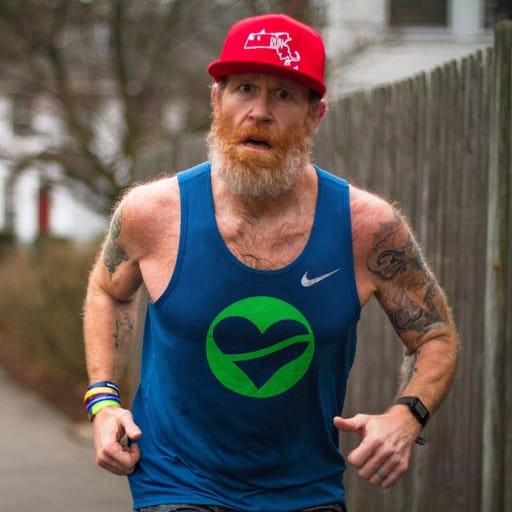
Transcript 0:00 [upbeat music] Welcome to For the Long Run, the podcast exploring the why behind what keeps runners running long, strong, and motivated. 0:17 I'm your host, Jonathan Levitt. Through personal and professional connections in the running world, I have the privilege of getting to know some amazing athletes. 0:24 I've always been fascinated by the psychological aspect of running, and this podcast is aimed at exploring this and much more. I hope you enjoy. America leads the world in medicine development. It matters. 0:36 We get new medicines first, nearly three years faster. Five million Americans go to work because we make medicines here at home, and not relying on other countries keeps us safe. But China is racing to overtake us. 0:49 Will we let them, or will we choose to stay ahead? When America leads, America cures. Let's tell Washington to keep us in the lead. Learn how at AmericaCures.com. Paid for by Pharma. Welcome back. 1:03 Today, I have Alan Sherrod joining me on the podcast. Alan, thanks for, uh, thanks for jumping on to chat. Hey, I'm, I'm just happy to be here. 1:10 Um, I love what you're doing with For the Long Run podcast, and I'm glad to be able to share my story, my run journey, uh, with you and all of your listeners. A little bit about me. I'm from Cape Cod. 1:25 I was born, uh, August 9th, 1973, Cape Cod Hospital. Um, I live in Western Mass now with my lovely wife, Elizabeth, and her son, Trevor, and our dog, Miracle. 1:41 And, uh, I live with bipolar disorder. I'm recover- I'm a re- recovering alcoholic, and I love to run. I love your story. Um, you... So we met through, uh, what was it? 1:58 One Run for Boston and then November Project? Yeah. Yeah. Um, I think November Project is the, is the place where we kind of really kind of, uh, crossed paths the most, and with, uh, Energy Bits a little bit too. Yes. 2:14 So, uh, so, so we'll start from, we'll start from there. How did you get connected with, with that community? Sure. So I was never really a runner. 2:25 I mean, I was like an athlete in high school and a little bit in college. Um, wanted to be a professional baseball player, but I was never into really running. 2:35 I mean, you ran because that was the exercise you used to get ready for any sport you were playing. 2:40 Um, the most I'd probably run before I met the yahoos at November Project was nine miles, and that was actually the, the spring before I met everyone in, uh, August. 2:50 So I started with November Project in August, but a little bit before that, uh, my friend, Amanda Ayers, who I worked with at Jerry Remy's, uh, was getting ready to run the, uh, Providence Half, I believe. 3:03 And so w- you know, she was looking for people to run with her. 3:06 So I, uh, so I started running around Jamaica Pond with her and a couple other people we worked with 'cause they were all kinda getting together to run that half. 3:14 And so that was-- we were doing like nine miles every time we'd get together around the, around the pond. And then, um, 3:25 in August, my friend, or my brother's friend, Kevin Duran, uh, was like, "Hey, you missed this really great workout." And I was like, "What are you talking about?" So it was August 15th, Wednesday. 3:36 He-- just after he got back from the stairs. He's like, "Yeah, you missed a great workout this morning." I'm like, "What are you talking about?" He goes, "You gotta check out the November Project. 3:44 It's totally up your alley." And he couldn't have been more right. Um, so I actually went to the website, checked it out. Then I went over to Harvard Stadium. I did, um, 3:57 a, a terrible 37 sections 'cause I didn't go all the way to the top or all the way to the bottom as, uh, Brogan and Boyan always wanted us to do. 4:07 So I, I just did it, and, um, I was hooked even before I'd met any of those amazing people. So on that Friday, um, August 17th, was my first, 4:18 my first workout with November Project on the hill at Summit Ave, which has become a, an infam- in- infamous place for me. It was actually the last time we met at the bottom of the hill. 4:27 Brogan looked around and- And this was, this was 2012, right? Yeah. It was August of 2012, and Brogan looked around, and he's like, "Wow, there's just way too many people here." We must've had- [laughs]... 4:38 75 to 100 people, and I think that was the biggest, uh, for a Friday workout at that point. So we all... He's like, "Use, use the up as a warm-up, and we'll all meet at the top," like we do now 4:49 in Boston, in Brookline on Summit Ave. And, uh, so we got up there, we did the bounce, and, um, I, I, I've been hooked on ultra-running pretty much ever since. So I'm gonna provide a little context here. 5:04 Uh, so, so we met through November Project, but I feel that much of the audience listening to this is in the trail and ultra and road running world, and, you know- Sure... may have heard about November Project, may not. 5:17 Essentially grassroots fitness movement, uh, started in Boston in 2011. And it is, as Alan was saying, it's what got him into running and ultra-running. Um, and it's what got me, you know, 5:29 always understanding that there's more out there, and there's always somebody doing more with less, and I think that's what I loved about it. 5:36 You know, you-- I would go, and there was a 40-year-old mom that was crushing marathons, and there was a 60-year-old dad that was, you know, working a, a, um, 5:49 you know, high-profile job and still found time to show up at 6:30 in the morning. 5:53 And there I was, you know, 24 years old with, [chuckles] like, no, no obligations, and, you know, why, why couldn't I do those things too? So, um-For me, it was, it was very motivating in the, like, what, what more? 6:08 What more? What more? And I found that, um, both empowering and also like a, like a, a fun little competition to just see what, what was possible. 6:18 And, and it was, it, it was so cra- It's like, it was such a crazy environment at the time, and people were just so, um, you know, in love with getting after it. 6:30 And so I ran my first marathon at 335, and I, [chuckles] I was, I was like, "Damn, that was slow. I- [laughs]... why can't I go f- why can't I go faster?" 6:39 And Chri- Chris Payne, um, who was not a leader at the time, was like, "Dude, you are surrounded by some of the fittest people in Boston. This is not the lens that you need to- Right... to be comparing yourself to." 6:53 Um, so let's talk about, let's talk about that. Let's talk about comparison. Let's talk about, um, mental health, which is a big, which is a big topic in, in your life and the things that you're passionate about. 7:07 So, um, now that we've painted the, the, the endurance picture of you- Let me, let me go-... let's talk about- Jonathan, let me do, let me just do a little bit more on that. Yeah. 7:17 Um, so not having run, like, more than nine miles at a time and then finding out how difficult, like, three hills was during a workout or four hills, which is pretty much the average that we could get through 35 minutes or 40 minutes, and then that would be the workout on Summit Ave. 7:33 One, one n- night Brogan was like, "Hey, who's gonna join me for 15 hills?" All right, 15 hills is- Yeah... 12 point- 12.36 miles just to the f- just to the, um, to the fire hydrant. 7:45 So we did, we had never done the full hills yet. And so- Oh, wow... I was like, "Of course I'm gonna," because I'm just that ridiculous. It was such a euphoric thing to... I'd be like, "Well, I'm gonna give it a shot." 7:56 I had no idea if I was gonna be able to do it. So I was like, I, I said, "All right. I'll do it," like, on Facebook, you know, so I verbaled. And unfortunately that night I had actually got really drunk, uh, [chuckles] 8:08 and I- Wow... passed out about 1:30, woke up at 2:45 AM, [chuckles] and I was like, "Oh, I can't go back to sleep now." I had the sweats. I had all this stuff. And I was like, "You know what? 8:16 It's gonna take me forever just to run this thing." So I got up, went to the hill, started doing it. I was, I was running at 3:30, probably sober by 4:30. Um, and 8:32 everybody showed up at 6:30. I got into the bounce, kept going, and I finished by about 9:00 with Brogan. He-- I mean, he's just a monster and a beast, so it was much easier for him to finish. But I- [laughs]... 8:45 did it, right? I did it. Like, that was the thing is I had no idea how long it was gonna take, how much it was gonna hurt, uh, or anything else, but it was just like November Project always made me feel I could do more. 8:58 Yeah. Um, that's wild. First the, the, the workout itself, I mean, that hill is a 200-foot gain in about a half mile, so it's about, I don't know, 15% incline. Right. 9:15 I can't imagine doing- 19.84 of a mile. Yeah. So, so that's just sort of a, a little example of the, this culture that we became a part of. Um, and did you ever think you would be that athlete? 9:33 No. No, I never thought I would be. Why not? I, I just... It never dawned on me to try. 9:40 It, I mean, running f- like, four miles or five miles to get in shape for football or basketball or baseball in high school and then in college, it was just what your coach told you to do. 9:50 I didn't really have an understanding of what it meant and how it was gonna become such a, an amazing, um, place for my mental health, uh, and my physical health. Um, I always fluctuated in my weight. 10:03 Um, when I wasn't playing, I was always a yo-yo person, where I was in shape when I was, when I was working out to be in shape for baseball or whatever, but then when I wasn't, it was, you know, overeating, overdrinking. 10:17 And then [chuckles] and then in 2010 I had a, a, a Rock Bottom moment in January, and I decided to change my life, and so the things that I got were a pair of running shoes and a gym membership, and I started moving. 10:31 I gave myself permission to, to have my own life, to, to find my own hobbies, to, to find my own friends, and which I had never done before, um, living in a very dysfunctional household, um, on Cape Cod 10:48 with, uh, my, my mom, single mom. And, and so 10:51 doing that thing with November Project, and then all of a sudden I was like, anytime after a workout and I had time, because I worked in the service industry, I was a bartender at Jerry Remy's, I'd go out and run 10 miles after our workouts. 11:03 And then I started-- And then one day I was like, "You know what? It's 10 miles from my house in Watertown on California Street to the North End. Why don't I see if I can do that?" So I ran- [laughs]... 11:14 all the way there to the 10 miles, and then I ran all the way home, got a snack, and then went to Western Ave, which was five miles, and home. So I did 30 miles after a November Project workout, 11:25 uh, in four and a half hours. So I was in the shape of my life working out with November Project. Like, it was just, it was different. It was euphoric. 11:32 Like, from 2012 to 2014 with November Project, it was, it was something that I'm not sure anybody can understand if they weren't part of it. 11:42 Yeah, and I, I joined in 2013, and I'd say I was in that stretch from 2013 to 2015 into 2016, where it was like any workout, I was there. Every extra run, I was there. 11:56 And for me, it was-A little unsustainable in terms of like doing all of the things all the time, but it was, it was fun. 12:06 And then part of, part of all the-- doing all the things, we would, you know, stay out till two AM on- [laughs]... 12:12 Sunday nights and then like show up to the workout the next day after, you know, having had a bottle of wine. Um, I don't know how we did any of that. 12:21 But, um, one of the things you mentioned was you, you hit rock bottom in 2010 you said. Is that- Yeah. Is that correct? Yeah. What, what does that, what does that mean? 12:31 [laughs] I'd finally come to a place where I wasn't happy being a victim of my circumstances of my past. Um- Mm-hmm... 12:38 unfortunately for most of my life I'd lived a victim-- I learned to live a victim lifestyle coming from a, a house full of women who had been hurt by men. 12:49 My grandfather left and divorced my nana, uh, left her with nine kids and no money, and I'm the first grandchild born, and I'm a boy, and all I ever heard was men, "Men suck, men are assholes." 13:00 Um, so it was, it was a tough place for me to live. 13:03 I mean, there, there's a, there's a whole lot of stuff that, I mean, we could have-- we could sit here for days and talk about, uh, that were, that were causing me to, to not know myself, not to understand myself, not to, 13:16 uh, truly be able to give myself a chance at a healthy life mentally and physically, spiritually as well. And so on, on a, on a, um, on January 4th, 2010, I'd finally come to the place where I was fed up. 13:31 I was sick and tired of being sick and tired. I was sick and tired of being bitter and angry, and [sighs] I kinda just looked at myself in the mirror and I was like, 13:41 "I'm either gonna kill myself or I'm gonna heal myself. Is this all I have to offer myself? Is this all I have to offer the world around me?" And thankfully I was like, "No." And so that was the beginning. 13:50 And so, right, I went out to, uh, Sports Authority, bought a pair of running shoes, went over to Workout World in Waltham, got a membership, and I started moving. I was 265 pounds, and I just... 14:04 I, I needed to find a better way. I needed to find a better direction. I needed to find better focus for myself. And so from 2010 to 2012, 14:16 I, I also picked up a camera which, which has been huge for me, which has been huge for my time with November Project. I was basically a November Project photographer from 2012 to 2014. 14:27 I was the one who brought my camera to every workout. Um, but also it was just kind of giving mypr- myself permission to, to fail forward, you know, to, to be better than yesterday and move forward was my motto. 14:41 And every day it was kind of just trying to find a better way to, uh, to battle the darkness, to battle the fog of, uh, not knowing what the future holds. 14:51 Like 10 years ago I couldn't tell you I'd be sitting here talking with you, Jonathan, about this and, and not be just bawling my eyes out 'cause it was just such an emotional feeling of not knowing how to do it. 15:01 Now having been able to talk about it, having been part of such amazing mental health campaigns through McLean Hospital and other places, being on many podcasts, doing my own podcast, um, 15:14 you know, just, just battling life better, learning to battle life better, a- and it's given me an opportunity to, to kind of help other people and to be a sounding board, and hopefully somebody can hear their own story in my story and know that they're valuable and important. 15:30 And so, you know, I started doing that. I, you know, I, I, I also did the MS ride, uh, from Quincy to Cape Cod that summer on a 40-pound mountain bike, knobby tires, uh, 175 miles from Quincy to Provincetown, and 15:46 I had dropped down to about 225, 226 by that point. And I, I think moving, moving showed me that, you know, ha- having an active body helps create a calmer mind. And I th- I needed that. 15:59 I needed to be able to calm my mind down. And, uh, I used to run with music too, like w- uh, when I was doing November Project workouts, um, 16:11 I was wearing my, my earphones while I was doing the workouts, and then I realized that that's not helpful because then I can't really interact with the, my community. 16:20 And so I stopped doing that, and I, I haven't really ever since because there's so much to listen to that my heart, my mind, uh, the people around me, w- when we can give them high fives and positive vibes, and I think that was the biggest thing for me with November Project was 16:36 building relationships within that community. I, I'm married because of the November Project. 16:41 I, I have a, a really great sustainable life now because of that one day of just showing up and realizing that that's my band of yahoos right there. Like, that's my band of people. 16:54 And it didn't matter, you know, if I was the fastest or the slowest. 16:59 It just mattered that they embraced me and I embraced them, and we embraced something really great that's in 50, you know, cities around the, around the world now. I love that. 17:11 Uh, I just got the chills [laughs] thinking about, um, like how powerful that type of community can be. Personally, I wish I got to the speed doesn't matter earlier- [laughs]... 17:24 um, and, and could've, uh, could've enjoyed things in a slightly less competitive way. But, um, for me that's what I needed at the time, and that's what I, that's what I brought to it, and that's what I took from it. 17:35 Um, I think the, the concept of like i- hear my story. If this is you, you know, hopefully this helps. My coach uses the line, "You are always enough no matter what." Um, that's... 17:52 Uh, and when people hear that for the first time, it sort of stops you in your tracks because it's like, "Hmm, yes, that's true," and you can be better while still being enough and, and focus on the process of getting better while accepting, you know, who you are in that moment is, is fine, and what you do next is what counts.Right. 18:14 And I think that the nice thing about running and trail running and marathon running and track running is there's always a community there. You're not running alone. 18:24 You know, I think that that's the biggest thing is we do so much alone. 18:28 It's nice to have a community of people around you supporting you, and, you know, I, I found that in my recovery community, I found that in my mental health communities. 18:37 Um, we're always looking for somebody, but a lot of times we're looking in the wrong places, and then, you know, when you reach your hand out in those places and nobody's there to grab it or they push it away, it kind of really brings you down. 18:51 But the cool thing is when you find those communities, when you find November Project, you know, uh, the, the community that got me sober is called the Phoenix Multisport. 19:00 You know, they help those in recovery through physical fitness. If you've been sober for 48 hours, you can use any of their facilities, any of their classes. Um, 19:10 that helped me see that I could learn to be sober because there were people there trying to, trying to get sober, and I, I started as a, um, [lips smack] I started as a supporter while I was still drinking. 19:24 And it came to the point of like how can I support these people if I'm not looking at why I'm drinking in the first place? And it just, you know, my s- my sobriety just started off as 30 days of seeing, 19:34 seeing if I could be sober for 30 days. I didn't expect to get to, I think I'm at like 670 days sober now. What does that mean for you? [sighs] Man, it means the world to me. 19:45 Like I've seen videos, you know, um, that I posted on what- whatever Instagram or Facebook intoxicated and it just makes me cry 'cause that, that person, who was that guy? Who was he? Why did he need to do that? 19:58 Why was that important? And why is it not important anymore? Why do I not see it as something that's important anymore? 20:07 But just, just to understand that my father is an alcoholic, my, my, my father's father is an alcoholic, a lot of my family on my mother's side are alcoholics. It's, it's why do we hide behind the drink? 20:21 You know, why do we hide from those things? And, and, a- and I've been in, since 2010 I've been battling better. 20:27 I've been failing forward on a lot of things, but that one thing I, I had a lot of trouble with because it's so normalized and something we do on a social level whether you're a runner or not, is drinking to kind of combat what we've done in the day. 20:42 And now I do that sober. Now I do that with my eyes wide open. For the same reasons I was drinking are the same reasons I'm not now because I wanna be a better part of whatever community I'm part of. 20:55 I wanna be a better part of my own life. I wanna be a better part of my wife and my life. And my relationship with my stepson is way better because I'm sober. And how does running play into that? A lot. A lot. 21:11 [laughs] Sets you up for that one. Yeah. A lot. 21:14 It's, um, it's the thing that I've found that it doesn't matter my pace, and I know that you found that when you started trail running that it was, it was more about the run, it was more about the feeling, it was more about nature, it was more about everything else except how fast you're running. 21:29 It's, it, it, it really is a, an amazing thing to be able to run. It really is an, an, it, it really helps me unfold. It really helps me unfold my feelings and my emotions. I mean, you can't hate yourself on a long run. 21:43 I mean, you can hate yourself at the start, but by the time you're done you're gonna have figured some things out. 21:48 You're not gonna have all the answers, but you're gonna have kind of sorted through a lot of that emotional baggage that you're carrying, all, you know, all, all the files you haven't looked at, all, all those things that, that may have been in your way before you started that run, 22:03 you've, you've kind of had a way, or at least I've had a way to try to, you know, kind of become my own, more of my own best friend on the journey of whatever mileage that run is that day, even if it's a short four-miler or if it's, you know, um, a high elevation 15-miler. 22:21 So you're, you're training right now for, is it a 60K? Yeah. So a 60K because I wanna do 37.3 miles. So I've been training- Why that?... 50K through Hillary's, uh, plan on VertRun. 22:35 But I don't do anything easy and I don't do anything normal. [laughs] Uh, 37 and 73 are huge numbers in my life, and I wanted to celebrate that. Um- What do those numbers mean? 22:50 37, uh, I mean, three sevens are God's number and they're huge in my life. If you add up all the numbers in my birthday it's 37. I'm three years older than my sister, seven years older than my brother. 23:00 I was born in 1973. Uh, all perfect tens, right? One and nine is ten, seven and three is 10. Um, my grandfather's baseball number was 37. Uh, he played center field for the Red Sox. 23:14 He was one of the first public cases of bipolar disorder in sports, so I've, I've carried that my whole life as well. 23:21 I mean, there's a lot to talk about here, but one thing that's really, really helped me is the ability to [sighs] learn to run. 23:31 And I, and I, I used to get in the way of that a lot because last year was a huge year for me because it was, it was coming into my f- one year anniversary of being sober, and so I was running for the Herron Project, and so I ran the LA Marathon in March as my first sober marathon, and it was just amazing. 23:51 And it got to the point, 'cause it was hot, and I got to mile 21 and my pace was like 850 or something, and then, a- actually I think it was like mile 18 I had to slow down a little bit. 24:00 Then my pace started getting worse and my pace started getting worse, and finally at mile 21.5 I called Elizabeth on the phone and I was like, "I'm, I gotta walk the rest of the way, and I'm gonna enjoy every step of it," 'cause mile 22 has November Project. 24:13 Uh, mile 22 has the Herron Project. Mile 22 has Back on My Feet, which Elizabeth was working for at the time. 24:19 So I was gonna go into mile 22Completely grateful for every mile of running I did to get there and celebrate with all of those communities that were part of my life on the road to sobriety. 24:36 And I get choked up a little bit because it's, it's the community. It's the people that recognize and value me even though I don't always value myself. And so it was really awesome to, to give myself permission 24:51 at mile 21.5 to walk all the way to the finish line and embrace every moment of it, high five everybody I could, you know, everybody I saw that I knew from, you know, whe-whether it was, uh, November Project LA or West LA and whatever. 25:08 Like, it was like a victory lap at the end. That to be able to, to, to enjoy all of that and to help other people through, um, the struggle of, of the end of that marathon, 'cause it was really hot. And so 25:21 I got all the way up to running 191 miles in May, but I was having problems. I was having hip flexor issues, quad issues, but I didn't wanna deal with it. That was... 'cause I didn't wanna stop running. 25:32 I didn't wanna, I didn't wanna put myself in a position to stop running 'cause it's so important for my mental health, and being sober, it was even more important to me at that time, at that point. 25:43 And I kept running through it all the way to November. And I, I was in serious pain running five miles, six miles. I w- but I was trying to run. I was running 15, 16, 20 miles a day, and I was doing that all week. But 25:59 the pain kinda got to me, so I was like, "I gotta stop." But before that, in August, I had run, uh, on my sober anniversary. 26:09 On August 18th, 2018, completely one year sober, I ran the Falmouth Road Race for the Heron Project as well. So I got to celebrate with the Heron Project. 26:21 I got to celebrate with Elizabeth and Trevor and all of the people in the Heron Project run crew, and it was so amazing. 26:30 Like, I wouldn't usually go to Falmouth in the summertime, being from Cape Cod, knowing how ridiculous it is there. [chuckles] Um, but it was that important. 26:39 Like, I was willing to go cross that bridge, and I don't cross that bridge often. I don't go there 'cause there's just so much dysfunction, uh, there for me, so many dysfunctional memories. 26:49 But it was something that was so important, I wasn't gonna miss that. And I couldn't run the whole thing. I had to kinda walk the end of it too because I just couldn't. 26:58 My, my, my hip flexor and my groin and all that, I had just destroyed it. But I was still running all the way to November, and it took till November f-for me to kinda realize, "Hey, I, I gotta stop this. 27:11 I gotta stop running. I have to. I have to give myself permission to find something else to do to maintain my mental health." And thankfully I did. What'd you find? Um, functional training. 27:25 I went back to being a weightlifter to, uh... I built a gym in my basement 27:31 just with random stuff I had, and I bought a few other things like a chin-up bar with a dip, uh, thing on it with leg lifts, uh, extra weights, uh, a weight vest, um, uh, the, the battle rope and things like that. 27:45 We have a AirDyne bike, we have, uh, a rower, and we have a treadmill in the basement. And I put mantras all over the walls, "Don't quit. Do work. Clear your mind. We are strong." 27:59 So that when I was down there, 'cause i-in the basement it's tough. So, so basically I was doing everything in my power to, to give myself the room to continue to move even though I couldn't run. 28:09 And thankfully I stopped running. Thankfully I started listening to, um, Ian Nurse, 28:16 uh, at Wellness in Motion Boston, even though I don't really have the money to go see him because e-even if you have insurance, it's a joke these days. 28:24 But he does a lot of great stuff on his Instagram, and I was able to kinda just be a good student and start listening to that stuff and just starting to learn more about my body. 28:32 I didn't like stretching 'cause I didn't wanna hurt myself more. That's what I thought. I thought if I stretched, I was gonna hurt myself more, which is completely absurd. And so every day now I make sure I'm stretching. 28:41 I roll out. I'm using the, uh, the lacrosse ball to get into those areas of my hip flexor and my hip and my, my glute that are just pissed off because of all the running. And so I didn't start running again until March. 28:57 No, I'd say I, I r- I was running a little bit. I ran a little bit and I tried to start running again in January. 29:01 I got about 50 miles for the month, and that was maybe, you know, running two miles on the treadmill in the basement just to kinda, at like a five-and-a-half mile an hour pace or whatever, just to not hurt myself, but to get that cardio, um, energy used. 29:17 And so I was averaging, I think I averaged 57 miles for January, February, and March. And then I, um, saw 29:25 on Athletic Brewing, which is a non-alcoholic, uh, brewing company out of Connecticut that is, they, they do everything around athletes. 29:33 They want you to be able to have really great craft brews without losing your competitive edge. And so Elizabeth introduced me to them, and then I became an ambassador. 29:42 And so I s- there was a sweepstakes between them and Vert Run, and so I just was like, "All right," you know, "Anytime there's something cool, I..." you know, and you just follow us and whatever. 29:51 And so I did that, and next thing I know the, um, Vert Run is, is contacting me, Athletic Brewing is contacting me and letting me know that I was one of the winners of the, uh, free month from Vert Run. And here we go. 30:05 Here we are. Um, so I've been following Hillary's 50, uh, 50K plan since April 26th, I believe. And so- That's Hillary Allen? Yes. And, um, they're amazing over there. 30:23 I've been talkin- talking with Kirsten, one of the co-founders, and she does their social media, and she's actually used some of my photography from, uh, the Black Lives MatterA protest in Fitchburg that I took pictures of, and, um, she uses my photos for, from a couple of my runs on their Instagram and stuff like that too. 30:41 So it's just been another, it's just another community that helps support me, and I help support them, and we help support each other and, and the running community around us. And I went from, I [laughs] went from, 30:54 I went from, um... I think it was earlier I started. I think I started a little bit before April 26 with them. But, so I went from March running 56 miles, I believe, to April running 130. No, no, I'm sorry. 31:12 So, right, I did start April 26. May was a good month. May was an awesome month. I ran 135 miles. 31:18 But I never pushed myself to the point of I wasn't gonna be able to run the next day, because I, I started to realize that I needed to start running from scratch. Because- Right... 31:28 from going from running 190 miles in a month, which meant I was really doing 50 to 60 miles a week, to doing 10 miles a week. So my body wasn't prepared for that. 31:40 And I, I, I think for, for a few minutes there, I forgot that, and I tried to run a little bit hard, and things were getting difficult for me, and I was getting pissed off. 31:48 And then finally I realized, like, I'm at the beginning again. I'm actually, I actually have a fresh start. I've never used a plan before. I've never listened to anybody else when it comes to pretty much anything. 31:56 Let's just say that. When it comes to- [laughs]... like, like, like it's not that I have all the answers, but I'm gonna find the answers myself. 32:03 But I really gave myself permission to allow people who are smarter than me to guide me and to actually listen to them, and I think that that's where we are as a society right now, is having to realize that we don't have all the answers in most of the situations we're in and most of the situations around us. 32:21 So if we can give ourselves an opportunity to listen more than we talk and actually absorb what we're learning, that's where the real change occurs, and that's what's happening with me. 32:32 So I will be prepared, [smacks lips] I probably won't be overly prepared for the 37 mile- [laughs]... of the mountain road on Mount, uh, Wachusett Mountain that day. 32:41 But I know that I'm gonna toe the line and I'm gonna finish. Whatever happens in between is whatever happens in between. Like, you know, I just follow the plan now. I just follow the plan. [laughs] I love that. 32:56 And, and one of the things you said, listen more than you talk and, um, use that to lead to change. What are some, what are some places in life that, that that's applying as well outside of running? 33:10 I mean, Black Lives Matter right now. We need to listen to their voices. We don't need to think like we know anything. We need to realize we don't. 33:17 And w- our view is jaded, and we have rose-colored glasses, 'cause a lot of times we don't even live in the areas where the stuff is occurring. And so it's just, 33:28 I wanna be an ally, but I, I wanna be an ally to anybody that needs my support, whatever that, whether that's in the recovery community, whether uh, whether that's in the mental health community, whether that's in the homeless community. 33:39 Um, I'm raising money for Father Bill's in Mainspring, which is, uh, in southern Massachusetts that Elizabeth has the pleasure of working for now. Uh, she moved on from Back On My Feet and actually started working 33:52 March 18th, so already into the pandemic she had to start a new job, and she really hasn't met any of her coworkers. So everything- That's wild... is different. Everything is new. It's all about how we approach it. 34:04 And so approaching this plan, I'd never done it before, and Elizabeth's like, "You won't, y- y- you don't do that. You won't let, y- you're gonna throw that thing away." No, because I respect actually 34:16 the people who founded Vert Run. I, I, I respect what they're doing and why they're doing it. I respect [sighs] Ian at Wellness In Motion. I respect everyone who works at The Phoenix Multisport. 34:33 I respect everyone at The Heron Project. I respect anyone who's trying to better their life, but not just better their life, better the lives of the people around them. That's where we're going to excel. 34:45 That's what we're, that's where we're going to, to rise up. And those kids that are being brought up right now are going to get to see that. Like, they're the ones that need the example set for them. 34:56 And if we do a good job of doing that, moving forward we can right a lot of the wrongs. But in, like anything in, like in my life, I know it doesn't take a, a day, a week, a month, or a year to do anything. 35:09 It takes the time you foster care to it. And every time you fall down, every time you, you know, you step in a pothole or whatever, it's, it's what am I doing to get out of that? 35:21 What am I doing to, to use that as an, as a hurdle instead of an excuse so that I can keep moving forward in a more healthy manner and get out of my own way a whole lot more? 35:34 What's a, what's an example of a time recently where you failed, uh, and you learned from it? I think I w- I think I wanted to... I mean, there's a lot of things, right? Like, yesterday was a failure. 35:45 Yesterday, not communicating better to Elizabeth about how I was feeling and why I was feeling it. 35:52 I just, I just got frustrated with, 'cause she wanted to help me, and that's an amazing thing, that she loves me of her own free will. And I was just like, "Please don't talk to me." 36:03 And that was such a reactionary thing to do. That's a failure. That, that is a failure because I know better. 36:09 I love her, I appreciate her, and I don't need to be projecting my pain onto her just because I'm having a really hard time. 36:18 In running, a failure just means that you didn't do as much as you wanted to, or you didn't get out there on the road at all, or on the trails at all. Like, and that's just failing. Being a failure is just 36:30 not, you know betterBut you allow yourself to not do what you know is best because you're struggling yourself, and that's what happened to me yesterday. I don't-- I'm not a failure in anything. 36:42 I fail a whole lot, but yesterday I was a failure in my relationship with myself, I was a failure in my relationship with Elizabeth, you know? And it matters. 36:51 It matters that I understand that, and I will do my best to communicate better how I'm feeling when I need that space because she wants to help me. She wants me to be okay. 37:04 She loves me, and she tells me every day she loves me, which is really difficult for me to allow to be true because of everything that I've gone through in my life to get here. 37:14 I've, I've learned to be very good at being alone, and I've actually had to allow myself to let love in, 37:23 to let kindness in in my relationship with her and her son because they love me unconditionally, and that's-- I, I can't even really put into words what that means to me. One of the questions that I-- 37:36 There are a couple of questions that I ask fairly consistently on this podcast, and we'll start with, um, we'll start with balance. What is, what is balance to you? Sure. 37:45 Balance is-- So that's what I've been searching for for a long time. You know, I was, um, I was interviewed by the Fitchburg Paper, 37:54 uh, in the spring of two thousand seventeen around, um, Mental Health Awareness Day or B- National Bipolar Day, whatever. I mean, there's a few of them around that time. And that's it. It's about balance. 38:05 What am I doing to balance my life? And so that means a lot of things. That means my mental health, that means my physical health, that means, 38:12 uh, things that I'm doing, um, as hobbies and communities that I'm part of to help me feel important as well. 38:21 Because I'm really good at helping somebody else for them, but now I'm really good at helping myself and sharing it with them. And so balance means... You know, it used to take me months. 38:34 Like, I was really good for nine months out of the year being bipolar. Like, from the moment the thaw until after, like, Christmas, I was, uh, I was amazing. 38:44 But then once the darkness started to set in, once the time even got worse and it was dark a lot longer, and I'd be like a hermit until the thaw again. 38:53 And so over time and over time, as I've dealt with things and I, and I've learned why I'm in pain in the first place and what can I do to change it and what was my fault and what was my responsibility and what wasn't, 39:04 I've learned that balance comes in with what can you control? How do you control it? And how do you prosper from it? Instead of continuing to be a victim, how do you be a survivor every day? How do you be a warrior? 39:21 How do you be, uh, an inspiration and a motivational, uh, impactful person in your own life so that you can do that for others as well? And so yes, balance has been the most important thing in my life. 39:33 And like I said, ten years ago, I wouldn't tell you that I would be having this conversation with you, Jonathan, where I actually have balance in my life. You know, photography was a huge thing for me. 39:42 It helped-- It was, it was probably-- Photography and fitness have been the greatest, uh, therapy, uh, utensils, um, pieces in my, in my tool bag. 39:55 But also being-- learning to be vulnerable enough to have conversations like this. Has therapy also played a role? [tsks] No. Uh, I never liked therapy. 40:07 Uh, I never liked other people telling me what to do and, and trying to figure me out because they don't know how to figure themselves out either. So- [chuckles] 40:14 But when I first got, when I first got, um, diagnosed with bipolar disorder in, in Fe- February of two thousand one, I mean, that was the thing, right? 40:23 So in order for me to go home, in order for me to be let out of the hospital, um, I needed a therapist, I needed a psychiatrist, and a support structure and medication. 40:33 And so I was on many cocktails of, of medication from two thousand one to two thousand eight. But I wasn't me. I wasn't creative. I couldn't cry. I couldn't feel. 40:43 I was good for everybody else because the m- the medicine, the medicine kind of made me okay for everybody else, but I was kind of a, like a walking zombie. And so in two thousand eight, I decided that I was gonna s- 40:56 quit the therapy, quit the, um, medication, and I was gonna find out why I was in pain in the first place. 41:04 And so from that moment in two thousand eight to that day in two thousand ten was a struggle, but it, it was more of a struggle of my own free will, you know? 41:13 And so during that time, as much as I didn't learn, I did learn. I was learning that I didn't want that type of a life anymore. I didn't want one where I was overly consuming everything. 41:25 Um, I didn't have a breaking point. I didn't know when to say when. Uh, I didn't know that no wasn't a bad word yet. Um, so from that day until two thousand-- January fourth, two thousand ten, I was still a victim. 41:41 But January fourth, two thousand ten was the day I became a survivor of my past, survivor of my family, survival of dysfunctional relationships and toxic energy, and I became my own hero, my own champion, 41:56 my own guide, because I've always looked for a guide. I always wanted a mentor, a coach. It just was never around. And so at some point, I needed to become that for myself, and that's, that's what fitness does for me. 42:07 That's what running does for me. That's what building a better relationship with myself so I'm my own best friend instead of my own worst enemy. 42:15 And then also learning how to talk about it so that other people can see their value as well when they see in the mirror of my story a little bit of the greatness that they are in spite of how they feel. 42:32 What would Alan of twenty twenty say to Alan of January fourth, two thousand and ten? Just be gentleGo easy. Give yourself some room. You're gonna fail a lot, but you're gonna do great things as well. I think that's it. 42:50 I think the thing I've learned is I gotta be a lot more gentle with myself. That's what I tell myself. It's like, "Whoa, whoa, whoa." That's true for everyone, yeah. Right. It's just like, "Whoa. Hey, easy." 42:59 Like y- okay, y- y- j- don't be so hard on yourself. Don't d- d- don't destroy yourself for, for one moment of your life. Just give yourself a chance. 43:14 Is that the kind of place where you are mentally at, at a start line, like give yourself a chance today? What... How does, how does a conversation like that go in your head? 43:27 I've never really worried about anything like that. I'm like, "I'm going out for a run," you know? But once you start running next to people, things kinda change and everything. So I c- I kinda like to leave it abstract 43:37 when it comes- Mm-hmm... to the start line because I know, whether it's a 5K or a 60K, there's gonna be some things that go on, and it's just like everyday life. Um, variable change is something you cannot control. 43:51 It's just how do I process it, you know? How do I perceive what's going on around me? 43:57 You know, when you're in a 5K, you think you can stay with those, those fast bastards for a long time, and then you realize that's not a good idea, so you slow down and- [laughs]... 44:05 get a reasonable pace and finish standing up and not vomiting. I mean, there are times you're like, "Oh, man, I'm close to vomiting," or whatever. But it's just what can you do today? 44:15 Like, really all we have is the moment we're in. What can we do today? What... 44:19 You know, when it's, like, the little things you do to get started in your day, getting out of bed, brushing your teeth, and whatever, is the same way it is when you go out for a run, you know? 44:28 If it's really bad, you can just turn around and go home, and if it's really great, you can just keep going, you know? Yeah. Um, that's, I think that's a perfect, it's a perfect analogy. 44:39 I think it's a perfect place to, uh, to wrap today. Where can we, where can we find you if we wanna follow along with your adventures and your journey? Sure. 44:48 So on Facebook and Instagram, it's @stigmafighter.alanshearer for just my everyday stuff, and on Instagram, if you wanna follow my running and fitness craziness, it's @strongbeginswithin. 45:03 And also, on my Facebook, I, I'm raising money for, um, [lips smack] Father Bill's, and I have a, um, fundraiser on there, and it's just awesome to see people supporting everything. 45:17 I think everything people are supporting is just amazing. 45:19 I think the more we can support each other and the more we can realize that we need to share our time, our energy, our thoughts, our feelings, and our emotions in a positive, impactful way, 45:32 is gonna help us get through everything we're going through right now a little bit better. Awesome. 45:37 Well, Alan, thanks for, thanks for doing exactly that today on, uh, on this podcast, and I'm very excited to share this one, and, um, if this, uh, if this resonates with anyone, please, please share it, uh, as Alan has, has done with his story. 45:53 Um, Alan, thanks so much for, for being real and raw as always, and, uh, I can't wait until we can give each other sweaty bear hugs again at the top of, uh, Summit Ave. I look forward to that like you don't know. 46:06 [laughs] Awesome. Thanks again. You're welcome. That's it for today's episode. Like many long runs, it's sad when it has to end. I hope you join in next week on For the Long Run, and in the meantime, happy trails. 46:21 If you've enjoyed this episode, it would mean a lot to me if you shared it so that others can find it and enjoy it too