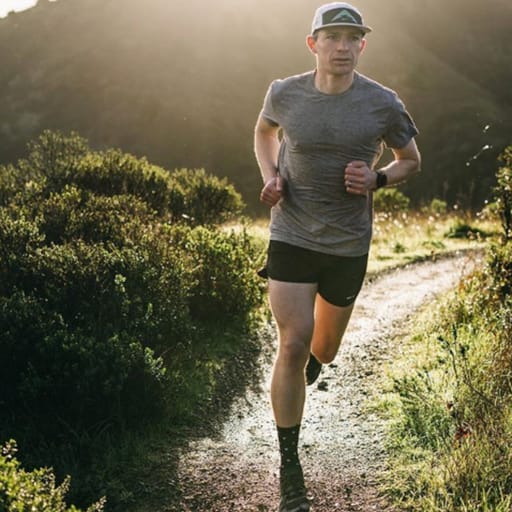
Transcript 0:02 Welcome to For the Long Run, the podcast exploring the why behind what keeps runners running long, strong, and motivated. I'm your host, Jonathan Levitt. 0:11 I've been running for a few years now, and have the privilege of meeting many incredible runners on my travels all across the country. This podcast is intended to share those amazing conversations. 0:22 [instrumental music] America leads the world in medicine development. It matters. We get new medicines first nearly three years faster. 0:30 Five million Americans go to work because we make medicines here at home, and not relying on other countries keeps us safe. But China is racing to overtake us. Will we let them, or will we choose to stay ahead? 0:43 When America leads, America cures. Let's tell Washington to keep us in the lead. Learn how at AmericaCures.com. Paid for by PhRMA. This week's podcast is with Mario Fraioli. 0:56 Mario is a coach and very solid runner himself, living in Northern California. In this episode, we talked about the state of affairs in running, and how Mario thinks we can all help turn the tide for the better. 1:06 We talked a bit about mental health and Mario's experience with an eating disorder as a younger runner, and the guidance he has for other coaches and athletes. 1:13 We covered some of the ways that Mario has seen the running industry change over the years, and we also talked about coaching an athlete through different parts of their journey, including through injuries and the off-season. 1:22 Given that we recorded the day before North Face 50, I got Mario's predictions on the race, and he was pretty spot on. I hope you enjoy. And welcome back. I am here in the fringes of Marin- [laughs] Oh, yeah... 1:34 with Mario Fraioli. Mario, thanks for having me today. Thanks for coming up to Cal Country. [laughs] Of course. 1:39 We were joking that, um, it took twice as long to get here because people in California can't drive in the rain. Well, we've got some precipitation, which we badly need, uh, for the first time in a while. 1:50 I don't know that this is enough to really do much, um, but hopefully this is, like, a little teaser for the rainy season that is impending. Got it. 1:59 Well, for traffic's sake, it w- it made things interesting today, but hopefully it, uh, it- it settles the dust on the trails and, and gives some, some necessary water here. Yeah. 2:09 Hopefully I'll get you out of here before the commute starts so that you're not dealing with the worst of it. Lovely. Well, anyways, thanks for, uh, thanks for taking the time to chat today. 2:17 I'm excited to, to get into it here with you. Um, so first question, uh, let's go with a hard one. Who is Mario? Uh, I'll steal the line from Red Hot Chili Peppers. I'm a runner, rebel, and a stunner. 2:29 [laughs] Uh, no, really, um- That's the best answer I've heard yet. [laughs] Uh, I'm Mario Fraioli. I am a, a lot of things. I'm a husband to my wife, Christine. Um, 2:41 I've got brothers, uh, I'm a brother to my siblings, you know, I'm a son, I'm a runner. Uh, I coach, I host the Morning Shakeout podcast. I write a newsletter of the same name. 2:52 I could go on and on and on, but I think those are the high points. So you're a man that wears many hats, is what you're saying, and- Yes... 2:59 and, uh, a lot of those hats fall in the running arena, uh, and many of them outside of the running arena. So how did you get into, um, maybe give a little background on, on yourself. How did you get into... 3:11 Let's first start with running. How'd you get into running? Yeah. So I've been running and involved with the sport on various levels since 19- I wanna say 1997 or so. '96, '97. Yeah, it was after the '96 Olympics. 3:22 High school, uh, is when I got started, and I started running cross country to keep in shape for basketball, and I've told this story many a time, and it's just continued to snowball from there. 3:33 Uh, and here we are 22 years later, and the ball is still rolling. [laughs] Um, so I started as a, as an athlete. Uh, I've been involved with the competitive side of the sport since day one. 3:44 Ran collegiately at Stonehill College in Massachusetts. Um, continued to compete after graduation. Still compete today, many years later. Started working couple of years after school at a specialty running shop. 3:59 Um, I was freelancing prior to that for some different outlets. Uh, I worked for a newspaper as a copy editor. Um, I've done a lot of different things. 4:10 Eventually ended up at competermagazine.com, where I was for six years as a senior editor, in charge of most of the training content and event coverage. I've been coaching since I got out of college, really. 4:22 2004, started just helping out some of my former teammates, getting ready for races after we had all graduated from school, and, you know, that has picked up steam to the point where it's how I spend most of my working time now. 4:35 So yeah. I've been, I've been involved, uh, I've been involved on a number of different levels- And was-... for a long time... 4:42 was that a progression that you were expecting, anticipating, planning, or has it really just evolved over time? No. I don't really plan for much, to be honest. Yeah. 4:51 I knew generally, um, that I wanted to work in running. I had aspirations of becoming a professional runner, whatever that meant, out of college, and that quickly fizzled out. 5:05 Um, I didn't know what I wanted to do with my life other than I knew running would be a big part of it, and still, now at 37 years old, that, I know that much. Yeah. 5:17 [laughs] I know that running is what I wanna be involved with and, and how I wanna spend most of my time, but 5:25 where I've been involved, how I've been involved, the levels I've been involved at, um, have evolved to this point and, and will continue to evolve for the foreseeable future. Cool. 5:34 What is it about running that, that you love so much? It's the glue that connects most of the pieces of my life together. Most of my closest friends, deepest relationships are through running. 5:50 I met my wife through running. Um, I make my living, you know, through running. I've learned a lot about myself over the years through running. 5:58 So, you know, it's-At this point, it's, it's hard to imagine my life without it. So, um, I think those, you know, those are the high points. Cool. Um, how has the industry changed over the last 15 to 20 years? 6:13 And, and [laughs] the second part of this loaded question is what's next? Well- Or what do you think is next? I mean, the industry itself has changed in a number of ways. 6:23 So when we're talking about the industry, are we talking about the commercial side of it, like footwear, apparel industries, racing, events? Um, I mean, what are we lumping under the industry? Yeah, I think... 6:34 So this was a, a, a- Media... listener-submitted question. Okay. And I think it was about, um, the, the interest was the human side of it. 6:43 So how has the coaching, how has the training, how has the recovery, what, what's been your, um, your visibility into how that's shifted over time? Well, so let's just go down the, the coaching route. 6:56 It's, it's easier today than it's ever been to call yourself a coach- Right... or to become a coach. And a lot of that is due to technology. Uh, some of that is due to social media. 7:11 Part of that is due to [laughs] people wanting to do something that they enjoy doing as a, as a way to make a living. 7:19 Um, you know, and a lot of coaching today, a lot of what I do with my own coaching is remote-based, and I've been doing that, you know, for the last, God, 15 years or so. But 7:31 how I communicate with my athletes, how I plan training, you know, how I run that side of my professional life, uh, has, has definitely changed a lot. And, you know, 10, 15 years ago, you didn't have as many coaches. Um, 7:47 it wasn't a very straightforward path into doing it. I mean, there's certainly people who were doing it remotely and continue to be. Um, but it's become a lot easier to do that. But the other side of that is, is people, 7:59 runners, and I think this extends outside of running too, are recognizing the value and importance of coaching, uh, and seeking it out. 8:09 I mean, many years ago, and to some degree today, I would meet a lot of runners who don't feel worthy of a coach. Yeah. They think only serious runners or elite runners should have a coach. 8:20 And more and more runners are realizing that regardless of what level you're at, uh, coaching can be really helpful in helping you along your path, whatever, whatever that means. 8:31 And even more so if you, if you aren't an elite and you don't know what to do. Yeah, that's the argument I make. 8:36 Um, and I think the newer, newer folks to the sport who either didn't have good coaching when they ran in high school or college or didn't run in high school or college, so they've never had that type of coaching, it's invaluable- Yeah... 8:50 um, to have someone who has experience and has knowledge and can help lead you along whatever path it is that you want to follow. 8:57 So how do you, how do you match up with an athlete, or how do you know if it's gonna be a good relationship versus, you know, maybe, maybe your style is- isn't what they need, or maybe, you know, they're, you know that they're not gonna work well with you? 9:10 How do you, how do you rectify that? How do you, you know, seek out, um, these relationships that, that are going to work? I've actually never sought out an athlete in my entire [laughs] coaching career. Yeah. 9:21 Um, I've always been approached by the athlete who is interested in working with me. 9:27 And with all of them, it starts with a conversation, just getting to know one another better if I don't know them well enough already, and understanding who they are, their background, what it is they wanna do, and me just being honest with them as to whether or not I think I'll be a good fit. 9:43 Mm-hmm. Because whether it's me or some other coach, like, there is, there is not one coach for- For everyone... every athlete. Yeah. Yeah. And I know for me, because I've been doing this long enough and have worked with 9:54 probably at this point hundreds of athlete- I don't even know if it's hundreds of athletes, honestly. Um, but a lot of athletes, uh, who I'm a good fit for and who I'm not- Yeah... 10:02 and the type of, the type of athlete that, you know, I am, I am best suited to. 10:07 So it's just, it starts with a conversation, and it's honesty from both sides, like the athlete being honest with me about who they are, what they wanna do, um, and me being honest with them as to whether or not I think I can, I can help them, because usually that's, that's my first question to any prospective athlete is, "How can I help you?" 10:24 Mm-hmm. And it just evolves from there. And, and what have you learned about the online coaching versus in-person coaching? You almost have to over-communicate. Yeah. 10:34 I think communication's the key to any successful relationship, not just coach/athlete. Right. 10:40 When you are not seeing your athletes on a weekly or regular basis, you've got to stay in close touch with them if you want to do your job well. Right. Um, and for me, I mean, I've always kind of 10:56 tended to, [laughs] to over-communicate, and, you know, I'm just, you know, I'm just always asking questions, checking in, seeing how they're doing. 11:06 Um, and, and without that, I just don't know how a successful remote coach/athlete relationship can work. Definitely. So switching gears a little bit- Mm-hmm... let's talk about Morning Shakeout. How did that evolve? 11:16 How did you get into doing that? Um, and where, where do you wanna see, where do you wanna see the newsletter go? Where do you wanna see the podcast go? 11:25 So the Morning Shakeout started as a newsletter only in 2015 while I was still at Competitor Magazine, I think actually right about now. 11:35 So we're having this conversation mid November-ish, like almost late November, is about when I, I launched the first one five years ago. So I guess happy birthday [laughs] Morning Shakeout. 11:45 [laughs] Um, I know for a fact it was 208 weeks ago- [laughs]... because I just put out the 208th issue, and I haven't missed a week since I started it. 11:52 But I was at Competitor Magazine working as a senior editor, and I'd sat on the idea of what is now the Morning Shakeout for quite a while. I had the domain, uh-For probably at least a year prior to that. 12:05 And I knew that I wanted to create something that was on the side. I had no business ambitions behind it all, just a creative pursuit, just an itch that I wanted to scratch. 12:16 Just a place where I could write, and I was thinking about it as, as mostly a written thing, where I could write about whatever I wanted to write about. 12:23 I could get opinionated on things that were happening in the sport, I could link off to things that I've read or listened to. Actually, I wasn't listening to much at the time- [laughs]... 12:31 'cause podcasts weren't, weren't quite as big as they are now five years ago. Everyone's got a podcast these days. Yeah, they weren't for me. I know, here we are. 12:38 [laughs] I, you know, funny enough, uh, having this conversation. But you know, I would... I just wanted a, a place that was mine. I had full ownership over it, I could do whatever I want. 12:49 Um, I didn't have anyone telling me that the content wasn't a good fit. But it was, it was j- it was just for me. Yeah. It was just sort of a, a creative outlet for whatever 12:59 I wanted to write about, link off to, um, you know, almost use as a journal of sorts. And, and that was sort of the idea behind it. And finally at one point I just... 13:09 I remember, I sent out a tweet and said, "I'm sending this thing out next Tuesday." [laughs] Sign up. "If you wanna sign up, you know, here's where you can, here's where you can do that. 13:16 I don't know what it's gonna be or how long it's gonna last, but let's just give a shot." And here we are, you know, fi- I guess four years later, not five years. 13:24 Uh, four years later, um, and it's, you know, it's still a thing and it's still going strong, and it is now something that is my job or a big part of my job and how I make, uh, a chunk of my living. 13:36 And the podcast spawned off of that two years ago now in 2017. Uh, I think I'm 80 s- I think I just sent off 80 s- eh- uh, episode 87 yesterday for, you know, for editing, and now that's a, that's a weekly thing. 13:50 And, and it was really a natural evolution of the newsletter. I was doing these interviews with athletes prior to the podcast, I called it Going Long, and I would have a conversation with them over Skype. 14:01 I would record it, I'd get it transcribed, then I'd get photos, and I'd kinda lay it out. And I still like that format, and I'd like to get back to that. Um, but the podcast was a natural evolution off of that. 14:10 And I had started about two, three years ago, I really started getting into podcasts as a consumer, uh, and I love the medium itself. And I was looking for running podcasts- Yeah... 14:23 'cause that's, I mean, that's what I am. I'm a, you know, I'm a running nerd at heart, and I couldn't... 14:27 I mean, there were some good ones out there, but I couldn't find the one that I really wanted to listen to, so I decided to create it myself. 14:32 And I knew because of my experience in the running media and the connections that I had made over the years at Competitor Magazine and the experience that I had interviewing people, that I could, I could do it well. 14:46 And I, I think I've done a good job with it. I enjoy doing it. 14:50 They're conversations that I wanna have with people that I'm genuinely interested in, and, um, seems to have been, like, seems to have been a pretty good response from listeners. 15:00 So yeah, both of those things are, are going strong here. Cool. And how do you choose your guests? I mean, they're just people who I wanna [laughs] learn more about. Yeah. 15:09 Um, I mean, some of them are folks that I've interviewed many times in the past. And with my podcast, I go longer and deeper than I did when I would interview them at Competitor. Oh, yeah. 15:21 Usually when I interview an athlete at Competitor, it would be, you know, a 10 to 20-minute conversation. It was very topical. It was about the race they- Right, something they've done recently. 15:30 Yeah, it was about the race they just ran, or if I'm writing a training article, it was, you know, specific training type of questions. 15:36 And, you know, with the podcast I g- I go much beyond that and try to get, much like you do with your show, it's like try to get, you know, as deep as I can- Right... 15:44 with them, trying to understand, you know, who they are- Right... how they, maybe how they got into the sport or whatever it is that they're doing within the sport. 15:52 Um, and yeah, I mean, just asking curious, you know, curious questions. So I mean, that's, that's sort of my... You know, I, I choose all of my guests. 16:02 I don't ask [laughs] like, I don't know if people would agree with this or not, but like I don't ask for guest suggestions- Yeah... because if I'm not interested in talking to the person- Right... 16:10 then, I mean, it's not gonna be a good conversation. So I mean, that's what I use sort of as my, you know, you know, kind of my standard as far as like who I wanna sit down with. Cool. And are you doing... 16:21 You're doing most of them online. Do you do some in person as well? I've done more and more of them in person over the last year. That's my preference. Yeah. They're just better conversations. For sure. 16:31 When you can sit down across from someone like we're doing now, it's gonna be a much richer conversation than if you're doing it over Skype. Right. And that's not to knock Skype at all. Right. 16:38 Great that we have that tool- Right... and that option. And the first, I don't know, 25 or so episodes were all done over Skype. And, you know, there- there's benefits to both. 16:49 With Skype, we don't need to be in the same place. Right. 16:51 Um, there's more opportunity to actually have the conversation, whereas obviously when you're sitting down with someone in person, you've gotta be in the same place, you gotta make your schedules align. 17:01 Um, but I'm trying to do more and more of them in person, just 'cause I think the quality of the conversation's higher. It's also a lot easier to control audio [laughs] than it is. Right. 17:09 Um- You don't have things beeping in the background and- Yeah, like we're not, we're not online, and as long as I've got batteries in the recorder- Right... 17:15 and I can see that it's picking up sound from both sides, I know that it's recording, whereas when you're doing it over Skype, I mean, I've had internet drop on my end- Yeah... 17:23 I've had internet drop on, on the other, on the other end of it, and it just, you know, kinda creates a little bit more of a hassle and a headache. 17:30 So I'm trying to do as many of them as I can in person, but I will definitely do them over Skype still if that's the only or best option. For sure. 17:38 Um, so personally I try and do much of the same thing that you mentioned, you know, go deep with people and not just talk about their accomplishments and things like that. 17:46 And Eric Schranz from Ultrarunner Podcast said, uh, when I was starting mine, he was like, "Please don't just be another running podcast that, you know, goes, goes and talks to, you know, lead athletes and talks about their, their, you know, major accomplishments." 17:58 And there's plenty of that out there. 18:00 I don't think either of us do that at all, and it's, it's cool that, um, you can have theseV- these conversations with the same person and, and get totally different content out of it. Yeah, absolutely. 18:11 And I have plenty of conversations with elite athletes. I have those relationships, and I know they have good stories. Right. And I think, you know, you can get a good story from an elite athlete- Right... 18:20 but you can also get a great story from someone that- Totally... nobody knows, and, uh, that's the fun of having it be my thing, is I can have on whoever- Right. You choose whoever you want. 18:28 Yeah, I can have on whoever I want, um, and we can have the conversation that, you know, we wanna have. So, and, and I try to really do that. 18:35 I try to have a mix of guests from elite athletes to not so well-known runners who I think have an interesting story and I'm interested to learn more about. 18:43 For me, people in the industry who are sort of behind the scenes- Yeah... that you're probably familiar with things that they've done. They're behind the scenes. Like, I just had Jesse Williams on my show. 18:52 He was the sports marketing director at Brooks. He was kind of behind Hanson's Brooks project and bringing on a lot of athletes in the Brooks PR Invitational. 18:59 Not many people outside of the industry know who he is, but he's done some things that you are certainly aware of. So having those types of conversations as well is, is interesting to me. 19:12 Coaches, I mean, I'm, I'm a coach myself, and I look at a lot of those conversations as continuing education for me- Right... 'cause I can learn from these people. Right. 19:19 I'm like, if I learn from these people, they're gonna help make me a better coach, and then the people who are listening are gonna take some stuff away from it as well, and everybody benefits. 19:27 So yeah, I've tried to diversify my, my guest list as, as best that I can. Cool. 19:33 Um, shifting gears again, um, speaking of topical conversations, I'd be remiss to mention, or, or remiss if I didn't bring up, you know, what Mary Cain has, has started, um, or- Flood gates are open... 19:45 flood gates are open, or what she's continued to push forward, and I think we're finally seeing, um, the potential for change. So I'd love to hear your take on, on, you know, the state of affairs. Well, I mean, 19:58 there, there's two sides of it, or at least I'm looking at two different sides of it. So there's Mary's case specifically, and she's calling out her former coach, Alberto Salazar, who, 20:11 uh, I mean, among, uh, um, amongst other things, he, he's not, he's not had a good month- [laughs]... really, um, in terms of the news. 20:18 So it's like in, in Mary's case, it's like, you know, he was, you know, telling her she needed to get thinner and thinner and thinner, and that's what she needed to do to improve her performance, and now it turns out it wasn't just Mary. 20:30 This was how he was acting toward- Systemic, yeah... a lot of his athletes, and it's, you know, it's systemic. 20:35 And before that, you've got Oregon Project in the headlines, and Alberto Salazar, and he's got a four-year ban for, uh, you know, breaking anti-doping rules. 20:44 So it's like, you know, things aren't looking good from that, you know, from that side of things, and obviously there are a lot of problems with him and that program that are now coming to light, and people had suspected things were happening over the years, and we're just learning now the, the extent of it, and I still don't even think we're done. 21:00 But the other side of it is it's systemic in the way that it's like this was... this is not just an Alberto Salazar problem. This is not just an Oregon Project problem. 21:09 This is a, a sport-wide problem, certainly in running at all levels, professional, collegiate, high school, unfortunately, but also in other sports. And I think, 21:22 and, and this is starting to happen now, and, I mean, this is still fresh. I mean, we're, what, like a, a week removed- A week, yeah... from... Yeah, I think exactly a week removed. I think it was last Thursday- Yeah... 21:31 that the story dropped. So it's like we're a week removed from this dropping, but, you know, now all of a sudden we're having conversations about, you know, 21:39 programs, um, at all levels of sport and, you know, prioritizing health over performance- Yeah... um, and looking at athletes as whole people and not just, uh, you know, not just like a revolving door to health. 21:55 Or a door of- Yeah... stable, a stable of horses. Yeah. Yeah, exactly. 21:59 So, you know, and I, and I think that's important because, I mean, I've certainly observed it throughout my, you know, my experience as, as an athlete and someone, you know, in running, and it's, it's not just, uh, you know, it's not just the, the weight thing. 22:14 I mean, that's certainly a big part of it, but it's like, you know, just, just health of the athletes- Yeah... you know, sort of, you know, in general. 22:21 So I think it's, you know, kudos to Mary Cain 'cause it takes a lot of bravery and honesty for her to come out and tell her story. 22:28 Um, but also, you know, whether she knew this or not, it's, it's starting a much bigger conversation that honestly is, is overdue. Yeah. Yeah, I talked with Mary last, last week, and she was 22:44 excited about creating structural change and, and really moving the ball forward on, like, like you said, systemic change. 22:54 Um, one of your athletes, Yiou, um, Yiou Wang, yesterday was talking about, um, on our panel, what is, what is health? She was answering the question, what is, what is good health? 23:04 And her answer was, "When I'm sleeping well, when I'm eating well, when I'm feeling well, and most importantly, when I wake up and feel good, that's good health." And I think that that's the... I call it the stoke meter. 23:16 [laughs] Mm-hmm. And, and I think that, um, I think that that is important, and I think that's like one of the most important lessons and one of the most important subjective measures of health. 23:30 Um, it's not the times you're running. It's not your weight. It's not your, you know, whatever, but are you enjoying it? 23:37 And, and I can't remember if it was her or somebody else on the panel that made the comment, but they said, "You don't have to do this. Like, this is a choice. You're choosing to run." Right. 23:47 And I think that a lot of people, amateurs definitely included, miss that, and they're like, "I have to run New York," or, "I have to do this long run," or, "I ha..." It's like, no, you don't. 23:59 And, and I think that the mental health, the, the physical health, it all plays a part in, um, you know, the state of affairs. Yeah. Well, it's a holistic look at health. 24:10 I mean, when I talk to a lot of my athletes, and I coach professionals and elites, but I-Coach a lot of age-groupers as well, and one thing that I'm trying to look out for with all of them, because 24:22 I can control their training. Right. That- that's about the only lever that I'm gonna pull for one of my athletes. 24:28 But in my conversations with them, you know, understanding who they are as a person, what they have going on in their life, what gets them excited, what have they struggled with. 24:37 So when I'm writing their training, I wanna make sure that the running piece of it occupies a healthy- Right... place in their life. 24:44 On the flip side, it helps to understand the other stuff because you wanna make sure that, you know, not that I can control these things, but that the other things that they're involved with in their life- Right... 24:54 are also supporting their running, and that there's... Like, that's what I call, like, a healthy balance- Right... between, you know, between those two sides of it. 25:02 And it's more than, it's much more than two sides of it, but to me, like, you know, that's health, is when things are in relative harmony. Mm-hmm. 25:09 I mean, and you're gonna have periods of time when you are training for a marathon and you're a little more in on that- Right... you know, than, you know, than you might be at other times of the year. 25:18 But at the same time, to your point, you know, make sure that you're doing that because it's something you- that you wanna do. Right. It's what gets you out of bed in the morning. It's, it's an exciting pursuit. 25:27 Because if you feel like you're obligated to do it for X, Y, or Z reasons, I mean, that, that is not health. I mean, to, you know, to your point and to Ewe's point, that, that is not health. 25:39 Um, and you know, sometimes- Even if you're supremely fit in that moment. Yeah. And sometimes, I mean, whether it's running or something else, like, yes, there are obligations that we all need to- Right... 25:48 fulfill, you know, in our lives, and that's, you know, and that's part of it and understanding that. 25:52 But in terms of pursuits like running or things that are, you know, even, I mean, t- how you make your job, I think your pers- or, or if that is your job and how you make your living, your perspective's gonna be a little bit different. 26:05 But for 99% of us, this is a h- this is a hobby. Right. It could be a serious hobby. Um, but no one's forcing you to spend your time- Right... you know, doing it. 26:14 So it's like if it's not occupying a healthy place in your life, step back and reevaluate. For sure. 26:19 Um, I think that's a really important point that, that a lot of people have thought about, but, you know, hearing it over and over is, is definitely helpful. Um- We all need to be reminded of it. Totally. 26:30 I mean, I, I do too, and I'm an experienced athlete, I'm an experienced coach, and we can all, you know, we can, we all have moments of, of weakness- Right... 26:40 and we can all, you know, kind of fall into, you know, that unhealthy mindset from time to time. 26:45 But that's why I think it's helpful to have, you know, certainly coaches, but mentors, teammates, training partners who if they're really looking out for you can help provide that kind of perspective. Definitely. 26:56 So as a coach, how do you communicate with an athlete that you think may be over the line or, um, going too far or putting too much stress on themselves related to running? I just have a frank conversation with them. 27:13 Yeah. And approach them a- and, and let them know what I've observed or patterns that I've seen starting to emerge, and seeing if [laughs] if they're actually noticing the same things. Right. 'Cause sometimes they are. 27:27 Yeah. And they just, they don't know how to get themselves- They think it's normal, yeah. Yeah, and they don't know how to get themselves out of it, uh, or they think it's, you know, they think it's normal behavior. 27:34 But it's just, you know, it's not coming at them in an accusatory way, but it's just trying to understand, you know, sort of where they're at, seeing if they recognize these behaviors that they're showing, and letting, you know, letting that conversation evolve from there. 27:48 And if we need to make some changes to their training or maybe we need to, you know, wipe their race schedule clean because they shouldn't be racing for one reason or another, you know, we do that. 27:59 But that's, I mean, that's where the communication piece comes in. Because if you're not communicating with your athletes, and vice versa to the athletes, if you're not communicating- With your coaches, yeah... 28:10 with your coaches, um, I mean, you're just stuck in a holding pattern. Right. Like, nothing, nothing's gonna really emerge from that because no one's talking to one another. Right. 28:17 So again, back to what I was saying earlier in this conversation, like, communication, you know, that is the biggest key to any successful relationship. For sure. 28:26 Now, what would you say to an athlete that doesn't have a coach that may be thinking that, you know, "Hey, I'm too all in right now and I'm struggling"? Talk to someone. Yeah. 28:35 Uh, it could be your training partner, could be a friend. Uh, could be a coach that maybe not your coach, but you know, you just wanna bend their ear a bit and just say like, you know, "Hey, I, 28:47 you know, this is how I f- I feel right now, and it's, you know, maybe it's not normal for me. Um, is, is this normal, like, you know, for an athlete?" Yeah. Um, and just, just reaching out to someone. Um, 28:58 but yeah, I mean, that could be any, you know, that could be any number of people. That could be a coach, that could be a mentor, that could be your spouse, you know. It could be a sibling. 29:05 Um, but you know, talk to someone. Yeah. Like, it's... 29:07 I mean, a lot of us bottle a lot of these things up inside, and that creates stress, and we just need to let it out and talk it out and get some perspective from someone else. But I mean, 29:19 you know, I don't think that every athlete needs a coach. Some are better off without them because of their personality or just their, you know, their life situation. But as a coach, 29:34 I've often said this, like, my, like, my num- my job is to provide perspective. That's what I do. Yep. Uh, I write workouts, yeah. I, you know, I'm there to give you feedback on that sort of stuff. 29:44 But at the end of the day, like, my number one job is to provide perspective, because, you know, I think that's what, you know, athletes need in a variety of different situations. For sure. 29:54 So I work with David Roche, and, and my experience with him over the last year has basically been he's, like, a life coach that specializes in running on the side, and it's, it's very much that dynamic where he's a sounding board, he's, you know, pointing me in the right direction with things, and I think that that's a really healthy relationship to have with a coach. 30:11 And if you don't have that, you know, there are plenty of other resources that-People can seek help from. 30:18 Um, so to that point, mental health has been something that you've, you've been pretty loud about, which I definitely appreciate. 30:25 Um, it's great to see men talking about mental health because, you know, previously there's a stigma around, like, oh, be- you should be tough. Don't talk about feelings, blah, blah, blah. Mm-hmm. Um, 30:37 let's talk about that. How did, how did that come about? How did that become something that, uh, is a priority of yours? Well, it goes back to me struggling with a lot of these things 30:51 early on in my post-collegiate career. So my, my particular issue was with disordered eating. And as I said at the top of this conversation, when I got out of college, 31:02 I wanted to become a professional runner, and I had this idea. This was all me. This wasn't- Right... you know, a coach telling me this or, you know, part of a toxic culture of some sort. 31:10 This, this was certainly all me saying like, "Okay, if I wanna compete at that level," and I was a division two collegiate All-American, and, you know, had qualified for nationals in track in the mile. 31:21 Like, I was a, I was a good runner, but I certainly wasn't anyone who was gonna land a contract out of school. But that's where I, that's where I wanted to be. Right. 31:27 And I thought that, you know, that, that mentality of, if I just work hard enough, if I just push, like, you know, a little bit harder and I make this my, you know, my sole focus, like, I can, I can get there. 31:37 And one of the things I did was look at the athletes that I wanted to be like, and this isn't to blame any of them, but I, I'd look at their stats, like, okay, who are the other 5'8" runners that have a similar build to me? 31:50 Okay, I look at Dathan Ritzenhein. He's 5'8". He weighs, like, 100 and, you know, 18 pounds or 120 pounds- Yeah... 31:55 whatever I saw in the little manual that I read or on the website or whatever, and I'm like, "I'm 140 pounds." Yeah. Like, I [laughs] like, I'm never gonna be- [laughs]... 32:06 that fast if he's got, like, 20 pounds on me, and I just, I got this idea in my head that lighter was a lot better. 32:12 And it very quickly spiraled downward to the point where, you know, yeah, I was still running a lot and, you know, from the outside looking in, training hard, but I was obsessed with the numbers on the scale, not the numbers on the watch. 32:26 And the scary thing is I was, I was successful. Like, I got down to 124 pounds pretty quickly. Wow. Um, but, you know, I, one, I, I... It was too fast. Uh, two, I, I sh- I, I should not be that light. 32:40 That's not a healthy weight for me. Um, and it was just a, it was an all-consuming thing. And, and so, you know, my performances eventually suffered, so it's like this... And that's what I was doing it for, right? Right. 32:50 Was to perform at a higher level. Right. So it's like I got so low that, you know, and I was so weak that I couldn't even perform at the, the level that I thought that was gonna get me at. 32:59 Did you get injured at that, at that point? Well, and then I, and then I got injured. Yeah. I had three pretty major stress fractures. Yeah. Like, two in my sacrum and one in my pubic symphysis, and I'm in my mid-20s. 33:07 Like, those aren't- Yeah, as a male... those aren't, yeah, those aren't normal injuries- Right... for a healthy male in his mid-20s. Right. But I wasn't a healthy male. 33:13 And, you know, on the, you know, the non-running side of it, I, 33:19 um, you know, I isolated myself essentially, uh, because, you know, I was so obsessed with this and my social life suffered and, like, a lot of relationships in my life suffered. 33:29 Um, you know, so there's, you know, there's that side of it as well. And then when you're an injured runner, uh, who- It's a vicious cycle... 33:35 yeah, well, who put your self-worth into, like, hey, I'm trying to become, you know, a professional. I've sacrificed all of these things, and here I am this injured. I mean, it really messed with your head. Yeah. 33:45 So do you think that that experience has made you a better coach? Yeah, absolutely. Um, I mean, I wouldn't wish that experience upon anyone, but I wouldn't have the perspective that I do now had I not gone through it. 33:57 I wouldn't understand. Yeah. 33:58 And so I can, you know, I can spot those behaviors pretty early on in a lot of my own athletes, but even just other runners that I know, um, you know, who I'm close with because I, I went through it. Right. 34:12 I know exactly who they are. Um, and I've shared my story publicly in, you know, a number of places now, and I get a lot of emails just from, you know, random guys who see a bit of themselves in my story. 34:24 And I know, and a, and a big reason why I'm vocal about it and why I share it so widely is, like, I know it's a much bigger problem than anyone cares to- Right... 34:35 admit or anyone even thinks, and I've, I've seen, you know, this type of behavior at all levels. And I want other men to know that it's okay to talk about it. It's okay to, you know, like, I guess, have a problem. Right. 34:51 Um- It's okay to not be okay. Yeah, it's okay to not be okay, but also to know there are resources that you can take- Right... 34:57 advantage of, and, and you should take advantage of because if you, if you don't, you know, it just gets, it gets harder and harder to, you know, undo, like, the damage. And that can be physical damage. 35:09 It can be psychological damage. Um, you know, it can be, you know, I mean [laughs] it could just be really bad. Yeah. Um, you know, so it's like trying to, 35:20 you know, either intervene when I can, um, to help someone out or just, like, by putting my story out there more regularly, people can, you know, people can seek help for themselves as they need it. For sure. 35:33 So how do we create this structural change that Mary was talking about and that she's kicked off here? Well- That's a million-dollar question. Yeah. It's, it's a question that doesn't have a very straightforward answer. 35:47 I mean, I think we need to do a better job educating both coaches and athletes on health, you know? Period. Um, you know, we all had health class as a kid. Right. You know, we're in school. 35:57 I mean, we could certainly all use refresher classes as an adult because it's easy to, you know, forget about those things and, you know, kinda like we tried to do at the beginning of this conversation, defining what health is. 36:08 Right. Um, and, you know, one of the problems with the Oregon Project and the culture that they had there was a, is a win at all costs culture, you know? 36:18 And when you have a win at all costs culture, regardless of what level that you're at, you're not prioritizing health over anything. It's all, it's all about winning. Right. And it's all about the result. 36:27 So, you know, I think it's just, you know, it's better coach training, you know? It's, it's like-I think Alberto Salazar said like, "Oh, my, my job as a coach was to help them perform, you know, at the highest level." 36:39 And it's like, I don't know that that is your job- Right... you know, as a coach. Because I think a lot of coaches need to understand, like how serious their role is. 36:48 It's not just writing workouts and, you know, coming up with a, a plan of like, "Okay, this is how we're gonna get from A to B." Like yeah, that's certainly part of it, but you're... I mean, you're working with people. 37:00 Right. And you're working with them, like speaking specifically to running, but this could apply to any sport. You know, you're... Whatever they're involved in, like it plays a big part in their life. Right. 37:09 They wouldn't have a coach otherwise, right? Right. Like, if, if you weren't serious about your running, like why would you hire a coach, right? 37:16 So it's like, that's the one thing I know about any athlete that I work with. If they're seeking me out, like they're taking their running seriously. Right. It's a big part of their life. So, 37:25 you know, you've gotta recognize that, and like realizing like, as I was saying earlier, how that fits into their life, and like how everything else in their life is gonna, you know, affect that. 37:33 So it's like, if you're gonna do an effective job as a coach, you're not just coaching, you know, the athlete, or you're not just like trying to build this performance machine. 37:41 Like, you're coaching a human being, and you need to, you need to [laughs] take that into account when you're- Right. Take it seriously. 37:47 You know, well, when you're planning their training, when you're communicating with them, the things that you say, words matter. I mean, look at a lot of the things. Not to... I'm gonna, I'm just gonna go after it. 37:57 Go for it. Yeah. [laughs] Like if, like if we're gonna put... Like, you look at the stuff like Alberto Salazar was saying to, you know, to his athletes- Right... 38:04 directly, or like saying to his other athletes about someone else, it's like words matter. Right. You know? That stuff makes an impact. 38:10 And it's like understanding that as a coach, whether you're coaching, you know, youth soccer, or whether you're coaching, you know, high school basketball, whether you're coaching professional track and field, like you are gonna have a profound impact on that athlete's life, period. 38:21 For the rest of their life. For the rest of their life. And whatever you say, yeah. Yeah. And, and I don't think many coaches recognize that. Yeah. 38:28 Or, or realize the, you know, the extent of the influence and the impact that they can have on others. So I think it needs to start with education on, you know, kind of on both sides. 38:38 And you know, I think specific to, you know, weight, it's like understanding like, you know, I mean, weight does matter. Yeah. Like, it, it certainly does. It matters for your overall health. Like- Right... 38:48 you know, if you're, if you're overweight, like you open yourself up to all kinds of health problems. If you're severely underweight, you also open yourself up to other health problems. 38:54 But understanding like what, what does healthy weight, you know, look like, and it's like you can't just not talk about weight. 39:00 Like, I don't think that is, you know, a smart approach either, because then you're, you're just not informed about anything. But like understanding what that means. Right. 39:06 Like, what does, what, what does a healthy weight, you know, mean? And it's just like the key word there is healthy, like that adjective. Like, it's, it's gotta be about the overall health of the athlete. Definitely. 39:16 Um, that was awesome. Uh, who are some of the coaches you look up to? Uh, number one would be Karen Bowen. She was my coach in college at Stonehill. 39:25 She's the first, um, and only coach that I've ever had as, as an athlete in running who had a profound impact on my life. And- How so? She cared more about me as a person than she did as an athlete. Yeah. 39:41 And that had a big impact on me in my late teens and early 20s, and I'm still in touch with her today. I'm gonna see her next weekend at the NCAA Division II Cross Country Championships in Sacramento. 39:50 Um, she's still coaching at, you know, at Stonehill. 39:52 And I mean, you know, I, I developed as an athlete under her because she knew her stuff, and she brought me along very gradually and, uh, intentionally over the course of my collegiate career. 40:03 But the overall theme there was she cared about me as- Yeah... a person. And, and to my point earlier [laughs], like that had a huge impact on me. Right. Um, and that has a huge impact on how I coach my own athletes. 40:15 Um, some others, not that I've worked with directly, but I've been fortunate enough to have conversations with, um, Frank Gagliano's the next one that comes to mind. I had him on my podcast a few months ago. 40:26 He and I still stay in touch. We talk about every other week or every third week or so. And same thing I learned from him, like his athletes are his family. 40:35 And you know, I really try to, even though I coach most of my athletes, half of them I should say, remotely, like that's how I think of them. Like, you know, he's more of a father figure to his athletes. 40:44 [laughs] I look at mine as, you know, I'm like the older brother. [laughs] Uh, some of them I'm like the uncle. Yeah. You know, whatever. Um, but- You're definitely the fun uncle. Yeah. Eh. [laughs] I can be... 40:53 Yeah, I, I like to think I can be fun, but I can be a hard ass sometimes too. [laughs] It just depends on like, you know, what that person needs. Yeah. 40:59 But it's like, but thinking of my athletes as family, and like having, you know, deep relationships and caring about them as a whole person. Um, you know, so that's, you know, that's another one. 41:08 I mean, you know, and then there are certainly other coaches who I've either met or, you know, have read a lot of their work, like a Terrence Mahon, um, Joe Vigil, Jack Daniels. 41:19 Um, I mean, I've met all of these people, you know, in person. I've had, you know, personal normal conversations with them, but I've had technical training conversations with them, you know, as well. 41:29 So you know, that's... You know, there is th- definitely that side of it as well. I feel like a lot of the coaching talk we've had here is about, 41:37 you know, the coaching the human side of it, and, and to me, that is most important. But you know, far as running goes, there is a, there is a technical side- There's work to be done, yeah. 41:44 Yeah, there's a technical side of it as well, and you've gotta know what you're doing because especially in a sport like running where you're, you're, you know, planning programming that is inherently physical- Right... 41:55 in nature, and having an... You know, you gotta understand like, you know, how, how people develop, like just generally, how men are different than women, um, you know, in terms of their, in terms of their development. 42:06 You know, understanding on an individual level, you know, how people respond to different types of stress. 42:11 Um, you know, how they recover from certain types of workouts, like if you give someone a VO2 max workout, like what that means in terms of recoverability versus, you know, something that's a little more aerobic in nature. 42:22 Um, you know, that, that's re- like you gotta know that stuff. Yeah. Um, because, you know, you're playing with fire. Otherwise, you can get someone hurt, and, [laughs] you know, you don't need to be doing that. 42:31 So um, you know, those... 42:33 I'd say s- those are some of like the biggest ones, like certainly like Karen Bowen and Frank Gagliano just from like my personal relationships with them and understanding how they approach the craft of coaching. 42:42 Um, but I mean, I'm a nerd. I mean, upstairs in my office, like my bookshelf, which I can show you later, it's like shelves of... training. Yeah. Like, and I've read them all, and it's like you, you know, I don't 42:55 have like my philosophy, but it's like you can pick things from, you know, from different people. Right. Um, and I've, you know, I've done that from more coaches than I [laughs] can probably count. Cool. 43:05 Um, speaking of injury and coming back from injury, um, a question we had was about the, the mental and physical aspects of it. 43:13 What are some ways you work with an athlete or, or that you might suggest to an athlete who's injured and then recovering from an injury, but worried about re-injury? So 43:25 if you've got a runner who can't run, what's the first thing they think of? The fact that they can't run, right? Right. Like, "I, I can't run." Um, and that's true. Like, you can't run. 43:33 [laughs] But let's flip that around. Let's focus on what you can do. Can you swim? Can you bike? Can you, can you aqua run? Right. Can you... Yeah, can you aqua jog? Like, whatever it can be. Can you lift? 43:43 Like, let's focus on what you can do because then you're gonna feel like you're making progress toward getting back to what it is that you want to do. Um, you know, can you go to re- can you go to rehab? 43:52 Can you go to physical therapy? Can you get treatment? Yeah, so, like, let's focus on, on what you can do. Right. 43:56 And I think that's just a good mindset to have in general, but oftentimes that's the first thing I try to flip because a runner who can't run, they, you know, they're bound to go crazy. Right. 44:06 And, you know, they'd rather be running than doing any of the other stuff, but- They can't. [laughs] Yeah, they can't, and, and part of that first step is, like, acceptance. Mm-hmm. 44:13 Is just getting, you know, getting the athlete to accept the fact that they're injured, and they're gonna have to take some time off so that this injury can heal, and they're gonna have to do some other things as well to help, you know, the, you know, the rate of progress along. 44:26 But, you know, it's focusing on, on what they, you know, what they can do. 44:31 Um, and then I think that helps with the, you know, it helps with the mental and the physical side of it because you've got this physical outlet where you can burn off energy and emotion, but, you know, also mentally you're engaged and you feel like you're working towards something. 44:46 And, you know, that, you know, that's way better than just sitting there lamenting over the fact that, you know, you can't run and you're losing all this fitness and, you know, blah, blah, blah. For sure. 44:57 One more, uh, technical question, then we'll get into some, some fun ones. Mm-hmm. Um, how do you coach or work with an athlete in the off-season? So that's a good question. 45:07 I was having this conversation this morning because here in California it's easy to not have- [laughs] Right... an off-season. You can run outside year-round. And people are like, "What is an off-season?" [laughs] Yeah. 45:15 I... Well, and it's, it's a real, like... You'd be like, oh, it's, it's great to, you know, have that option where you can run outside year-round, and, and it's great. Right. 45:23 Like, I can go out any day of the year, and I can go for a run, and usually weather's not, you know, an obstacle. But, you know, it's a dangerous trap to fall into because, I mean, every, every athlete needs a break. 45:35 Um, you need breaks on a micro level. Like, you need to rest during the course of a week. 45:40 Um, you need down weeks and periods of recovery over the course of a training cycle, and then over the course of, like, an entire year, like, you should have multiple periods, like, during the year because you can't be on all the time. 45:51 Right. And you can't be at peak fitness all the time. I mean, that's- You shouldn't be. No, it's, it's not productive at all. Um, but there... 45:59 I don't know where it comes from, but there are a lot of athletes who they're deathly afraid of falling out of shape. Yeah. Um, 46:05 but it's okay to get out of shape because you have to allow yourself to get out of shape so that you can get in even better shape- Right... you know, down the road. 46:12 Like, you've gotta have something to, you know, to work against. 46:15 So some of it can just be explaining that, you know, to an athlete, the benefits of having a down season, but that's why it's important, you know, this is where I think coaching can be helpful because you sit down with your athlete, and you plan out, you know, your season or your year. 46:28 And when you're, when you're looking at it from the 50th row, you can, you know, you can be like, "Okay, these are, you know, kind of the, the big events or the main focuses throughout the year, 46:39 and we know we wanna be peaked and ready for those things. But, you know, we'll build in periods of, you know, this off-season or periods of rest and recovery, you know, around that." 46:49 And, and sometimes, too, before you even get to that point, you know, you have an athlete come to you or come to me, and they wanna run, like, all these races. Yeah. And you're just like, "Well, 46:58 like, that, that's just not a recipe for success." [laughs] Like, either none of those are all that important to you, um, you know, or you're just like, you're just, you just wanna run yourself, like, into the ground. 47:08 Right. 47:08 So it's like learning how to prioritize, you know, those things and being deliberate about the races, you know, that you select, and then also just, like, building in that off-season as much as you would build up a training block. 47:19 I mean, for me with athletes that I work with, um, you know, and they're... 47:24 You know, on a, on a person-to-person basis, like, things might change a little bit depending on, you know, who they are and, like, you know, what they have to do. 47:32 Like, I've got, I've got seven women who are qualified for the Olympic trials marathon in February, and I've got, like, two more who are kinda knocking on the door of trying to get in. 47:40 Like, they're super close, so they're gonna give it a go at CIM. If they get in at CIM, then, you know, we're like- Quick turnaround. Yeah, it's a, it's a quick turnaround, and ordinarily, like, I wouldn't- Right... 47:50 you know, I, I wouldn't say, like, run two high-level marathons- Right... in that close a period, but it's like that's what you gotta do to get to the trials, and that's your last chance. Like, that's what it's gonna be. 47:57 Right. 47:58 So it's like in between, you know, certainly we'll take a break to recover from that first marathon, but it's like that's gonna look different than if we hadn't had another race on the schedule for, you know, three months later. 48:07 So for me, I mean, I've got a lot of athletes right now who are coming off of fall marathons, and they don't have something else around the corner, or we know what they're gonna be doing in the spring, and it's a ways off. 48:18 So it's like, "Hey, let's use this time of year to, like, one, talk to me a, a bit less." [laughs] Yeah. Um, you know, you can't be hearing from me all the time either. Right. 48:27 Like, not be looking at Final Surge every day and what your workout is gonna be. 48:32 Like, I think there's a, you know, there's a mental release there as much as, like, the physical release of, like, dialing your, you know, your training back and, like, telling them, be like, "It's okay to get out of shape." 48:41 Yeah. Like, I want you to get, like, out of shape, and doesn't mean you can't be active. 48:46 Um, there are other things that you can do, but it's like, you know, looking at the off-season as an opportunity more than anything else. 48:51 I mean-Whether you're a recre- I, I don't wanna say recreational, but, like, age group, you know, athlete, competitive amateur, or a professional and elite, when you're in training mode for something for six, eight, 10, 12, 16 weeks, whatever it happens to be, like, you get pretty dialed- Yeah... 49:05 and things fall by the wayside. So it's looking at the off-season as an opportunity to do those things that you wouldn't be able to do, um, while you're training, and that's, you know, that's important. 49:14 Um, and I think it's just, like, it allows you to, to get hungry again because if you're, if you're... Like, I don't know. I, I'm a little worried about people who are super enthusiastic all the time. Yeah. 49:26 Like, it just, I don't know. That just doesn't, uh, it just doesn't fly with me. Um, like, give yourself, like, give yourself a chance to kind of, like, you know, just not be excited about training for a while- Yeah... 49:39 because by doing that, like, you're gonna get excited again. More hungry, yeah. You know? Yeah, you're gonna get, you're gonna get hungrier. 49:43 Like, if you're on all the time, you know, eventually that switch is gonna get turned off, so it's like let's just be deliberate about it- Yeah... and plan it in. 49:49 And I've, I always tell my athletes, like, it's much better to take planned downtime than to take forced- Right... downtime. Totally. Yeah. You know? And it's as much a part of training as the workouts itself. For sure. 49:58 I've been, I've been at it for a long chunk this year, and as excited as I am to race on Saturday, when I saw nine off days pop up on my training plan, I was like, "Huh, that looks kinda fun." 50:12 [laughs] So I think that balance. And, and, you know, by day three or day four, I probably won't be enjoying it, but by the end of it, that fire will, will be burning- Yeah... even hotter than ever. 50:23 And some of that comes down to, I mean, this is gonna sound like a really weird segue, some of it comes down to identity. And this isn't just professional athletes, but- Right... you identify yourself as a runner. 50:31 If I'm not running, I'm not a ru- it's like, you know, it's okay to not be a runner for a few weeks. Right. Uh, you- you're still a runner- Right... but it's okay to not be running, um, for a few weeks. 50:39 Like, that doesn't, that's not the only thing- Right... that defines you. Like, go be a good husband. Go be a brother. Go be a friend. Um, go be the things that you, as we were just talking about, couldn't be- Right... 50:49 you know, to the best of- You're busy... your ability- Yeah... while you were, while you were focused on training for this race. So looking at it as an opportunity, for me, has always been a good way to frame it. Cool. 50:59 Um, I'm told to ask about your basketball skills- [laughs]... with Billy. Um, it's f- Billy and I were hanging out this morning trying to figure out when we are gonna play basketball- [laughs]... 51:09 at some point this weekend. So little, little background to that, as I mentioned earlier, I played basketball through my junior year of high school. It was my first love. I still, 51:20 I don't follow the sport super closely anymore, but I still love grabbing the basketball and going out and, and playing. 51:26 Um, and about six weeks ago, I think, I was in Southern California recording a bunch of podcasts, and I stayed with Billy for a couple nights. 51:36 And the morning I was about to leave, uh, we went for, like, a short run, but we went to the basketball court to play 'cause I knew he liked to play, and he had heard that I liked to play. 51:44 And we had a little one-on-one game going on, and apparently, at some point this weekend, we're gonna have the rematch. [laughs] Nice. Um- He can't, he can't handle me though. He can't handle you? Yeah. 51:55 You're gonna crush him? My first step's too fast for him. [laughs] Put him on his butt. Um, so we're here in Northern California, North Face, California... Sorry. 52:06 Yeah, North Face, California is- We can call it North Face, California. Sure. [laughs] North Face, California is this weekend. North Face 50- Mm-hmm... is this weekend. Uh, what are your predictions? 52:16 [exhales] Which race? Let's start with the women's race. The w- I mean, both are going to be great races. They're strong fields on both sides. 52:25 I think the women's race, even though it's had quite a few drops in the last couple weeks, is the deeper- Yeah... of the two. I think up front, call me biased if you want, because I coach her- [laughs]... 52:40 um, Io Wang is gonna be up there with, um, Claire Gallagher, I think Brittany Peterson. Uh, I think we'll see, uh, who else am I, I'm forgetting in there. 52:56 Um, Anna Mae Flynn is up there. Like, I think those are, those are kind of the top four. Uh, I think they're gonna be battling it out. I'm excited to see how it plays out. I, you know, I see Io multiple times per week. 53:09 I run with her a lot. I write all her workouts. I know how ready she is. I know how excited she is for the event. So, you know, as a, as a coach, I'm just excited for her to have this opportunity. 53:19 Um, as a fan, I'm excited to watch those four women and whoever else wants to insert themselves into it. Addie Bracy could certainly be up there as well. 53:28 Um, just throw down and, and have a great race throughout the headlands. Um, on the men's side, not as deep, but I think Jared Hazen and Matt Daniels are gonna have quite a throw down at the front. Yeah. 53:43 [laughs] Uh, I'll be curious to see. I'm sure some folks are gonna go out with them, or maybe they're gonna be the aggressors as, as well, but I think it's gonna be a fast day, you know, on the men's side. 53:52 But conditions are looking good. Course is in good shape. Uh, it's a hard 50 miles in terms of elevation, but it's a very runnable course. The entire 50 miles is runnable. So, 54:07 you know, I think it benefits those folks who come from that traditional kind of cross-country, track background. They know how to race. They know how to compete. They know how to respond to moves. 54:16 Uh, and they've, you know, they can really turn it over when they need to. Uh, and there's a number of those athletes on both sides, and I'm really, really interested to see how it plays out. 54:28 I think there's gonna be a lot of carnage. Oh, for sure. [laughs] I mean, absolutely. Uh, there always is. Yeah. 54:33 I mean, it's just, like, that's almost as certain as, certain as, like, death and taxes here, but it's like- [laughs] Yeah. Death, taxes, and carnage at North Face. [laughs] Yeah, it's gonna happen. 54:41 I mean, the races are gonna go out hot. Um, I've seen this morning on a preview show that I did with Billy and Corrine, the winner's gonna come from that group. Um, top three are gonna probably come from that group. 54:54 But I think there's great opportunity for kind of the three through 10 spots or four through 10 spots, um, to just sit back early, be patient, and clean up that carnage over the last third of the race. Cool. 55:06 Will we see you doing karaoke at The Deuce afterwards? God, no. [laughs] You do not wanna hear me sing. Awesome. Uh, thanks so much for, uh, for coming on today, and, uh- Thanks for having me... 55:16 we'll see you in, uh, we'll see you at Crissy Field. Sounds good. That's it for today's episode. Like many long runs, it's sad when it has to end. 55:25 I hope you join in next week on For the Long Run, and in the meantime, happy trails. If you've enjoyed this episode, it would mean a lot to me if you shared it so that others can find it and enjoy it too. 55:36 [outro music]