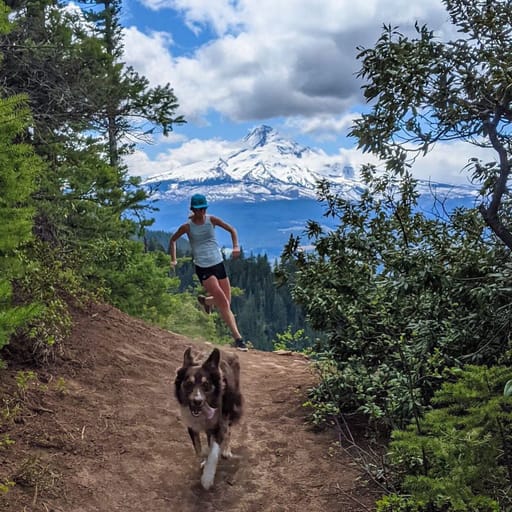
Transcript 0:00 [upbeat music] I'm like such a nerd with, like, vitamins and minerals, but they can make such a difference. 0:08 And like talking about the importance of those in your diet, especially if you're an athlete, and like what they can do for you is like so fascinating. I love just, like, teaching others. 0:17 Food is cool, and it's so powerful, and if we can use it to essentially be like a performance-enhancing drug. Like, it has that much power. 0:27 Welcome to For The Long Run, the podcast exploring the why behind what keeps runners running long, strong, and motivated. I'm your host, Jonathan Levitt. 0:35 Through personal and professional connections in the running world, I have the privilege of getting to know some amazing athletes. 0:41 I've always been fascinated by the psychological aspect of running, and this podcast is aimed at exploring this and much more. I hope you enjoy. 0:53 This episode is brought to you by Lyric, to help enable everybody and every body to feel better every day. Lyric is a therapeutic massager and home wellness companion. 1:03 It's designed for display so you won't forget to use it, and it looks beautiful on any coffee table. It even includes an accessory handle to find those hard-to-reach places so that you can massage your back by yourself. 1:14 Grab yours today for $199 at national retailers like Target, Best Buy, Bed Bath & Beyond, or REI, or get free shipping online with the code FTLR at experience lyric.com. 1:32 Have you guys heard of Beam? I have been absolutely loving their products lately. 1:36 Beam is a CBD company that's making waves in the running world by offering products that combine THC-free CBD with other high-quality ingredients. 1:45 It was founded by two ex-professional athletes with the idea that everyone should have the chance to experience what better feels like. Whether you're sore or stressed, Beam is key for recovery and self-care. 1:56 Try it for yourself with 15% off using the code FTLR from beamtlc.com. I recommend Beam Dream powder or the Focus capsules. 2:18 Welcome back. I am here in Boulder, Colorado, with Alex Borsek. Alex, thanks so much for taking some time to chat. Thank you for having me here. I'm so excited to be on this pod. [laughs] Of course. 2:28 It's been a long time coming, and I'm excited to dive into it. Same. Let's do it. So first question is always a tough one. Uh, who is Alex? Ooh, that is such a tough one. Um, I- [laughs] That's so tough. 2:41 I am a runner, I guess a mountain athlete. I live in Portland, Oregon. I'm a Midwest girl. I came-- I moved from Ohio to the West Coast eight years ago. And yeah, I'm a dog mom, and I'm a dietician. 2:56 I work primarily with athletes, and in all my other free time, I probably just spend in the mountains. [laughs] Nice. Um, so given this is a running podcast, we'll start there and dive into all the other stuff, I'm sure. 3:07 Do you remember your first run? First ever run? First ever run. Yeah. I think it was just around my neighborhood. 3:15 I played soccer growing up, and I actually hated running, and my first run was probably running around the neighborhood, like, for soccer tryouts, and I think that's it. That's pretty boring, but... 3:26 [laughs] And so a lot of time has elapsed from then till now. Uh, what did that journey look like? 3:33 Oh, man, if you would've told me at any point from being young to probably, like, through college that I would be, like, a runner, I would've laughed. There's no way. I didn't, like, associate with it. 3:43 I didn't really enjoy it. 3:45 I did a marathon, my first marathon, in high school, actually, for, like, a senior class project, but I did it for all the wrong reasons, and so my relationship with running was never a good one for a while until I kind of moved out to the West Coast, and running became more of this, like, joyous thing that I got to do outside and, like, explore these new areas and took a whole new meaning for me. 4:05 Why do you think it was for all the wrong reasons? Oh. 4:08 [laughs] I mean, very broadly, I, I did it as a way to somewhat, like, mask an eating disorder, and so I went into it knowing or have-- like, being pretty deep in one and then using running as a way to burn a lot of calories, not eat a lot of food, and play it off as like I'm doing something cool and healthy, but it wasn't. 4:29 And at what point did you realize that? Oh, like years later. [laughs] Yeah, it was a, it was a very rocky relationship with running for a while. 4:36 It's-- All the things I was doing with running in my, like, late teens and early 20s were very much geared towards, like, very negative outcomes. 4:45 Do you think that that has anything to do with the work you do professionally now? Absolutely. Has-- I knew for a long time that I wanted to go into nutrition, but I wasn't sure exactly what area I wanted to focus on. 4:59 Nutrition's fascinating. There's so many different avenues that you can take. 5:02 Some of my own experiences and then just seeing people close to me going through some of the same things and learning eventually by seeing my own dietician and having my own support team, I was like, "Whoa, food is super cool and super powerful, and, like, we can use it for good and not use it, like, for bad or, like, against us," is very cool, and I wanna make sure that everyone else knows that too. 5:21 [laughs] So where, where did that transition for you occur? Probably, I'd have to say in, like, middle of college, so as I was, like, probably a couple years into my program. And so what did it look like? 5:35 I-- Like, with a bunch of, like, help and therapy and a good support team, I started to think on my own personal terms that, like, food is fuel, and food is good, and food can do so many awesome, amazing things for us. 5:46 And then just learning the knowledge in school that, like, how cool food is, like, different nutrients, micronutrients, vitamins and minerals, and all the powerful things it can do for us kind of just, like, changed my whole mindset around it and was like, "This is cool." 6:00 Like, this is actually a way to get, like, stronger and faster and better and happier, and we're using it for all the wrong reasons. 6:05 [laughs]So if you, knowing what you know now, had to talk to high school Alex, who was running a marathon for, as you said, all the wrong reasons, what, what would you say? That's a tough one. 6:18 I think first I'd say, like, no one really cares. [laughs] Like, if you're not doing it because you don't enjoy it, and that's, like, the primary reason why you're doing it, then, like, don't do it. 6:28 I mean, I don't think I enjoyed a single minute of, like, training for that marathon and running that marathon. 6:34 I think it was cool, and I probably crossed the finish line and had, like, some joy in that, but the whole process itself was, like, not a joyous one. 6:41 Um, and I think I would tell myself, "Yeah, just do things that you enjoy doing, and then stop worrying so much, and no one else cares." [laughs] And, like, treat your body good. 6:50 Like, you could do so many more amazing things if you just give yourself the tools to do that. So now you run 30 miles in the mountains for fun- [laughs]... on a casual Saturday. Mm-hmm. 6:59 So the journey has been different as of late for you. So talk to me about your relationship with running today and joy and how you focus on adventures with Otto, your cute dog, and Matt, your husband. 7:13 Running now feels less... It doesn't really feel like running to me. It feels more of like this way I could go out and just, like, experience total happiness. 7:21 It's taken me a long time to get to that point, though, where I can look at running and look at it in a lens of just joy, whereas, yeah, like so many years ago, it was just, like, kind of dreaded it. 7:31 And so now it's just, it's evolved into, like, I'm outside in the places that bring me joy, and I'm doing what brings me joy and makes me super happy, and I don't know, it just doesn't even feel like running. 7:41 It feels like I'm just going out for, like, a very fun day. When did you do your first ultra? I don't remember the year. I think it was maybe 2015. Why'd you do it? I, [laughs] I wanted to see if I could. 7:54 It was one of those things where I had, like, run a marathon, so I, like, knew I could do it. 7:59 But moving out to the West Coast, seeing these trails for the first time, 'cause Ohio doesn't really have many, if any, trails. 8:05 So moving out here, seeing these amazing places, these mountains, these trails, and I was like, "Whoa, this is like an entirely new sport. This doesn't feel like running. This feels like exploration and adventure." 8:15 And I was like, "This could be fun. This could be a, like a good way to just see if I, like, enjoy this sport again." And did you? [laughs] I did, although it, like, kicked my ass. It was so hard. What'd you run? 8:27 I ran the Squamish 50, 50-miler. So your first ultra was a 50-miler? Yeah, I was so dumb. [laughs] I wish someone would've told me, like... [laughs] Well, so why, why did you pick that? 8:37 Um, when I first moved out here, I lived in Bellingham, Washington, which is very close to Vancouver, which is close to Squamish. And when I first moved out here, I didn't run a single step. 8:47 Again, my relationship with running wasn't great. I didn't enjoy it. It wasn't something I, like, sought out to do. Um, but I was really into rock climbing. 8:54 And so Matt and I, my husband, we spent almost every weekend up in Squamish rock climbing. And so I felt like I had a special connection to this place. The mountains were beautiful. 9:02 The trails were very cool, and we'd go for a hike. I just felt like it was almost like a special place to us. We, like, made a lot of memories together there the first kind of year we lived out here. 9:11 And I was like, "You know what? I wanna run this race because it's in this area that I think is really special," so. And what was that first finish line like? It was cool. It was hard. I like... 9:22 The whole time, I was like, "I know I'm gonna finish. I just don't know when or how. [laughs] But I'm gonna do it." And I finished, and I was like... I mean, it was humbling. It was super humbling. 9:32 And looking back at that race, I'm pretty sure I walked 95% of that thing. I did not train properly. I went out. I don't even know what I thought. I have no idea what I thought. But it was really hard. 9:41 I, I felt excited, and I felt, I don't know, like this... I felt like I almost felt like this is where I belong. Without really knowing that, I just felt like almost like this relief. 9:51 Like, what an amazing experience, and I didn't even know what to expect, but it just ended up being so amazing. I was like, "I kinda wanna do more of this," but, like, after I recovered- [laughs]... 9:59 'cause it was really hard. [laughs] So when things got hard in that first race, how did you get through it? I don't know. I just, I think I look at everything as an adventure, and I didn't grow up racing. 10:11 I grew up, you know, playing soccer, so I didn't train in cross country or do workouts or train or anything. And so even races now to me still feel like an adventure. 10:20 They don't feel like I get to the starting line, and I feel super anxious, and the gun goes off, and I have to run really fast or anything. I'm like, "Oh, I'm here. Let's just go play in the mountains for a bit," so. 10:30 Very cool. What is the current training goal? I have no idea. I had a big race this year that I spent a lot of time and effort training towards, and I haven't really thought about anything since then. 10:42 I, I definitely needed, like, a little mental break after that race, and so I've tried, like, kind of purposely not to think of what's next because I think I need some time to, like, mentally recover from- Yeah... 10:51 the race. I definitely relate to that. 10:54 [laughs] I ran Boston on Monday, and my plan was to run another marathon eight weeks later, and I'm not doing that for the exact same reason or for similar reasons because I think that there's so much, like, mental energy that's expended when training and peaking and racing and then coming down off that high. 11:13 Um, and many of us haven't raced in two years, and it's, like, amplified in some way- Oh... even without, you know, five races in a year. Mm-hmm. 11:23 Yeah, I feel like, I mean, anyone who runs knows that running is just as much mental as physical, and if you don't go into a race with, like, a, you know, feeling, like, really healthy mentally, like, you may not finish, or you may not do as well as you wanna do, or even if you are, like, physically trained up to it. 11:37 And I think it's super important to respect that after a race, too. 11:39 If you finish, and you're, like, not psyched on the race or feeling bad about something, like, eventually, like, poor mental health like that will end up leading to, like, a physical injury. Right. 11:49 So I think it's super wise when you do, like, notice you're feeling like that to just take a step back and reevaluate. For sure. 11:55 So we've talked a lot about mental health offline, I guess, but talking about your relationship with mental health. Whoa, that's a loaded question. [laughs] I know. [laughs]I definitely struggle a lot with anxiety. 12:10 And I think when I first got into the sport, that was also when, like, social media was kind of taking off. Instagram was just a thing, and I definitely got stuck into the trap of, like, well, comparison for sure. 12:22 I mean, it's really hard online to not compare yourself to other people. Right. Even though we all know it's just this, like... [laughs] It's not really someone's life. It's, like, a very small percentage of it. Right. 12:31 But it's still hard when you're just, it's in your face. But then also the just comparing, like, not against other people, but just comparing yourself, too. It's like, "Wow, this person can do this every weekend. 12:39 Like, why can't I?" So then I got stuck in that in the very beginning when I first, like, moved here and was like, "I have to do something epic every weekend, and, like, it has to be the coolest thing. 12:49 I will accept nothing less." 12:50 [laughs] And so for a while, that definitely, like, took a toll on my mental health without me, I think, realizing at the time, but just, like, wanting to go and, like, do the best thing or the coolest thing and, like, make sure people knew that, which is so dumb, 'cause, like, no one actually cares. 13:04 Like, no one cares. And it took me a long time to learn that. 13:07 But, like, doing things where I would, like, Matt and I would drive six or seven hours after work on a Friday night and then do something super epic that takes most people, like, maybe a week, we would do it in, like, a day or two days, and then we would, like, leave at 8:00 or 9:00 PM at night on Sunday, drive six or seven hours home and, like, not sleep and go right to work. 13:28 And we would do this most weekends, 'cause we were like, "We have to make sure- Yeah... we do the cool shit." And that led to some, like, really unhealthy thoughts about myself and, like, behaviors. 13:37 And I've never reached, like, an official point of, like, overtraining, but I definitely feel like I was very close a number of times. And just wasn't starting to feel, like, happy in some of the things I was doing. 13:47 Like, I loved doing these things, but it almost felt like- An obligation. Yeah, like, I felt really pressured to go do these things. And I was like, "Wait, this is dumb. 13:55 I love these things because it's an adventure and it's fun, and now it's like, it's less of that," and that's, and it felt really shitty. [laughs] So how did you pull back? Um, I hired a coach. [laughs] Who did you hire? 14:07 Uh, I hired David Roche. He's so amazing. We've been working together for the past, like, almost three years, actually. Um, and he has helped with this immensely. Oh my gosh, it's been incredible. 14:18 He talks about, you know, you are enough, and it's, like, such a simple three words, but for so long, I was like, "Well, I'm not enough. 14:25 I'm not doing the things that, like, I feel like I should do or what everyone else is doing, or, like, you know, proving myself that I belong in this sport or in this world or in this community." 14:34 And, you know, the more and more he's, like, saying that, "No, like, you are enough," it's like, "Oh, guess I am." [laughs] But like, it's, it was hard. It's, and it's sometimes it's still hard. 14:43 You know, comparing yourself is tough. We all get stuck in the, that comparison trap sometimes. Definitely. 14:49 So for those who don't follow you, Alex has a fairly substantial Instagram audience, probably in part due to your cute dog. Definitely in part. [laughs] Um, but how do you, how do you manage that? 'Cause that's... 15:01 Like, I have 10,000 followers, and I, like, find myself, I find that to be a challenge sometimes, right? 15:08 Like, I've been so open about so many things, and there are things I don't wanna be open about, or there are things that are, like, going on in the background that, like, then you say that social media's a highlight reel, and then it's like I wanna share the things that suck. 15:20 But sometimes they're personal, and so I have a hard time straddling that line, and I'm curious your relationship with that as well. Yeah, I have a super hard time with that, too. 15:31 And my relationship has absolutely evolved over the years. 15:34 So at first, I went from, like, literally just posting, like, whatever I was eating and, like, random stuff I was doing and then started posting more pictures of my dog. 15:42 [laughs] And then I just got, like, a ton of followers. And I was like, "Whoa, this is-" Like 75,000 followers. [laughs] Yeah, yeah. Well, that's actually funny. 15:49 I actually refuse to look at my main page to know how many followers I have 'cause I don't want it to, like, mess with my head. Yeah. So that's a... I actually didn't know that until right now. [laughs] Sorry. 15:57 [laughs] We can edit that out- [laughs]... from your own memory. Yeah, it's fine. [laughs] Um, but social media has been amazing for me in some ways and so toxic in others. 16:08 And at first, that definitely fueled the, like, comparison and, like, wanting to, like, go out and do more in, like, a very unhealthy way and, you know, comparing to other people. 16:17 Like, "I've gotta post on Instagram Monday morning, like, what I'm doing." And so they, so everyone knows. 16:21 And it's, like, kind of cringey to think about, but I think we've all been in somewhat similar of, like, a trap on social media- Yeah... in some way or another. 16:28 But anyways, I got this following that I really did not expect, and I don't use any other social media platforms. I log into Facebook, like, once a month. I don't have a Twitter. TikTok, I don't even- [laughs]... 16:39 like, know, use that or whatever. But so this was, like, so, it was, like, so uncomfortable for me. I had this following. I was like, "Whoa, what do I do now with it? Like, do I share my life? 16:49 Do I keep it, like, pretty vanilla? Like, what do I do?" I would just share adventures, and it was, like, pretty benign, and then couple years of having my Instagram, my, my dog died really unexpectedly. 17:01 And at first, it was a really cool tool to, like, I shared that, and it was really hard to share. 17:06 But the response I got back from people being like, "I've gone through something similar" or, "I can relate" or, like, "I'm just so sorry," you know? 17:13 The outpouring of, like, love, I was like, "Whoa, this is an amazing thing. Like, maybe I should, like, be more vulnerable or maybe I should share some of, like, the harder things." 17:21 And I think that helped me learn that, like, it's okay to kinda share both sides of that. Yeah. So I started sharing a bit more. 17:27 But as the years went on, you know, I think anytime you put yourself out there in any way, you're, you're gonna get a lot of love, but you're also gonna get a lot of shit. 17:34 And I've experienced my fair share of kinda the bad stuff, and that made me, you know, challenge my relationship with social media again. It made me kind of back away. 17:45 And so now I'm kind of at the point where I spend about five minutes a week [laughs] on social media. I maybe post a few times a month. 17:53 Nothing is, like, ever very, like, deep 'cause I've gotten to the point where I've spent so much mental energy and had so much anxiety over some of the things that people have said that I'm like, "It's not worth it." 18:02 I really appreciate, like, the good, positive outcomes that have come from it, friends, relationships, things like that.But if we're talking about, like, anything you can do to make sure that your mental health stays positive, that was one of the things where I'm like, "I think it's taking away more than it's adding at this point." 18:14 Yeah. So just, I, yeah, so I don't really... I use it. Like, I have it still on my account, but I don't really do much on it. 18:20 It's such a fascinating tool or such a fascinating part of our lives now, and like when Instagram went down the other day, it was like, "What are we gonna do?" [laughs] "Like, how will people know what I ate for lunch?" 18:31 But yeah, I struggle with the same thing. Like, I post a photo every single day. I don't know why, but I do- Yeah... and I have for like, for a couple of years now. 18:39 I find this conversation fascinating, and I was looking forward to having it with you, and the reason I find it so fascinating is because it's one of those things like, do people care? 18:49 Like, at the end of the day, it's the journey, it's the, like, meaning that you add to your own experience that is the only thing that matters- Mm-hmm... and the relationships you have with other people and whatnot. 19:00 And so every so often, I get into this like, what the hell is the point of me posting a running photo every single day when there are, like, plenty of other important things going on in the world that are, like, so much more important than running? 19:13 And then sometimes I'll, like, say that on Instagram, and people will respond, and they'll be like, "No, it's, it's, like, cool to see a journey and the ups and the downs"- Mm-hmm... 19:23 and like, because for so many years, it just was a highlight reel- Yeah... myself included, and, um, I think we're getting to a point where, like, people are vulnerable and people are sharing the highs and the lows. 19:34 And like, I posted something about, like, the negative self-talk that I had- Mm-hmm... at Boston on Monday, and I, like, I think that stuff is important. Like, I think it's... If you looked at my race, like I ran a 336. 19:47 For some, that's fantastic. For me, it was not anywhere close to what I was expecting. Mm-hmm. And I thought I was going to, you know, jog a 310- Mm-hmm... [laughs] and, and like, cover and, you know, be fine. Yep, yep. 20:00 I don't know where I was going with that, but I think it was, I was gonna reflect on, like, the number of people that replied, and I just think that, like, we're, we're at this place where people need to see the real side of people. 20:13 And then it's like, well, how far is too far? Right. You don't wanna be a sob story. Right, right. So it's, it's like a, such a challenging balance. It is, it is. 20:20 I mean, I've had so many people reach out and be like, "The things that you shared, so meaningful. 20:23 I'm so glad, like, it's helped me or it's made me rethink things," and like, those messages mean more to me than a lot of things. 20:30 Like, it's, it's cool to know to be a part of someone else's journey, um, and to, like, be vulnerable and do that 'cause I feel like probably a lot of people, I, I am more vulnerable than, like, probably most people on social media. 20:40 But I, I am careful of sharing other things because I think once you become super vulnerable, people feel very privileged to know all the details of your life. Right. 20:47 And then if you don't share them, then it just feels like people... I don't know. They, like, not lose respect. It's, it's such an interesting world. 20:55 At this point, I get, like, one every single day, at least one rude or condescending or mean message in my inbox. 21:02 Doesn't matter if I post it or not, just something, like I have upset someone in some way or I've said something or someone doesn't agree or someone thinks my dog should be wearing goggles. Like- [laughs]... 21:12 I don't know. There's just like every day it's something, and I'm like, you just gotta decide, like, what role social media plays in your life. Yeah. And if it's positive, yeah, hell yeah. 21:20 If, and if you're receiving positive feedback from, like, things, then, like, yeah, I mean, keep doing it. But as soon as it turns negative, like, I think it's important to reevaluate, like- Yeah... 21:27 why you're there and then, like, what your goal is. I got a note yesterday on a post which, like, solidified my entire purpose for using social media. Mm-hmm. Like, I love these interactions. 21:38 Somebody posted on my Instagram, "I was behind you on Boylston, and your energy got me down that last little stretch. My husband has a video of you pumping up the crowds." 21:47 And for some reason, I was on her explore page, and she- Oh, what?... found my profile and saw that I'd, I finished, like, 10 yards ahead of her- So cool... 21:56 and messaged me this, and, like, those interactions I think are so cool. Totally. And then there's the, all of the people we get to meet. Like, I met you through [laughs] Instagram. Totally, totally. 22:06 Um- Yeah, like, I just basically spent the last 10 minutes, like, shitting on social media, but honestly, like, I do, I do love so much of it and, like, yeah, like, I've met you. I've met so many people. 22:15 Like, honestly, some of my very best friends, people that have been in my wedding, I met through social media, in not a weird way. 22:20 Like, you know, the running community is awesome, and I've met some of those people just, like, through social media- Yeah... and not in person just because, and that's really cool. 22:29 It's super cool to have, like, real-life friends from something because it's honestly like match.com but for friends. Like- [laughs]... 22:35 you can see exactly what someone's into, like more or less, and be like, "That person looks interesting, and we have the same interests. Let's hang out." And then- Totally... like, yeah. 22:41 It's, like, such an interesting... Like, I was on the plane back to Colorado on Monday, and I messaged someone who I'd been following since February, and I said, "Hey, are you flying back to Colorado right now?" 22:54 And she turned around and go- and said, "Hey, John." [laughs] And I had never met her. Yeah. 22:58 And we had, like, messaged a whole bunch of times, and she was flying back with her family, and her family was in all the seats next to me, and it's just, like, so cool that the community is, like, that small that- Totally... 23:09 we can be so interconnected, and that you can be on a plane with people that you've talked to but never met or meet in the airport. Yeah. [laughs] Meet someone in the airport that you've never met before- Yep. Uh-huh... 23:20 even though I've been to Portland a million times. [laughs] Ah, I know it, man. Next time. [laughs] Thanks again to Lyric for sponsoring this episode. 23:29 Lyric's rhythm therapy is designed to help every body and every body relax and temporarily relieve pain. 23:36 As the miles have continued to grow this marathon season, using Lyric has been a great way to effortlessly help with some good passive recovery in between sessions. 23:45 Get yours today for $199 at national retailers like Target, Best Buy, Bed Bath & Beyond, or REI, or get free shipping online right to your door with the code FTLR at experiencelyric.com. 24:00 Thanks again to Beam for sponsoring this episode of the podcast. Did you know that you can get a subscription to Beam's Dream Powder? It's what I use most nights before bed to help with a refreshing night's sleep. 24:10 When you subscribe, you'll get the Dream blend with a bunch of perks like even better pricing, free shipping, a free mug, and a drink frother just for signing up. 24:18 Dream helps me wind down at night, and it's made with compounds like melatonin and magnesium that support a better night's sleep.Make sure to use the code FTLR at checkout for an extra 15% off the already discounted 20% off monthly rate. 24:33 And now back to our conversation. [upbeat music] So talk to me about, um, your work as a dietician. So I've worked with Alex, uh, what was that last, two years ago? A year ago? I think it was, yeah, at least two. 24:50 Anyway, I did some blood work. I shared it with her, and she gave me some great advice, and the long and the short of it was eat more. [laughs] Uh, and eat more carbs, which is a reoccurring theme. 24:59 But talk to me about how you work with athletes, and we'll go from there. Yeah. So I love my job. I love it so much. 25:07 So I am super privileged to work with athletes of all levels, and I work with anyone, but I, I feel like I've been mostly working with athletes the last few years, which has been great. 25:17 But I am a huge fan of, like, personalized nutrition. And knowing that why we eat food, we don't just make a simple decision of like, "This sounds good, I'm going to eat that." 25:27 There are, like, a million other factors that impact why we choose those foods we eat. You never just open the fridge and you're like, "I'm gonna eat that." 25:33 There's so many other things that go into that, and so I like to work with people to, like, make changes based on emotions surrounding food rather than just, like, eat this, eat that type of thing, or, like, learning why food's important. 25:46 So like I mentioned earlier with, like, micronutrients, and I'm, like, such a nerd with, like, vitamins and minerals, but they can make such a difference in, like, talking about the importance of those in your diet, especially if you're an athlete, and, like, what they can do for you is, like, so fascinating. 25:59 I love just, like, teaching others food is cool, and it's so powerful, and if we can use it to essentially be like a performance-enhancing drug. Like, it has that much power. Dope your diet, not your blood. I love that. 26:11 Is that someone's catchline? I'm gonna, like, take that. [laughs] So Ashley Rever, the lead nutrition scientist and dietician- Mm-hmm... at InsideTracker, that's, that's her line. I love it. [laughs] That's so good. 26:20 But yeah, just, like, I like to learn why people make the food decisions they make and make decisions from there. 26:24 So someone could eat a certain thing for a certain reason, and if you're telling that person, "Hey, don't eat that food anymore," or, "Eat more of it," it's not as simple as that. 26:33 There's, like, all these things behind it. Like, maybe they eat it because it reminds them of home and they're homesick. Maybe they eat it because they think it truly is the healthiest option. 26:40 Maybe they eat it because someone told them to. 26:42 So the more I get to talk to someone and make this nutrition approach very personalized, the more these changes stick, instead of just being like, "Eat more kale and add chia seeds to your smoothie." 26:51 Like, boring, you know? [laughs] I wanna make sure we do things that, like, actually benefit that person from, like, inside of their brain, inside of their heart, you know? 26:59 What's been the, the most surprising takeaways or discoveries that you've had as a dietician? I could do a whole podcast on this. [laughs] Um, in terms of, like, working with people or things I've seen, or? 27:12 Not necessarily things you've seen, but, like, your work as a dietician. The most surprising thing. Like, people are always surprised to hear X or people love hearing Y or something like that. Yeah. 27:24 I think one of the big things is people think that in order to have good nutrition or be nutritious or eat well, they need to eat well 100% of the time, and that's not the case. 27:34 I always tell my clients, like, if we're eating, making, like, good, positive choices most of the time, I say, like, 70% of the time, you're doing a damn good job. Cs get degrees. Yeah. 27:43 Like, nutrition's very, very important. It can make or break how we feel, could make, make or break how we kinda feel later in life if we develop, like, some chronic diseases. 27:52 Obviously helps immensely in running and recovery, but it's not our whole life. 27:57 So if we're looking at our life as a pie chart, and we have a section for work, section for relationships, section for personal life, mental health, physical health, our own exercise, food, we have to balance all these things in a circle. 28:10 And when people try to take any of those things, work, relationships, running, food, 100%, like, where is the percentage left for all the other things? And so I want that to be food for people too. 28:21 I don't want this to, like, consume their life and be like, "Everything I do revolves around making a strict decision around food," and then they think about it all day long and they're stressed. 28:28 Because stress is stress, and so if they're stressed about food but they're eating well, is that really benefiting them, like, [laughs] in the long run? Probably not. 28:36 Like, they might be eating the right things, but they're creating so much stress worrying about it. 28:39 And so my big thing is, like, eat well most of the time, and if you do that, you're gonna be set up for success for sure. I love that. So my own journey with food has been interesting. I would never say I've had a... 28:52 I don't wanna phrase this wrong, but... So I joined InsideTracker seven years ago, and I had been, like, dabbling with paleo and low carb because, like, that's what I thought was right. Mm-hmm. 29:02 Um, because that's what you see on the internet and, you know, things like that, and I was getting my information from the wrong places. And my blood work indicated that I needed to eat more. 29:12 I needed to eat more carbs and eat more protein. Actually eat less protein. And I did that, and I got, like, really dialed on a very regimented... 29:23 I, I had a very regimented like, "This is what I do, this is what I don't eat," and it was, like, borderline restrictive. Mm-hmm. 29:30 And what was interesting is that my blood work was terrible, and so I thought I was doing- Mm-hmm... all of the right things because that's what I had learned about- Mm-hmm... 29:38 from the internet and from other people who aren't credentialed to give nutrition advice. Sure. [laughs] Um, and objectively it was wrong. 29:47 And I didn't feel good, and I was tired all the time, and I was frequently injured and not- Yeah... running well. [laughs] And so fast-forward seven years and I'm the loosest I've ever been with- Mm-hmm... 29:56 nutrition, but doing what I need. Yep. And I don't know, five to six pounds heavier than I have been in a few years.But the running is great. Mm-hmm. And the mental health is great, and the... 30:08 Like, I can go out to eat and not worry about, like, what's on the menu or, like, I'm not looking at menus before I go to a restaurant anymore. 30:15 I don't know if that, like, bordered some sort of category or not, but it's been a fascinating personal journey of letting loose a little bit while still doing the basics or the essentials. 30:27 And I learned that that was called intuitive eating. Yeah. Well, first of all, that's amazing, and I'm super happy to, like, hear that journey from you. 30:34 And I also think everyone listening- Did you say love that journey for you? Love that journey for you. 30:38 [laughs] I also think everyone should, like, listen to that and then rewind it and then re-listen to it again and, like, learn that, like, yes, flexibility is key. 30:45 Like, being super rigid about diet isn't gonna make you the healthiest person. If you're gonna go out to dinner, like you said, and be stressed about what you're gonna eat, like, that sucks. Like- Right... 30:53 food should be fun. Like, food is delicious. It's fun. It gives us nourishment. It's social. 30:59 And, like, embracing all aspects of that is important for nutrition, not just necessarily, like, checking the boxes on nutrients. For sure. Retweet. Yeah. [laughs] Um, yeah, it's been fascinating. 31:09 And to be able to be a part of others' journeys around nutrition through what I get to do for work is- Mm-hmm... fascinating, but it's a whole lot of, like, debunking myths and, like, unlearning- Yeah. [laughs]... 31:20 and helping people unlearn. Mm-hmm. We talked about this with relationships- Uh-huh... but there's a whole lot of unlearning that needs to be done with nutrition in order- Mm-hmm... to have a better relationship with it. 31:30 For sure. Yeah. Everyone... Like, what you mentioned about, like, you weren't sure how to, like, term your behavior towards food. But honestly, everyone at some point in their life has had some form of disordered eating. 31:39 And you don't have to call it an eating disorder, 'cause not everyone has that, but everyone has some form of eating patterns that are maybe not- Sustainable, yeah... sustainable or, like, you know, normal on paper. 31:48 Right. We've all been raised by people who also have different relationships with food, so, like, we bring in all of these other influences, and that influences how we eat. 31:56 So whether it's, like, the media, whether it's our parents, our friends, our coaches in high school or college, like, we're all bringing in baggage, food baggage. [laughs] Right. Food baggage. [laughs] Now we're talking. 32:06 Yeah. [laughs] What's in the food baggage? Um, definitely ice cream. Pizzas. Okay. Uh, ice cream with sprinkles, has to be. Okay. Pizza for sure. Tacos, no doubt. Those are probably the three big ones for sure. Sweet. 32:17 So how does it feel to work with a coach who frequently talks about incorporating fun foods into your diet? 32:24 Like, early on when I started working with David, after my long runs, he would put in, like, lots of fun foods, like big day, like, stuff like that. Mm-hmm. What does that mean to you as a dietician to see? I love it. 32:36 I love it so much. Like, that's the best thing you can, like, tell people and encourage people to do because I think a lot of times when people get really into sports or training, they're like, "I have to come back. 32:46 I have to make a protein smoothie, and I have to eat a kale salad," and then they have to just be super regimented. And then it kinda takes the fun out of running or training or the process or whatever. 32:56 So it's so cool to have a coach who's like, "Hell yeah, eat ice cream." Like, I eat a pint of ice cream every night, and David's like, "Yeah, I support that. This is great." 33:04 [laughs] I think the fun around food and training is so key. 33:09 I've gotten to know some of the athletes on Team Boss here in Boulder, and the relationship they have with each other and with running and with food is, I think, why they will be the best team in the country- Mm-hmm... 33:22 soon if they're not already. Uh, they had, what, five athletes go to the Olympics and do quite well for the most part. 33:29 I had Ayesha Praulier on the podcast a few months ago, I guess it was last summer at this point, and [laughs] we had to reschedule our first time because she had gone to mimosas with the team- [laughs]... 33:41 to celebrate Corey McGee's 800 meter PR- Mm-hmm... which she ran in practice that day. And Ayesha was, like, very apologetic. She was like, "Oh, sorry, so sorry about this." I was like, "Don't apologize. 33:51 That's fucking awesome." It is, yeah. Um, and I think that- Yeah... like, that's the dynamic that is so key to long-term health and success. 100%, couldn't agree more. 34:01 Like, eating is very important, and, like, that social aspect around eating and celebrating and having food be a celebration and enjoyment, that's so, so important. 34:11 I think it's interesting because one of the athletes on the team is a dietician, and it's clear that they all came to the team in a good place. Mm-hmm. 34:19 But also, I'm going to guess that Maddie is partly responsible for fostering this type of environment. I had her on the podcast a few weeks ago. We actually sat downstairs in that- Mm-hmm. Yeah. [laughs]... 34:30 that little podcast nook, and we talked a lot about that and about the team's relationship with food and, like, their intent to be role models for younger athletes. 34:39 And I th- I think it's really awesome to see- I love that... particularly because they're having success, they're having tangible success while running. Yeah, I love that. That's awesome. So switching gears entirely. 34:51 Okay. Mm-hmm. A question I like to ask on the podcast is... Yeah, this is a total pivot, but- [laughs] Oh, I'm, I'm excited... of course, I've already made the pivot- [laughs]... so we're just gonna dive further into it. 35:01 Great. Um, so fast-forward five years, what are you really proud of? Oh, my gosh. Um, I will be really proud if I can... 35:12 I, like, wanna say a race result, which sounds so shitty 'cause it's not that, but I wanna be proud of the process that it takes to get to that point. Like, I- Is it a specific race? Yeah, it's a specific race. 35:22 Is it UTMB? Yes. [laughs] And I wanna be proud of myself for, like, going after my potential. 35:28 I wanna look back and be like, "I did what I could do," because I don't think there's been a point in my life where I've actually, like, had enough self-confidence to do things like that. I've always been... 35:38 I, I just haven't had the confidence, or I've had some anxiety. And so I... It's easy to do things to not go after your potential, not to, like, self-sabotage, but just not to go all in. What do you mean? I don't know. 35:48 Like, to- I've struggled with this too, so I'm asking because I'm curious. Yeah. 35:51 It's, it's kind of hard to put into words, but, like, I think before I'd be like, "Well, I'll never be as fast as my friends, but what I can do is I can do these stupid adventures on the weekend, and I'll do that instead." 36:02 And that's not really, like, doing much for me as an athlete towards my goals. And so I think, like, not having the confidence to be like-No, you, you can. 36:09 If you go up to your potential and you, and you, you know, treat your body right and you go after your goals with love, like you can accomplish things. Um, but it's taken me a long time to get to that point. 36:17 I think I o- in the past been like, "Well, I can never do that, so I might as well just like find something I can do, whether or not it's like good or healthy to do." [laughs] What will it take to get there? 36:28 I think it'll take a lot of self-love. I think I have a lot of that, but then there's times where I have none. So I don't struggle with confidence all the time, but when I do struggle with it, it feels very, very hard. 36:40 I have amazing friends who are so good at what they do, and sometimes that plays into my role of like self-confidence, and then I kinda get down on myself. 36:51 So I think in order for me to like look back in five years and be really proud, I need to be like, "No, I can fucking rock this. I can go do this." 36:57 Like, I have enough confidence in myself that like I can go all in and not like shy away when things get hard or things don't go exactly how I want them to go and like just continue to persevere. 37:08 So I asked you earlier, what would Alex of today say to high school Alex? So this question is: What would Alex of finishing UTMB and crushing your goal look at Alex of today and say? Oh, my gosh. 37:23 Um, well, it's been like a pretty hard couple years, so I think... And I'm, I'm not like totally out of this hard couple years, and so I would tell myself to just like keep going. 37:33 Like, it's been so easy to wanna like give up over the last couple years for various reasons, and I haven't yet. But there's been times I'm like, "I think I'm over this. I think I'm done. I don't think I'm a runner. 37:43 I think it's not meant for me. I think I need to move on to something else." I think I need to tell myself like, "Just keep going." 37:49 Like, when shit gets hard and stuff feels really impossible, like just keep going, 'cause it'll, it'll get better or it'll pass. 37:55 I think that's so critical, and like it's an interesting reflection on something that hasn't happened yet. But it's exactly what I told myself when I was running through Wellesley on Monday. 38:05 I vividly remember exactly where I was having this, like conversation in my own head. 38:11 I was coming into Wellesley Center right before the spot, for those who are listening, it's r- it was right before the spot where Rozelle used to, uh, post up, um, in front of the firehouse right in Wellesley Center. 38:20 Anyway, I remind myself that this is supposed to be hard- Mm-hmm... and you can do hard things, and this is supposed to be hard. And it's fun because it's hard. Mm-hmm. And we like Type 2 fun. [laughs] Yeah. 38:33 And this was like the conversation that I, that I was having as, as my, like dream race was slipping away, that you're gonna finish this, and you're gonna keep going. But it's not supposed to be easy. Like- Mm-hmm... 38:46 these things we do, they're not comfortable. If they're comfortable, th- they're just not com- [laughs] they're not comfortable. There's no way for what we're doing- Yeah, yeah... to be comfortable. Yeah. 38:55 I mean, I like hard things. I put myself in situations that are purposely hard because I, I like them. 39:01 So I think it's so, it's f- funny for me to feel like I wanna give up on hard things when like I put myself in those hard situations. 39:07 It's like it doesn't really make much sense when I think about it, but like I think my whole life I've been pretty privileged to be... Things have come pretty easy for me in a lot of areas for my whole life. 39:17 I play piano. That's always come pretty easy. School's come pretty easy. But running is, does not come easy for me. It's something I really have to work at. 39:24 It's not just something that like I'm naturally born and good at. But it's something I love, and it's something I wanna be better at. And so 39:31 I like challenging myself for hard things, but I think sometimes it's really easy then to get down on yourself when like hard things feel hard in a different way, you know? 39:39 Like, I can push through a long day in the mountains, and that's hard, but it doesn't feel as hard as like continuing to believe in yourself when shit hits the fan. Different kind of hard. 39:46 You just need a Ted Lasso believe. I have it on my mirror at home. 39:49 [laughs] Every day I slap it, but even still, some days it's like, "Yeah, I can do this," and other days you slap it and you're like, "I still need some extra help." [laughs] What do you do on those days? 39:58 I just keep going. I just, like I... I don't know. I just keep going. I know like, [sighs] 40:04 it would, sometimes it feels really easy to just like skip a day or, or not go after it or just do something stupid, but I'm like, I've started to really enjoy the process, and with the process knowing that like not every day is awesome and not every day is perfect. 40:17 And like those crappy days will come, for sure, but then like they're followed by better things, whether it's the next day, the next week, whatever. It's just like, I know it'll pass. 40:27 Just get through it, and just give it my best that day. Is gratitude something you intentionally practice? No. I don't intentionally practice it, but I feel like I have a lot of gratitude. 40:36 But I don't have to tell myself that I, I'm like grateful for things. I don't know. 40:40 I know some people have to like really focus on it and be like, "I get to do this," or, "I get to do it," and I, I feel like I'm just like really excited about a lot of things in life that it just feels natural, if that makes sense. 40:50 [laughs] Yeah. No, it does. I think some people, like they need the intentionality of it. Yeah. Um, and others, it's sort of omnipresent. 40:58 Yeah, I think it's 'cause I've, I think I've surrounded myself with a lot of other people who are all very full of gratitude, so when you're surrounded by that, it's, it just feels like a natural part of life. 41:06 [laughs] Who are some of your role models in the sport? In the sport? Oh. I think anyone... And I'm gonna switch. This is gonna be super broad. I'm not gonna like name super- Yeah... like specific names. 41:17 But I think anyone who can balance work with play is someone I deeply admire. Some work or all play? [laughs] That too. 41:26 But like I, I think anyone who can take their passions and fit it into their normal life, whether their life is a parent or someone who works or, like a, you know, goes to work at a job, at a desk or something, or is basically just like trying to balance all these things in life and is still crushing it, I admire them so much. 41:41 Like, those are the people I wanna be like too. Like, I think it's so cool when people can, can balance all that and still find huge success in that. 41:49 This, to that point, this woman that I met on the plane, her name is Tracy-She has three kids, and she runs 75 miles a week at 10,000 feet. Amazing. [laughs] I'm like, "Tracy, how do you do this?" Yeah. 42:02 "This is so impressive." And her... I know that numbers aren't everything and blah, blah, blah. Mm-hmm. But her Strava weekly mileage is a straight line. [laughs] That's amazing- Like holy-... the consistency, wow. 42:14 Oh, my God, this is incredible. Yeah. And she does that with three kids, and works- Wow... like, all this stuff, and I find that to be so impressive. Like, I can barely look after myself. Yeah. [laughs] Right. 42:23 And I live by myself, and, like, I don't have that many obligations outside of, like, do your job and maybe run some miles in the week. [laughs] Uh-huh. Um, so I agree. 42:34 I think that those people are very impressive, and some of it's by necessity. Like, I had Kyle Petari on the podcast. Mm. 42:39 Um, and his episode will be released tomorrow, which, if you're listening to this, it's already released- [laughs]... 42:45 183, and he talks about necessity being a source of, I don't want to say motivation, but structure for him. So he intentionally makes things challenging for himself so that he can get things done. Hmm. Um, he's a lawyer. 43:02 He is a dad, and he is a husband, and he's a professional runner. And so he just, like- Yeah... adds all this stuff- Yeah. Uh-huh... into his day so that he's forced to create structure so that he- Yeah... 43:14 can, you know, go for a run while his kids are playing on the treadmill next to him, or when they were younger, he would hike with them on his back, and that would be his, you know, strength training or whatever. 43:24 Yeah, yeah. And so I find- I find this, like, forced necessity to be so impressive. Yeah, it's- it's cool. I mean, there's so many people I could name in the sport who I admire. 43:33 Like, there's probably, like, hundreds of people, honestly, and but, like, it was, like, this year at Western, super cool to see, like, I'm probably gonna mess the stat up, but I think, like, most of the top 10 women either have kids or have a full-time job or both. 43:47 [laughs] Yeah. And that is fucking awesome. I love that. Like, every one of those women, I'm like, "You are amazing." 43:52 Like, to run at that level and be that, have that much success and also in, like, their family life, social life, work life, so cool. The whole, like, carry your kids across the finish line of 100 mile- Oh... 44:05 or, like- Kills me... it kills me. [laughs] I love it. I could watch that literally for hours. I know. And I have watched that for hours. Yeah. [laughs] It's so good. It's incredible. 44:13 Um, I have so many other questions about the, like, everything we've talked about. We might have to do another, another round- Yeah... of this podcast. 44:21 Uh, but I think the last question I'm gonna ask is what is one thing that you wish people knew about you? And you can't say that you play piano, because you already said that. [laughs] Whoa, 44:32 this is tough, 'cause I'm kind of an open book. Um, here's one. I stopped drinking this year. I stopped drinking alcohol. Good job. And not a lot of people know that, for a lot of reasons. 44:41 Um, I just didn't think that it was doing me any favors anymore, and so definitely for, like, some, like, mental reasons and definitely some health reasons. 44:50 Yeah, I, so I just, I, during, during COVID, the start of COVID, my husband and I were, we're like, "You know what? We're not really gonna drink anymore. 44:58 We're gonna, like, dial it back," um, just 'cause it was a really stressful time and we didn't wanna have to, like, use alcohol as a coping mech- mechanism for stress. 45:04 But we didn't, like, stop completely, and then this year in January, I was like, "You know what? I'm done. I am done." And it's, I make it sound real easy, and it has actually not been very easy. 45:14 It's been very difficult at times, but I'm really- I'm really excited about it. Cool. And it's funny, because I used to, I feel like some part of my identity is, like, this beer-drinking girl- Yeah... 45:25 who just, like, is rallying, like, there to party, which I'm still very much here to party. I just don't drink anymore. [laughs] Are you on the non-alcoholic beer train? I've had a couple, but I, yeah, I don't know. 45:37 I wouldn't say I, like, rely on it or anything, but I've had a couple, and they're, they've been good. Cool. Yeah. That is a fun fact. Yeah. 45:43 [laughs] Well, Alex, thanks so much for taking some time to chat, and, uh, hope to share some tacos with you in either Boulder or Portland soon. Yes, thank you so much. Yeah. I'm so honored to be on this. Of, of course. 45:52 [laughs] [upbeat music] That's it for today's episode. Like many long runs, it's sad when it has to end. I hope you join in next time on For the Long Run, and in the meantime, happy trails. 46:07 If you enjoyed this episode, it would mean a lot to me if you shared it so that others could find it and enjoy it, too. This podcast and the accompanying music has been produced by Brian Walters of Single Track Sound. 46:22 For the Long Run's logo was created by Vanessa Wolf of Sterling Wolf. [upbeat music]